


Guanacaste has never been a classic fly-and-flop all-inclusive destination like Cancun or Punta Cana. Yet a growing cluster of large resorts now dots its Pacific coastline, from Papagayo Bay down toward Tamarindo. For travelers sorting through more than 20 all-inclusive results in today’s search pages, the real question is not just which resort to book, but whether all-inclusive makes sense at all in a region where most itineraries include volcanoes, hot springs and cloud forests several hours away. This guide breaks down the strengths and tradeoffs of Guanacaste’s best-known all-inclusive options, focusing on Westin Reserva Conchal, the RIU properties on Matapalo Beach, adults-only Secrets Papagayo, Occidental Tamarindo and a handful of other genuine all-inclusive choices.
Understanding Guanacaste’s All-Inclusive Landscape
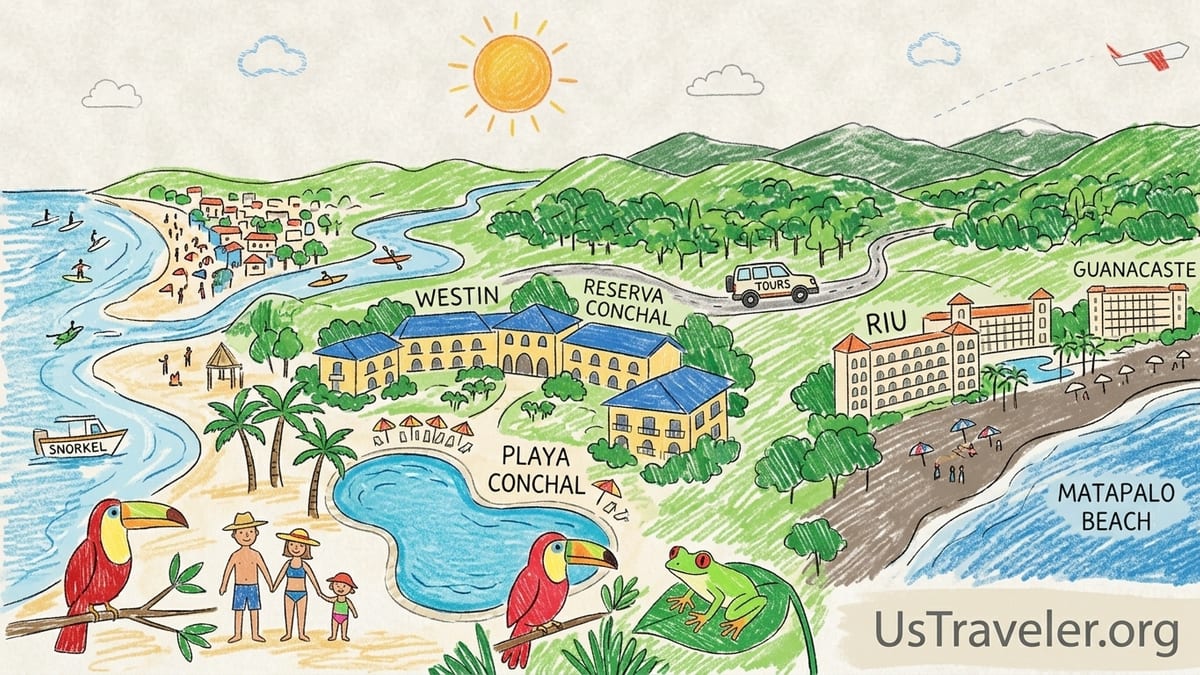
Compared with Mexico or the Dominican Republic, Guanacaste’s all-inclusive scene is compact and relatively high-end. The largest clusters sit around three areas: the Gulf of Papagayo (home to Secrets Papagayo and a few mixed-plan resorts), the Matapalo area north of Playas del Coco where RIU Guanacaste and RIU Palace Costa Rica share a long beach, and the Reserva Conchal complex and Tamarindo area slightly further south, where the Westin Reserva Conchal and Occidental Tamarindo serve as the main all-inclusive anchors. Current hotel filters on major booking engines surface more than 20 Guanacaste properties under the “all-inclusive” label, but many of those are small beach hotels with limited inclusions, or resorts where the AI package is only one of several rate plans.
For travelers seeking a classic all-inclusive experience with wristbands, multiple restaurants, pools and included drinks, the realistic short list narrows quickly. On the family-friendly side, The Westin Reserva Conchal and the two RIU properties dominate. For adults-only, Secrets Papagayo is the clear mainstream option in Guanacaste at the moment, pairing a hillside setting on Arenilla Beach with a more boutique feel than the mega-resorts. Occidental Tamarindo offers a smaller, older-school option right on Tamarindo Bay, handy if you want nightlife and surfing within a few minutes’ taxi ride.
Because Costa Rica’s appeal is so tied to its national parks and rural landscapes, these resorts function differently than similar brands in Mexico. Many guests at Westin Conchal or Secrets Papagayo, for example, will book full-day trips to Rincón de la Vieja for mud baths and zip lines, to Palo Verde National Park for river safaris, or even overnight add-ons to Arenal. That means understanding excursion logistics and costs is as important as comparing which buffet has the best sushi or how late the lobby bar serves premium spirits.
When deciding whether to go all-inclusive in Guanacaste, start by mapping your likely touring days. If you plan to be off-property three or four full days out of a week, the economics look very different than if you intend to largely stay by the pool with perhaps one big excursion. The following sections walk through each major resort cluster, then zoom out to compare food quality, drinks, activities, kids’ facilities, beaches and off-site touring, so you can match a property to the style of trip you actually want to have.
Westin Reserva Conchal: Polished Family All-Inclusive With Golf
The Westin Reserva Conchal sits on Playa Conchal, often cited as one of Guanacaste’s most attractive beaches, with pale sand made from crushed shells and typically calmer water than surf-heavy spots like Tamarindo. Part of the larger Reserva Conchal gated community, the resort functions as a self-contained, upscale all-inclusive. Room rates generally bundle buffet and à la carte dining, snacks, alcoholic and nonalcoholic drinks, non-motorized water sports, entertainment, a large pool complex and taxes and service fees. Golf, spa treatments and some premium wines and liquors are extra, so couples eyeing daily tee times should factor green fees into their budget rather than assuming they are folded into the all-inclusive price.
The property’s 18-hole par-71 course, designed by Robert Trent Jones II, is one of Guanacaste’s marquee golf draws, making Westin Conchal a natural choice for golfers who want to sneak in a round between wildlife tours. Families tend to appreciate the Westin Family Kids Club, which runs structured activities and gives parents a break during the heat of the afternoon. In practice, guests report that the kids club feels more like a comfortable supervised play space than a high-drama waterpark, which fits Guanacaste’s quieter profile. Teenagers are more likely to split time between the enormous lagoon-style pool, the beach and on-site tennis or basketball courts.
Dining at the Westin leans into variety rather than culinary experimentation. Expect a central buffet plus several specialty restaurants, often including options such as a steakhouse, Italian trattoria and an Asian-fusion venue. Recent visitors tend to describe food quality as solidly good rather than exceptional, with breakfast buffets and pool snacks getting the most praise. Compared with Secrets Papagayo’s adults-only, largely à la carte set-up, the Westin feels more like a classic Caribbean all-inclusive, with a higher volume of guests and the occasional crowding at peak buffet times in school holidays and Christmas week.
Where the Westin stands out is its balance of resort comfort with relatively easy access to off-site dining and tours. Tamarindo is around 25 to 35 minutes away by taxi depending on traffic, making it feasible to have dinner in town or join a catamaran cruise out of Tamarindo or nearby Flamingo. Private drivers and local tour operators based just outside the resort’s gates often offer full-day trips to Rincón de la Vieja or adventure parks, with prices that can be more competitive than booking through the hotel tour desk.
RIU Guanacaste & RIU Palace: Big-Resort Energy on Matapalo Beach
North of Playas del Coco on Matapalo Beach, Hotel RIU Guanacaste and Hotel RIU Palace Costa Rica sit side by side, sharing a long stretch of sand and a concentrated complex of pools, restaurants and bars. Both operate on a 24-hour all-inclusive basis, including buffet and specialty dining, domestic and some international drinks and basic non-motorized water sports. The Palace positions itself as the more upscale of the two, with additional dining options and more elaborate suite categories, while the RIU Guanacaste caters to a broader, often more budget-conscious crowd.
The vibe at the RIU complex is energetic, with organized activities at the pool, show-style entertainment at night and a generally social atmosphere. This can be a plus for groups of friends or multi-generational families looking for a lively environment, but may feel busy for couples hoping for quiet pool days. Renovation campaigns in recent years have refreshed common areas and some rooms, but the architecture still reads as classic large-scale resort rather than boutique hideaway. Guests who have sampled both RIU and Westin Conchal often note that while the Westin feels more polished and spread out, the RIU’s compact layout makes it easy to bounce between the beach, buffet, and nighttime shows without long walks.
Matapalo Beach itself is long and scenic, framed by green hills typical of this northern stretch of Guanacaste. Surf conditions can be stronger here than in protected coves like Papagayo Bay, so red-flag days are not unusual in certain seasons. On calm days, resort-based kayaks and paddleboards are popular, and local independent operators on the beach may offer banana boat rides or simple snorkel trips. Because the RIU complex is somewhat removed from towns, guests who care about off-resort dining or nightlife should be comfortable with a mostly on-property experience, punctuated by organized excursions to national parks or to the small harbor at Playas del Coco for sunset sailing.
For value-focused travelers, especially those comparing Costa Rica with Mexico, the RIU properties often price competitively in winter and spring. A seven-night stay for a couple in a standard room in shoulder season can undercut boutique eco-lodges inland once you factor in three meals a day and drinks. The tradeoff is a less “only in Costa Rica” feel on property and a stronger emphasis on the resort bubble, which some guests embrace and others try to counterbalance with extra off-site touring days.
Secrets Papagayo: Adults-Only Hideaway on Papagayo Bay
Secrets Papagayo, overlooking Arenilla Beach in the Gulf of Papagayo, is currently Guanacaste’s flagship adults-only all-inclusive resort. Set on a wooded hillside rather than a flat beachfront grid, it offers 202 rooms and suites, many with views across the bay, and a noticeably more intimate feel than the RIU or Westin complexes. The brand’s “Unlimited-Luxury” concept wraps in à la carte dining with no reservations at several restaurants, a buffet, a café, top-shelf spirits at multiple bars, 24-hour room service and daily activities like yoga, snorkeling and cooking demonstrations. The minimum age is 18, which shapes the overall atmosphere toward couples and small groups of friends rather than families.
The setting is a key part of Secrets Papagayo’s appeal. Arenilla Beach is a small, dark-sand cove that feels protected and calm compared with the open Pacific. While the sand itself is not the powdery white of some Caribbean islands, water is often gentle enough for relaxed swimming and paddleboarding, and guests regularly spot birds and the occasional howler monkey in the trees above the shoreline. Two main infinity-style pools sit on different levels, one quieter and one more active, giving couples the option to choose between social and low-key spaces without leaving the resort.
Culinary expectations at Secrets Papagayo are higher than at many large all-inclusives, partly because adults-only guests tend to place more emphasis on lingering dinners and wine lists. Recent feedback highlights the Italian and seafood restaurants as standouts, with the buffet strongest at breakfast. The on-property spa and wellness programming, including morning yoga with ocean views, adds to the resort’s appeal as a romantic or honeymoon choice. Guests can upgrade to Preferred Club room categories for additional perks such as access to a private lounge and some enhanced room locations, although several repeat visitors report that the core experience is already comfortable without the supplement.
Secrets’ location on Papagayo Bay makes it convenient for both airport transfers and excursions. Liberia’s international airport is roughly a 25 to 35 minute drive depending on traffic, so many guests are poolside within an hour of landing. The resort’s activity desk, and local operators who pick up at the gate, offer typical Guanacaste tours: full-day adventures at Rincón de la Vieja with zip lines and hot springs, river floats on the Corobicí or Tenorio, and catamaran cruises that depart from nearby marinas. Because many couples visiting Secrets plan two or three full-day outings in a week, it is important to weigh how much value you will really extract from the all-inclusive dining and drinks on those days when breakfast is rushed and you do not return until late evening.
Occidental Tamarindo and Other Tamarindo-Area All-Inclusives
For travelers who want surf-town energy and walkable nightlife rather than a self-contained resort bubble, Occidental Tamarindo is one of the few genuine all-inclusive options right on Tamarindo Bay. Located on the quieter Playa Langosta end of the bay, it is still only a short taxi or 20-minute walk from Tamarindo’s restaurants, bars and shops. The property is smaller and older than the Westin or RIU complexes, with a simpler pool area and more compact common spaces, but the combination of direct beachfront access and proximity to town gives it a distinct niche.
Guests who choose Occidental Tamarindo are often less concerned with having half a dozen specialty restaurants on site and more focused on the convenience of buffet meals, included drinks and easy surfing or beach walking. Tamarindo’s beach is a well-known surf spot, so waves can be stronger than at Playa Conchal or Papagayo Bay. That makes the location appealing for beginner and intermediate surfers who want to take lessons or rent boards just a few minutes from their room. At the same time, those looking for calm, waveless swimming may find conditions inconsistent, especially for young children.
Tamarindo’s status as a regional hub means that even all-inclusive guests are tempted to eat and drink off property. A couple might, for instance, have most breakfasts and lunches at Occidental’s buffet but head into town for sushi one night, brick-oven pizza another, and cocktails at a rooftop bar overlooking the bay on a third evening. In that sense, the all-inclusive plan here functions more like a meal plan that reduces costs on days when you are tired or returning late from a river safari or estuary tour, rather than a sealed resort experience where you never reach for your wallet.
Beyond Occidental, a few other properties near Tamarindo and Playa Flamingo market themselves as all-inclusive or offer optional AI bands, but inclusions tend to be narrower and the scale more intimate. These can work well for travelers who want a beach hotel feel with predictable food costs, not a full resort infrastructure. When comparing, it is worth confirming exactly which meals, drinks and activities are included, since terminology on booking engines can be inconsistent in this region.
Food, Drinks, Activities and Kids Clubs: How the Resorts Compare
On food quality, Guanacaste’s mainstream all-inclusives cluster in the “good but rarely gourmet” range, with a few bright spots. Secrets Papagayo tends to rank highest among the four flagship names for dinner quality and menu design, particularly at its à la carte venues, which lean into seafood and international dishes with more careful presentation. The Westin Reserva Conchal follows with consistently solid buffets and family-friendly menus, though some repeat guests describe lunch and snack options as a bit repetitive over a week-long stay. The RIU properties offer the widest buffets with plenty of comfort food staples, appealing to larger groups and less adventurous eaters, while Occidental Tamarindo trades breadth for the convenience of having meals on hand a short walk from the beach and town.
In terms of drinks, all of these resorts include domestic beers, basic cocktails and standard house wines in their all-inclusive packages. Secrets Papagayo emphasizes higher-end spirits in some bars and markets its access to “top-shelf” options more heavily, though truly premium labels may still incur a surcharge. The Westin and RIU complexes keep pool bars busy with frozen cocktails and long drinks, with occasional complaints about drinks being a bit sweet or inconsistent depending on the bartender. At some properties, eco-minded shifts such as using paper cups around the pool have sparked mixed reactions from guests; travelers who are particular about drink presentation sometimes bring their own insulated tumblers.
Activities skew toward low-impact and nature-focused rather than high-octane party scenes. Expect yoga and fitness classes, low-key pool games, salsa lessons and evening shows at the larger resorts. RIU’s entertainment teams are generally the most extroverted, hosting quizzes and dance nights that can run late, while Secrets and Westin cultivate a more laid-back rhythm, especially outside peak holiday weeks. None of these resorts replicate the elaborate waterparks and foam parties now common in parts of Mexico, which many travelers see as a plus in Costa Rica.
Families weighing kids clubs will find the most developed facilities at Westin Reserva Conchal, where the Westin Family Kids Club is designed to keep younger children busy with crafts, supervised play and occasional nature walks within the resort. The RIU properties also run kids’ programming and have family pools, but the tone is more informal. Occidental Tamarindo’s smaller footprint means a simpler setup, which can be fine for independent older kids more interested in the beach and surf lessons than in organized clubs. Since Secrets Papagayo is adults-only, it naturally drops out of this comparison entirely, which can make it a welcome escape for honeymooners who want to avoid splash zones and strollers.
Excursions, Costs and When All-Inclusive Makes Sense
The biggest variable in the value equation for Guanacaste all-inclusives is how much touring you plan to do. Signature excursions such as full-day trips to Rincón de la Vieja, Tenorio or Monteverde typically run at least the cost of a full dinner for two at a mid-range restaurant back home, once you factor in transport, entrance fees and lunch. A couple staying at Secrets Papagayo might, for example, book a river float on one day, a combined zip line and hot springs package on another, and a sunset catamaran cruise on a third. Each of those outings not only adds to the trip budget but also pulls you away from the resort’s included lunches and afternoon drinks.
Families at Westin Conchal or RIU Palace face similar tradeoffs. Two adults and two school-age children booking a guided adventure day with transport can easily end up with an all-in cost that rivals the nightly room rate at their resort, especially in peak dry-season months. For some, that is an acceptable premium for experiencing Costa Rica’s landscapes rather than just its pools. For others who mainly want to read by the beach with perhaps one marquee excursion, it may argue in favor of staying put more and squeezing maximum value out of the buffet and bars.
One way to think about the decision is to imagine a seven-night stay and assign rough “on property” versus “away” days. If you anticipate four or more full days off-site, a traditional hotel or condo, especially in areas like Tamarindo, may end up more economical, since you will be buying most of your meals in towns or at roadside sodas near the national parks anyway. Travelers who have stayed in the Reserva Conchal area sometimes choose a non-all-inclusive condo paired with access to the beach club, then book dinners at the Westin’s restaurants or in nearby Flamingo and Brasilito as they wish.
Conversely, if this is your first time in Costa Rica, you are flying in and out of Liberia and you want a worry-free base with predictable costs, an all-inclusive can still be a smart play. A couple might, for instance, split a week at Secrets Papagayo between two heavy-touring days and five mostly on-property days, with a loose plan to pick one extra last-minute excursion if the weather is favorable. A family at Westin Conchal could alternate pool-focused days with two big adventures and one half-day catamaran trip, still leaving plenty of afternoons to enjoy the resort they have paid for.
The Takeaway
Selecting an all-inclusive in Guanacaste is less about chasing the “best” resort in abstract terms and more about matching a property’s personality to your own travel style. Westin Reserva Conchal suits families and golfers who want a polished, self-contained base near one of the coast’s most appealing beaches, with the flexibility to dine in Tamarindo or Flamingo a couple of nights. The RIU Guanacaste and RIU Palace Costa Rica deliver a livelier, value-forward take on the all-inclusive formula, ideal for groups comfortable spending most of their time inside a big, social resort bubble.
Secrets Papagayo stands out as Guanacaste’s primary adults-only all-inclusive, pairing a compact, hillside layout with better-than-average à la carte dining and easy access to both the airport and classic Guanacaste excursions. Occidental Tamarindo and a few smaller AI properties around Tamarindo and Flamingo fill the niche for travelers who want the convenience of pre-paid meals but still plan to eat, drink and surf in town regularly.
Above all, be honest about how you will divide your time between resort comforts and off-site exploration. In a destination where volcano hikes, wildlife-rich rivers, and Pacific sunsets from small sailboats are major reasons to visit, an all-inclusive can either be a great value or an expensive add-on that you barely use. With realistic expectations and a clear sense of priorities, Guanacaste’s growing roster of all-inclusive resorts can serve as a comfortable launch pad into one of Central America’s most compelling regions.
FAQ
Q1. Which Guanacaste all-inclusive is best for families with young children?
Westin Reserva Conchal is often the strongest fit for young families, thanks to its large pool complex, calmer Playa Conchal setting and a more structured kids club. The RIU properties also cater well to families who prefer a livelier atmosphere and do not mind a bit more surf on Matapalo Beach.
Q2. Is Secrets Papagayo truly adults-only?
Yes. Secrets Papagayo is an adults-only resort with a minimum age of 18, so there are no children on property. This helps maintain a more tranquil, couples-oriented environment compared with family-focused all-inclusives.
Q3. How does food quality compare between Westin Conchal, RIU and Secrets Papagayo?
In broad terms, Secrets Papagayo tends to offer the most refined à la carte dinners, Westin Conchal delivers consistent, family-friendly buffets and specialty venues, and the RIU properties prioritize variety and volume. None are equivalent to top standalone fine-dining restaurants, but most guests find the food comfortably above basic resort standards.
Q4. Are drinks and cocktails really included at these Guanacaste all-inclusive resorts?
At all four flagship resorts discussed, standard alcoholic and nonalcoholic drinks are included in the base all-inclusive package. Truly premium labels, specialty wines and certain bottled beverages may carry surcharges, so travelers with particular preferences should check on arrival what is covered at each bar.
Q5. Which resort has the best beach for swimming?
Playa Conchal, in front of Westin Reserva Conchal, is generally considered one of the best swimming beaches among these resorts, with relatively calm water on many days. Arenilla Beach at Secrets Papagayo is a protected cove that often feels gentle, while Matapalo and Tamarindo can have stronger surf, which appeals to some but may not be ideal for small children or nervous swimmers.
Q6. How expensive are typical excursions from these all-inclusive resorts?
Prices vary by season and operator, but full-day guided excursions with transport to popular areas like Rincón de la Vieja or river safaris typically cost enough that a couple will feel it as a significant line item in their budget. Families should expect to spend a meaningful amount on two or three big outings, which can rival several nights of dining out back home.
Q7. Is it worth renting a car if I stay at an all-inclusive in Guanacaste?
Renting a car can make sense for confident drivers who want to explore beaches and small towns independently and avoid paying for multiple private transfers. However, many guests at Westin Conchal, Secrets Papagayo and RIU properties rely comfortably on airport shuttles and organized tours, especially if they plan only a few off-site days.
Q8. Are there any truly quiet, boutique all-inclusive resorts in Guanacaste?
Most of Guanacaste’s fully all-inclusive properties are medium to large resorts. Travelers seeking a boutique feel often compromise by choosing a smaller hotel with breakfast included and paying separately for lunches and dinners in nearby towns such as Tamarindo, Playa Flamingo or Nosara.
Q9. If I plan to tour around Costa Rica, should I still book all-inclusive?
If you will spend several days away from Guanacaste visiting Arenal, Monteverde or the Central Pacific, an all-inclusive base may not be the most efficient use of your budget, since you will be paying for meals you are not eating. In that case, a mix of smaller hotels and lodges with breakfast included can offer more flexibility.
Q10. How far are these resorts from Liberia airport?
In normal traffic, Secrets Papagayo and the RIU properties are roughly 25 to 45 minutes from Liberia’s international airport by car, while Westin Reserva Conchal and Occidental Tamarindo typically sit closer to the 60 to 75 minute mark. Transfer times vary with road conditions and time of day, but most travelers can expect to be at their resort within an hour to an hour and a half of landing.