


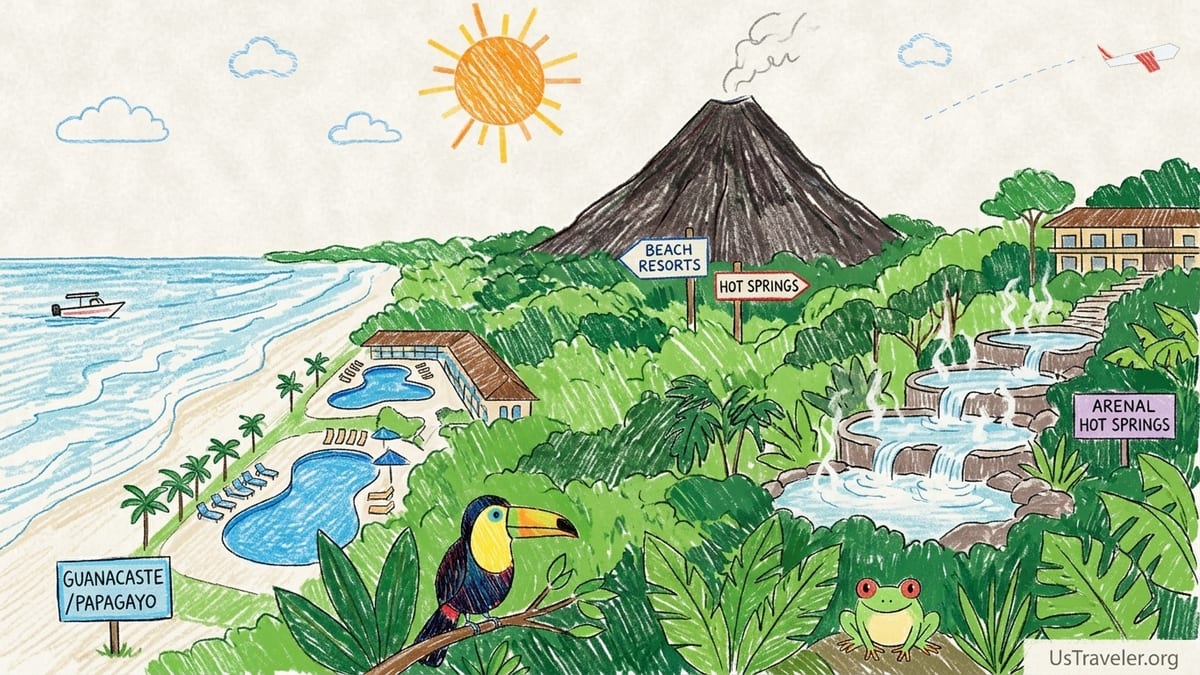
Costa Rica’s resort scene has matured into a serious destination-resort market, with Guanacaste, Papagayo, Arenal, Manuel Antonio, Nicoya and the Osa Peninsula all offering polished properties that go far beyond the eco-lodge stereotype. For 2026, the country’s best resorts combine direct beach access or natural hot springs with spa programs, family-friendly pools, strong restaurant lineups and streamlined transfers from Liberia or San José. This booking-focused guide compares the standout options in each region so you can match the right resort to the experience you want, from ultra-luxury Papagayo enclaves to hot-spring hideaways and wilderness lodges at the end of the road.
How Costa Rica’s Resort Landscape Works in 2026
Costa Rica’s top resort zones now function much like those in Mexico or the Caribbean, but on a smaller and more nature-driven scale. Guanacaste and the Papagayo Peninsula concentrate full-service beach resorts with multiple pools, kids’ clubs and quick access from Liberia airport. Inland Arenal has evolved into a cluster of hot-spring resorts with spa-level wellness programs and curated excursions. Manuel Antonio, Nicoya and Osa round out the picture with higher-end properties that trade nightlife and shopping for wildlife, wellness and seclusion.
From a practical booking standpoint, most visitors still fly into Liberia for Guanacaste and Papagayo or into San José for Arenal, Manuel Antonio and the south. Transfer times shape how many resort nights you can realistically enjoy. A taxi or private transfer from Liberia to Papagayo can take about 40 to 60 minutes depending on the property, while San José to Arenal or Manuel Antonio usually runs 3 to 3.5 hours by road. Short domestic flights and helicopters exist, but most travelers still rely on ground transfers baked into resort or tour packages.
Rates vary dramatically by season and brand. In dry season from December through March, a standard room at a high-end Guanacaste or Papagayo resort can easily rise into the mid to high hundreds of dollars per night, with top suites into four figures. By contrast, green-season promotions between May and November can bring rates down noticeably. Families should factor in half-board or all-inclusive pricing, resort fees and airport transfers when comparing what appears to be similar nightly rates across regions.
While eco-lodges still define many rural areas, the regions covered here skew toward fully featured destination resorts. Most of the properties highlighted below offer at least one signature restaurant, a spa, multiple pools and curated excursions bookable through on-site concierges. The key question is less whether you will find resort-level comfort, and more whether you want a beach-first, hot-springs-first or wilderness-first experience.
Guanacaste Beach Resorts: Classic Sand-and-Sun Stays
Guanacaste’s Pacific coastline is the most straightforward choice for travelers who simply want a beach vacation with easy logistics. Many resorts sit within a 60 to 90 minute drive of Liberia airport, and most offer direct beachfront settings with large pool complexes and family facilities. This region is ideal if you picture lazy days moving between loungers, swim-up bars and water sports with kids’ clubs in the background.
Large all-inclusive properties such as the Westin Reserva Conchal and the W Costa Rica in the Playa Conchal area illustrate the Guanacaste model. They front long, walkable beaches where you can slip directly from breakfast to the sand, and often bundle non-motorized water sports, kids’ programming and buffet or a la carte dining into the nightly rate. Guests typically spend most of their time on site, punctuated by a few day trips such as sailing cruises or zip-line parks arranged through the tour desks.
Compared with Papagayo, Guanacaste’s broader coast tends to feel more open and less gated. Towns like Tamarindo and Playas del Coco have their own mid-range beachfront hotels and condos, where smaller pools and simpler spas are offset by the ability to walk to independent restaurants and surf schools. Airport transfers here are straightforward, often involving a private shuttle or shared van that can be arranged ahead of time. For planning purposes, travelers should expect around one hour from Liberia to Playa Hermosa or Coco, and up to two hours to reach properties farther south toward Nosara or Samara.
Families weighing Guanacaste against Papagayo often find this region more flexible. Direct beach access is nearly universal, and resort layouts are usually flatter and easier to navigate with strollers. However, service levels and room finishes can range from functional to luxurious, so careful reading of recent reviews and room descriptions still matters when deciding where to invest for a weeklong stay.
Papagayo Peninsula: High-End Beach and Bay Resorts
The Papagayo Peninsula in northern Guanacaste has solidified its role as Costa Rica’s flagship resort playground, defined by branded luxury properties, calm bays and a master-planned setting. Unlike the more open beach towns to the south, Papagayo feels contained and intentionally designed, with guests shuttled between beach clubs, marinas, golf courses and restaurants inside a gated environment.
At the top of the market, Four Seasons Resort Peninsula Papagayo continues to attract travelers seeking an all-ages luxury beach resort with extensive facilities. It is recognized as a Forbes Five-Star property and occupies a dramatic point with beaches on two sides, giving guests convenient direct access to sand without lengthy internal transfers. The resort’s pool complexes, kids’ club, spa and 18-hole Arnold Palmer golf course support stays where guests rarely feel the need to leave the peninsula, and transfer times of about 40 minutes from Liberia keep arrival logistics simple.
Nearby, Andaz Costa Rica Resort at Peninsula Papagayo offers a stylish alternative, with hilltop villas looking down on Culebra Bay and access to several small beaches by stairs or boat. The property leans into design, artful public spaces and a sequence of pools, including designated family and adults-only areas. A complimentary boat connects the main resort to a private beach club, giving guests a more traditional stretch of sand even though the core property itself sits above the shoreline. The resort’s restaurants, kids’ club, spa and complimentary non-motorized water sports create a full resort ecosystem that appeals to couples and families alike.
Recent openings and upgrades, including new ultra-luxury brands and renovated facilities across the peninsula, underscore how Papagayo now resembles a high-end Caribbean or Mexican destination resort corridor. Travelers can book a week in Papagayo with the expectation of multiple dining venues, spa treatments, guided wildlife walks, snorkeling and sailing, all coordinated through on-site concierges. The trade-off is that local town life is limited, and prices for food, drink and excursions reflect the curated, resort-centric environment.
Arenal Hot-Spring Resorts: Soaking, Spas and Volcano Views
Inland Arenal has become Costa Rica’s flagship hot-spring resort region, centered on the town of La Fortuna and the looming cone of Arenal Volcano. The focus here is less on beaches and more on geothermal pools, spa therapies and rainforest excursions. Travelers usually fly into San José and take a 3 to 3.5 hour road transfer to reach the area, or combine Arenal with Guanacaste or Papagayo as part of a multi-stop itinerary.
Signature properties such as Tabacón Thermal Resort & Spa show why Arenal is now a destination in its own right. Tabacón’s landscaped hot-spring river winds through tropical gardens, with multiple pools at different temperatures and a full-service spa onsite. Guests split their days between soaking sessions, massages and outings such as hanging bridge walks or waterfall hikes, all bookable through the resort’s activity desks. The focus is wellness rather than nightlife, and most visitors retire early after long days in the water or on the trails.
Other high-end Arenal options like the Nayara collection and The Springs Resort & Spa build on similar themes, pairing rooms and villas with volcano views, private plunge pools or direct hot-spring access. Many properties operate their own on-site restaurants serving Costa Rican and international cuisine, so guests rarely need to leave the grounds for dinner. Pools here are usually terraced and intimate rather than expansive, reflecting the emphasis on privacy and relaxation.
Because Arenal lacks a beach, most visitors thinking in terms of resort vacations combine three or four nights here with a similar stay on the Pacific coast. When comparing properties, travelers should examine not only room categories and spa menus but also the specific configuration of hot-spring pools. Some resorts offer quiet, adults-focused soaking areas, while others clearly cater to families with shallow pools and slides. Transfers between Arenal and either Liberia or San José typically run several hours by road, so private drivers or shared shuttles should be reserved in advance, especially in high season.
Manuel Antonio Nature Resorts: Wildlife Meets Comfort
Manuel Antonio has long been known for its national park and wildlife sightings, but the resort offering has steadily become more sophisticated. The area’s higher-end properties now combine beach or near-beach locations with strong restaurant programs, infinity pools and well-developed excursion desks, all wrapped in dense rainforest and steep hillsides. The region is typically accessed from San José by a 2.5 to 3.5 hour road transfer, or by a short domestic flight followed by a local transfer.
One of the clearest examples of a modern Manuel Antonio resort is Arenas del Mar, which positions itself as a beachfront and rainforest property. It offers direct access to a small beach, an infinity pool with broad ocean views and a second pool near the sand. Guests often see monkeys and sloths on the grounds, while still enjoying polished service, contemporary rooms and a spa. The resort’s restaurant options, including ocean-view dining, allow guests to stay on property for most meals if they choose, or to head into the nearby town for more casual options.
Another standout is Tulemar Resort, a collection of villas and bungalows spread across a private hillside reserve with its own small beach. The property has multiple pools and on-property shuttle services, plus concierge teams who arrange everything from private chefs to national park tours. Guests frequently report spotting wildlife like monkeys and toucans directly from their terraces, underscoring how Manuel Antonio blends resort comforts with easy access to nature. While Tulemar’s beach is not as expansive as some Guanacaste stretches, its sheltered setting and limited outside access keep it feeling exclusive.
Compared with Guanacaste and Papagayo, Manuel Antonio’s resorts often sit higher above the water, and direct beach access may require shuttles or steep paths. Pools and spas typically compensate, offering panoramic views and full treatment menus. Families value the combination of wildlife, pools and relatively short excursions, but should be prepared for steps, slopes and internal transfers within the properties themselves. Booking here makes the most sense for travelers who want a nature-first setting without sacrificing comfort or strong restaurant experiences.
Nicoya Peninsula Luxury Retreats: Wellness and Seclusion
The Nicoya Peninsula, particularly around Nosara, Santa Teresa and Mal País, has evolved from a surf-and-yoga haven into a cluster of discreet luxury retreats. These properties skew more intimate and wellness-oriented than the larger Guanacaste or Papagayo resorts, with fewer rooms, personalized service and a heavier emphasis on spa programs, yoga and local, seasonal cuisine.
Rather than high-rise hotels, Nicoya’s top-end stays are often low-profile villas and small resorts integrated into hillsides or beachfront lots. Guests may have access to saltwater infinity pools, on-site yoga shalas and small but carefully curated spas. Direct beach access varies: some properties sit right on the sand, while others are set back slightly for privacy, with a short walk or golf-cart ride to surf breaks and tide pools. Because Nicoya is more spread out geographically, guests often rely on 4x4 rentals or arranged transfers to move between beaches, restaurants and hiking trails.
From a logistics perspective, reaching Nicoya usually takes longer than reaching Guanacaste’s main resort strip. Travelers often connect via Liberia or San José, then continue by domestic flight, ferry or a 4 to 5 hour drive, depending on the exact location. This extra effort helps keep the region quieter and less built up, which is part of its appeal. Stays here make the most sense for travelers who prioritize privacy, wellness and surf culture over large kids’ clubs or extensive pool complexes.
Price points can rival or exceed those of branded Guanacaste resorts despite the smaller scale, reflecting the bespoke nature of these retreats. In return, guests typically receive multi-course tasting menus, guided wellness programs and highly personalized excursion planning, from horseback rides on empty beaches to private boat trips for snorkeling or fishing. Nicoya’s luxury retreats are strong choices for honeymooners, wellness-seekers and returning visitors who value a low-key environment with upscale touches.
Osa Peninsula Wilderness Properties: Remote Luxury and Adventure
The Osa Peninsula in southern Costa Rica remains one of the country’s wildest corners, defined by dense rainforest, remote beaches and the biodiversity of Corcovado National Park. In the past, accommodation here was largely limited to basic eco-lodges. In recent years, however, a number of higher-end wilderness properties have emerged, blending comfortable rooms and attentive service with serious wildlife and adventure access.
Osa’s upscale lodges and small resorts tend to offer partially or fully inclusive pricing, bundling meals, guided hikes, boat tours and sometimes domestic flights into package rates. Pools are generally compact and often designed to blend into the surrounding forest rather than dominate the property. Spas, where available, focus on simple, nature-inspired treatments rather than elaborate facilities. Direct beach access varies widely: some properties are tucked into jungle hillsides with ocean views, while others sit just steps from secluded beaches where you may share the sand with only a handful of other guests.
Reaching Osa usually requires a domestic flight from San José to a regional airstrip such as Puerto Jiménez or Drake Bay, followed by a boat or 4x4 transfer to the lodge. This can turn a single travel day into a sequence of legs, so travelers should allow extra time at both ends of their stay. Once on site, guests typically follow lodge-set schedules, joining morning hikes, kayak trips or dolphin-spotting outings. Evenings center on communal dinners and early nights, as most activities begin at dawn to take advantage of wildlife activity and cooler temperatures.
These wilderness properties do not match Papagayo or Guanacaste in terms of restaurant variety, spa menus or pool complexes. Instead, they deliver immersive nature experiences with a level of comfort that would have been rare in the region a decade ago, including proper beds, hot showers, good food and attentive guiding. Travelers considering Osa should be comfortable with remoteness, variable weather and limited connectivity, and should see the resort as a gateway to the surrounding ecosystems rather than a self-contained entertainment hub.
Comparing Experiences, Facilities and Transfer Times
When choosing between Costa Rica’s main resort regions, the comparison often comes down to which experiences you want within walking distance, and how much travel time you are willing to invest on arrival. Guanacaste and Papagayo stand out for sheer ease: fly into Liberia, clear formalities and be at a resort pool or beach in roughly 40 to 90 minutes, depending on the property. Families with young children or travelers on shorter trips often favor these regions specifically because they maximize time on site.
In terms of facilities, Papagayo and top Arenal hot-spring resorts offer the most polished spa and pool environments per guest, while Guanacaste’s larger all-inclusives provide extensive, if sometimes less personalized, options. Papagayo shines for bay-front beaches, curated beach clubs and calm waters suitable for paddleboarding and kayaking. Guanacaste’s broader coast offers longer open-ocean beaches, with more independent surf schools and casual dining. Arenal cannot compete on sand, but its cascading hot-spring pools and full-service spas are unmatched elsewhere in the country, making it the best choice for travelers who rank soaking and wellness above beach time.
Manuel Antonio, Nicoya and Osa deliver greater immersion in nature, at the cost of more complex logistics and sometimes limited direct beach access. Manuel Antonio balances wildlife and comfort, with resorts like Arenas del Mar and Tulemar giving guests pools, spas and restaurant quality comparable to coastal destinations, plus easy access to national park trails and guided wildlife spotting. Nicoya is stronger for wellness retreats and surf culture, while Osa is the clear choice for wilderness experiences and remote beaches where you may take guided hikes rather than casual shoreline strolls.
Across all regions, family facilities vary significantly. Many Guanacaste and Papagayo resorts feature kids’ clubs, shallow pools and connecting room layouts. Arenal and Manuel Antonio properties increasingly offer family-friendly villas and suites, but may lack large-scale kids’ clubs. Nicoya retreats and Osa wilderness lodges lean toward older children and adults who can participate in longer hikes or water-based excursions. Before booking, families should confirm the minimum ages for specific tours, the presence of lifeguards at pools and beaches, and whether children’s menus or early dining options are available on site.
Ultimately, Costa Rica in 2026 offers a spectrum of resort experiences aligned with global destination-resort standards. Travelers can still find rustic eco-lodges if they wish, but they can just as easily book into branded beach resorts, refined hot-spring spas or discreet wellness retreats. The key is to be honest about the balance of relaxation, adventure and wildlife you want, then choose the region and resort type that match those priorities and your preferred transfer times.
The Takeaway
Costa Rica’s evolution into a fully fledged destination-resort market means travelers now face the welcome challenge of choosing among several strong regions, each with its own flavor. Guanacaste offers classic beach-resort convenience, Papagayo condenses high-end options into a compact peninsula with bay-front beaches, and Arenal delivers dedicated hot-spring and spa experiences in the shadow of a volcano. Manuel Antonio, Nicoya and Osa complement these with nature-driven stays that layer wildlife, wellness and wilderness onto comfortable, often luxurious, bases.
For a first or shorter trip centered on relaxation, pairing a Papagayo or Guanacaste beach resort with a few nights at an Arenal hot-spring property provides an easy introduction to both sides of Costa Rica’s resort scene. Repeat visitors and travelers with more time can add Manuel Antonio or Nicoya for wildlife and wellness, or venture to Osa for a taste of remote wilderness without abandoning resort-level comfort. Whatever combination you choose, understanding how each region handles direct beach access, pools, spas, restaurants, family facilities and transfers will help you book a stay that feels tailored rather than generic.
FAQ
Q1. Which Costa Rica region is best if I want a classic beach resort with minimal travel time from the airport?
Liberia-based Guanacaste and the Papagayo Peninsula are best for quick access, with many resorts reachable in roughly 40 to 90 minutes by road from the airport.
Q2. How many nights should I plan in Arenal if I want to enjoy the hot springs without feeling rushed?
Most travelers find that three nights in Arenal gives enough time for multiple hot-spring sessions, a spa treatment and one or two excursions such as hanging bridges or waterfall hikes.
Q3. Are Papagayo resorts suitable for families with young children?
Yes, many Papagayo resorts offer kids’ clubs, shallow pools and family rooms, along with calm bay waters that are friendlier for younger swimmers than open-ocean beaches.
Q4. If I book a Manuel Antonio resort, will I have direct access to a swimmable beach?
Some, like beachfront properties with on-site paths to the sand, do offer direct access, while others sit on hillsides and rely on shuttles or short walks to reach nearby beaches.
Q5. How difficult is it to combine a beach resort in Guanacaste or Papagayo with a stay in Arenal on the same trip?
It is common to combine them. Transfers by road often take 3 to 4 hours, so many travelers split a week into three or four nights in each region, using private drivers or shared shuttles.
Q6. Are Nicoya Peninsula luxury retreats truly beachfront, or are they more inland wellness properties?
The Nicoya Peninsula offers a mix. Some upscale retreats sit directly on the sand near surf breaks, while others are tucked slightly inland on hillsides with ocean views and short walks or rides to the beach.
Q7. What should I expect from spas at Costa Rica’s top resorts?
Spas at leading properties typically offer full menus of massages, facials and body treatments, with Arenal and Papagayo in particular focusing on hydrotherapy, hot-spring circuits or ocean-view treatment rooms.
Q8. Is the Osa Peninsula too remote for a first-time visitor who still wants resort-style comfort?
Osa is remote but not inaccessible. Higher-end wilderness lodges provide comfortable rooms, good meals and guided activities, though transfers involve flights and boat or 4x4 legs and amenities are simpler than in Papagayo.
Q9. Do Costa Rica’s major resorts offer all-inclusive pricing, or should I budget separately for meals and excursions?
Both models exist. Some Guanacaste and a few other resorts offer all-inclusive or half-board plans, while many Papagayo, Arenal and Manuel Antonio properties price rooms separately and charge per meal and excursion.
Q10. When is the best time of year to visit Costa Rica’s beach and hot-spring resorts?
Dry season from roughly December to April provides the most reliable sunshine, especially on the Pacific coast, while the green season from May to November brings lower rates, lusher landscapes and periodic afternoon showers.