


Costa Rica might be compact on the map, but road tripping between Arenal, Monteverde, Manuel Antonio, Guanacaste, Nicoya and the Osa region feels like crossing several countries in one. Paved highways give way to steep gravel climbs, rivers swell in rainy season and a wrong vehicle choice can turn a beach escape into a stressful slog. With good planning, however, a Costa Rica road trip is one of the most rewarding ways to see the country, letting you stop at roadside sodas for casados, pull over for howler monkeys and reach lodges far beyond the shuttle routes.
How Self‑Drive Travel in Costa Rica Really Works
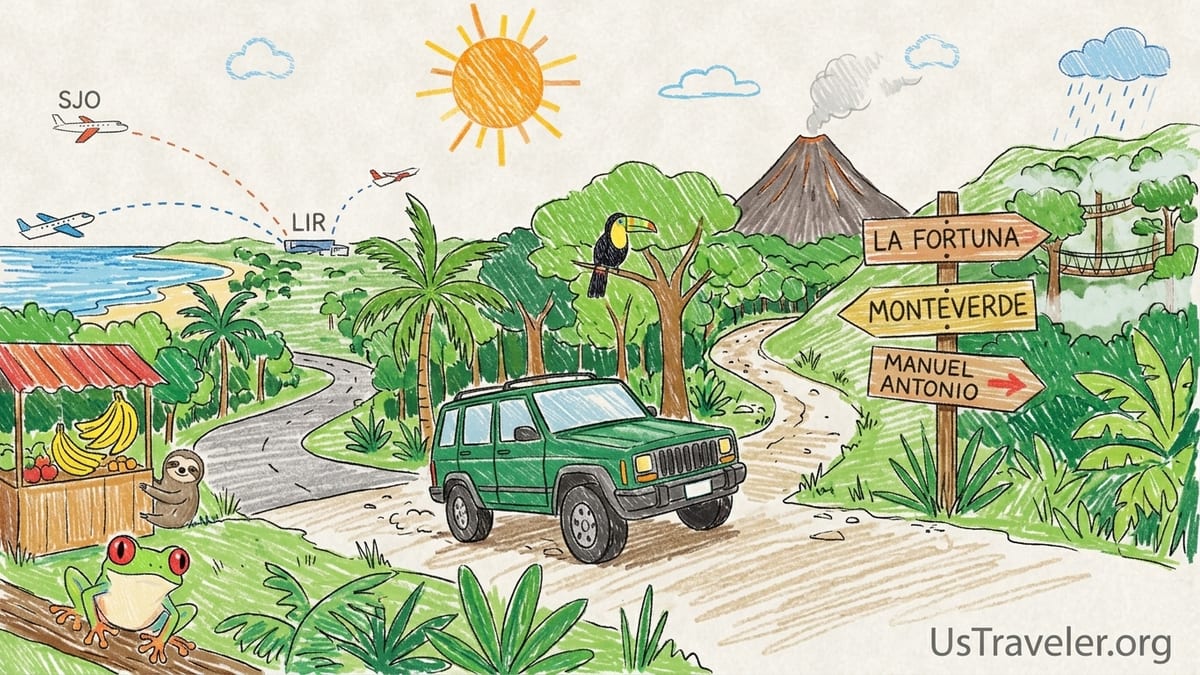
Most visitors begin their Costa Rica road trip at one of two airports: San José (SJO) in the Central Valley or Liberia (LIR) in Guanacaste. From SJO, classic inland routes link Arenal/La Fortuna, Monteverde and the Central Pacific coastline at Manuel Antonio. From LIR, travelers fan out to the beaches of Gulf of Papagayo, Playa Flamingo, Tamarindo and then on toward the Nicoya Peninsula. A third popular driving region runs south from the Central Pacific through Dominical and Uvita toward the Osa Peninsula.
Compared with much of Central America, Costa Rica’s main tourist arteries are relatively well paved. The Interamericana (Route 1) links San José with Liberia, while Route 27 connects the capital with the Pacific coast and Route 32 crosses to the Caribbean. The challenge is less about basic road quality and more about steep grades, narrow bridges, aggressive passing and frequent construction. Travel times are longer than they look on a map, and a four hour estimate on a navigation app often becomes five or six once you add in traffic and rain.
Navigation is straightforward if you download offline maps and use a real‑time app such as Waze, which many local drivers prefer for its traffic alerts and speed bump warnings. Cellular coverage is good on major roads but patchy in pockets of Nicoya and Osa, so plan your route in advance and avoid setting out late in the day, especially in the rainy season when downpours can reduce visibility and wash out smaller roads.
Driving at night is generally not recommended outside urban areas due to unlit roads, pedestrians and cyclists without reflective gear, and sudden fog in mountain zones. If your flight lands in San José at 3 p.m., for example, it is usually wiser to spend the first night near the airport rather than trying to reach La Fortuna after dark.
Choosing the Right Vehicle: 2WD, High‑Clearance SUV or 4x4
For many first‑time visitors, the key question is whether a normal sedan is enough or if a high‑clearance SUV or full 4x4 is necessary. The answer depends less on prestige and more on your exact route, season and hotel access roads. Prices vary by company and time of year, but as a broad guideline, a compact 2WD sedan often starts around 35 to 45 US dollars per day in the low season before mandatory insurance, while compact SUVs such as a Toyota Rush or Hyundai Creta typically start closer to 55 to 70 dollars per day. True 4x4 models such as a Toyota Hilux or Mitsubishi Montero can be higher again, often from 80 to 100 dollars per day or more.
On the SJO to La Fortuna to Monteverde to Manuel Antonio loop in the dry season, a high‑clearance 2WD SUV is usually the sweet spot. The main roads between San José, La Fortuna and Quepos are paved, but hotel driveways and side roads can be steep, rutted and prone to potholes. An SUV’s extra clearance and more robust suspension make these approaches more comfortable and help prevent underbody damage that could lead to disputes at the rental counter.
If your plans extend deeper into Nicoya (for example to Santa Teresa or remote beaches north of Nosara) or onto less traveled tracks in the Osa region, a true 4x4 becomes more valuable, particularly from May to November when heavy rains can leave deep mud, washboards and ruts. In those months, a vehicle with low‑range 4x4 can make the difference between confidently climbing a muddy hill to your eco‑lodge and having to abandon the attempt a few hundred meters short.
Whatever you rent, take time at pickup to walk around the vehicle with an agent, photograph existing damage and confirm the presence of a spare tire, jack and warning triangle. In Costa Rica, basic liability insurance is mandatory, and many travelers add full coverage or rely on a credit card’s collision waiver. Read the policy carefully, as water damage and undercarriage damage are commonly excluded, which is another argument for choosing a sturdier vehicle if you expect rough access roads.
Classic Central Route: San José – La Fortuna – Monteverde – Manuel Antonio
One of the most realistic and popular self‑drive itineraries links the Arenal volcano region with the cloud forests of Monteverde and the beaches and wildlife of Manuel Antonio. A typical trip might run 10 to 14 days, starting and finishing at San José. On day one, many travelers overnight near the airport in Alajuela, then collect their rental car early on day two to drive to La Fortuna, a journey that usually takes around three and a half to four and a half hours depending on traffic leaving the Central Valley and road works along Route 702.
La Fortuna works well as a three or four night base. The main access roads to town are paved, and most popular hot spring resorts and hotels lie directly on asphalt or on short, manageable gravel spurs. A high‑clearance SUV makes potholes and speed bumps less jarring, but a standard sedan is usually adequate in the dry season if you choose centrally located accommodation. From La Fortuna, you can easily reach hanging bridges, zip‑line parks and boat tours on Lake Arenal, all on paved or well‑graded roads.
The drive from La Fortuna to Monteverde typically takes three to four hours along roads that wrap around Lake Arenal before climbing into the Tilarán range. Until a few years ago, long stretches near Tilarán and up toward Santa Elena were unpaved, but key sections have been asphalted, improving comfort and reducing dust. Even so, there are still patches of gravel, narrow bridges and steep grades, so a high‑clearance SUV is strongly recommended. During heavy rain, in particular between September and November, the final kilometer or two to certain lodges near Monteverde Reserve can become rutted, and guests occasionally report being grateful for the extra traction and clearance.
From Monteverde to Manuel Antonio, expect a driving day of around five to six hours, descending steeply to the Pacific lowlands and then following Route 34 (the Costanera Sur) down the coast. The main highway is paved and relatively straightforward, but access roads to rental houses and smaller hotels outside Quepos can involve steep concrete ramps or rough gravel. In dry season, a 2WD SUV is usually fine here; in the heart of the rains, particularly in October, having 4x4 for an uphill start on wet concrete or loose stone can be reassuring. Once in Manuel Antonio, most visitors park and use local taxis or buses to reach the national park and beaches, which reduces daily driving stress.
North Pacific Route: Liberia – Guanacaste Beaches – Nicoya Peninsula
For travelers flying into Liberia, a natural loop focuses on Guanacaste’s drier Pacific coast and the Nicoya Peninsula. On arrival, many people drive directly to beach towns such as Playas del Coco or Tamarindo, both reachable in about one and a half to two and a half hours on paved highways. These resort hubs offer a range of accommodation, from large branded hotels to small eco‑lodges, most with straightforward access that does not demand 4x4 in normal conditions.
From Tamarindo or Flamingo, you can continue down the coast toward Nosara, Samara and eventually the southern Nicoya Peninsula near Santa Teresa and Montezuma. The roads linking major hubs have gradually improved, with more stretches of pavement each year, but potholes, partial gravel sections and short steep hills remain common. In the dry months from December through April, a high‑clearance 2WD SUV is usually sufficient to reach Nosara or Samara, though expect dust and corrugations on some sections. South of Samara toward Santa Teresa, particularly if you use smaller coastal connectors, heavy rain can turn unpaved segments into muddy tracks where 4x4 significantly reduces the risk of getting bogged.
Another version of this route uses the Gulf of Nicoya ferries to shorten driving times and add a maritime break to your trip. The main vehicle ferries operate between Puntarenas and Paquera and between Puntarenas and Playa Naranjo. For example, a traveler driving from San José to Santa Teresa might head to Puntarenas, board the Paquera ferry with their SUV, then continue on paved and partially paved roads across the peninsula. Schedules change seasonally and can be affected by maintenance or weather, so it is wise to check times and arrive early, especially on holiday weekends.
On the Nicoya Peninsula, accommodation is scattered along beaches and hillsides. A small hotel on the main road in Nosara will present very different access challenges than a clifftop villa reached via a two kilometer dirt track. Before booking, ask property owners specifically about road conditions in the rainy season and any low river crossings or steep driveways. Many long‑time hosts will tell you frankly if they consider 4x4 essential between May and November or if a regular SUV is enough for most guests.
South Pacific & Osa Route: Dominical, Uvita and Beyond
Costa Rica’s South Pacific coast is one of the most rewarding areas for a self‑drive adventure, blending rainforest‑covered hills with whale‑rich bays and, further south, the wild Osa Peninsula. Most travelers reach this region by driving from San José via Route 27 and then Route 34 toward Dominical and Uvita. With minimal stops, the drive from the capital to Uvita usually takes around five to six hours; traffic jams exiting the Central Valley and slow trucks along the coastal highway can easily add another hour.
The main highway through Dominical and Uvita is paved and in good condition, but many of the most appealing lodges and rental homes perch on steep ridges above the coast. Access roads often start as asphalt before turning into concrete strips and then gravel. In the dry season, confident drivers sometimes manage these approaches in a high‑clearance 2WD SUV, but in the rainy months from May onward, a true 4x4 is strongly recommended. Travelers frequently report situations where they could reach their hillside villa in a sedan on a sunny afternoon but struggled or failed after a night of heavy rain turned the final climb into slick clay.
Continuing south toward the Osa Peninsula, the road to Puerto Jiménez is paved, and standard vehicles regularly make the journey. The complexity begins if you plan to explore Corcovado National Park access points or remote beaches such as Carate and Matapalo. Several tracks in this area include river crossings and long stretches of unpaved road that change dramatically with rainfall. In high water, even experienced local drivers on full 4x4 sometimes wait for levels to drop before attempting a crossing. For independent travelers, the safest approach is to choose accommodations that are clearly reachable by road year‑round and to heed local advice about when to park and walk instead of pushing deeper by car.
Many visitors split their time between an easier base such as Uvita or Ojochal and a shorter, guided foray into the wilder corners of Osa, using boat transfers or organized tours rather than driving everywhere themselves. This hybrid approach keeps the self‑drive portion enjoyable and reduces the risk of damage to your rental vehicle on the roughest roads.
Seasonal Road Conditions, Driving Times and Hotel Access Roads
Costa Rica has two broad seasons that directly affect road trips. The dry season, typically from December to April, brings sun, dust and better road reliability. The rainy season, from roughly May through November, peaks in September and October with intense afternoon downpours, temporary flooding and occasional landslides in mountain areas. On the SJO to La Fortuna to Monteverde to Manuel Antonio loop, dry‑season travelers usually find that main roads remain passable every day, while wet‑season drivers must be more flexible with timing and expectations.
Typical driving times are longer than the distances might suggest. As a practical planning guide, allow three and a half to five hours from San José to La Fortuna, three to four hours from La Fortuna to Monteverde, and five to seven hours from Monteverde to Manuel Antonio, depending on traffic, rain and stops. From Liberia to Tamarindo, plan for around one and a half to two and a half hours, while Liberia to Nosara can easily stretch to four or five hours if you encounter construction or rough sections. From San José to Uvita, most self‑drivers report five to six hours of actual wheel time.
Hotel access is where many travelers underestimate conditions. A central hotel in La Fortuna or Quepos might sit directly on a paved road and include parking in a flat lot. By contrast, a boutique lodge near Monteverde Cloud Forest Reserve may require driving a final kilometer along a steep gravel lane peppered with washouts. In the Osa region, access to jungle lodges often includes rutted tracks or seasonal stream crossings. When comparing properties, pay close attention to recent guest reviews that mention “steep driveway” or “rough road in,” and do not hesitate to message the property to ask what type of vehicle they recommend for the time of year you will visit.
If you arrive in the rainy season and your host or a local guide suggests leaving your car in town and taking a 4x4 taxi or transfer for the last stretch, consider following that advice even if your rental vehicle technically has four‑wheel drive. Locals know which sections flood, where clay becomes dangerously slick and which bridges are under repair after heavy storms, and taking a taxi for a tricky final segment is often cheaper than paying for towing or repairs.
Rental Car Practicalities and Safety Tips
Once you decide on a route and vehicle type, there are several practical steps that make a Costa Rica road trip smoother. Booking directly with a reputable local or international rental company before arrival usually secures better availability, especially in peak months such as late December and March. When comparing prices, check what is included: Costa Rica’s mandatory liability insurance raises the total cost significantly compared with the base daily rate shown in some comparison tools, and items such as additional drivers, child seats and electronic toll tags may add to the bill.
At pickup, inspect the car thoroughly, note any scratches or dents on the document and take photos. Confirm how to engage 4x4 if your vehicle has it, and ask the agent about fuel type, as diesel pumps are common and confusing a gasoline engine with diesel is an expensive mistake. Many visitors opt for automatic transmissions, which reduce stress on steep, winding roads if you are not accustomed to driving manual.
On the road, fill up when your tank drops to half rather than waiting for the fuel light, especially in Nicoya and the South Pacific where gas stations can be widely spaced. Respect speed limits even if some local drivers do not; police speed checks are common on major routes, and fines are substantial. Seat belts are mandatory, and using a phone while driving is prohibited. When parking at beaches and trailheads, do not leave valuables visible in the vehicle. Simple measures such as choosing attended parking lots in towns like La Fortuna, Tamarindo or Quepos and taking electronics with you reduce the likelihood of opportunistic theft.
Finally, plan for slower days in your itinerary. On a two week trip, consider limiting yourself to three or four bases rather than changing hotels every night. For example, three nights in La Fortuna, three in Monteverde, four in Manuel Antonio and three in Uvita or Guanacaste beaches allows you to enjoy each region without spending every other day in the car. Building in this margin not only makes the trip more relaxing but also gives you room to adjust if heavy rain or road works delay one leg of the journey.
The Takeaway
Costa Rica is ideally suited to regional road trips rather than a single coast to coast marathon. By focusing on combinations such as San José to La Fortuna to Monteverde to Manuel Antonio, Liberia to Guanacaste beaches and the Nicoya Peninsula, or San José to the South Pacific and toward the Osa region, you can experience volcanoes, cloud forest and beaches without overextending your driving days.
Choosing the right vehicle is central to a smooth journey. On main paved routes in the dry season, a high‑clearance 2WD SUV is enough for most travelers, but hotel access roads in parts of Monteverde, Nicoya and Osa, and the heavier rains from May to November, make a full 4x4 a wise investment. Respecting conservative driving times, planning around daylight hours and confirming access conditions with your accommodation turn what could be a stressful logistical puzzle into one of the great pleasures of travel in Costa Rica.
With realistic expectations and flexible plans, a Costa Rica road trip offers the freedom to stop at a roadside fruit stand, detour to a hidden waterfall or linger longer in a town that unexpectedly captures your imagination. A bit of extra planning before you pick up the keys will repay you many times over once you are following the curves of the Pacific coast or watching Arenal’s silhouette appear through morning mist.
FAQ
Q1. Do I really need a 4x4 for a Costa Rica road trip including Arenal, Monteverde and Manuel Antonio?
For most travelers in the dry season, a high‑clearance 2WD SUV is usually enough on this loop, but a 4x4 is helpful if your hotel has a steep gravel access road or if you are traveling in the peak rainy months of September and October.
Q2. Is it safe to drive in Costa Rica at night between destinations?
It is safer to avoid long night drives, especially on rural or mountain roads. Poor lighting, sharp curves, fog and pedestrians or cyclists without reflective gear all increase risks after dark, so try to time intercity drives for daylight hours.
Q3. How accurate are navigation app driving times in Costa Rica?
Navigation apps often underestimate travel times. A good rule is to add at least 25 to 50 percent to whatever time the app suggests, especially for routes with mountain sections, road works or heavy rain.
Q4. Can I take my rental car on the ferry to the Nicoya Peninsula?
Yes, most standard rental contracts allow vehicles on the ferries between Puntarenas and Paquera or Playa Naranjo, but you should still confirm this with your rental company and arrive early for busy sailings, especially on holiday weekends.
Q5. Is a sedan enough for visiting Guanacaste beaches from Liberia?
For major resort areas like Playas del Coco, Tamarindo and Flamingo in the dry season, many visitors manage in a sedan, but a small SUV is more comfortable and better suited to potholes and occasional unpaved segments, particularly if you want to explore beyond the main towns.
Q6. What happens if a road to my hotel becomes impassable in the rainy season?
If heavy rain makes an access road unsafe, contact your hotel or host immediately. They may advise parking in town and arranging a 4x4 taxi transfer, changing your route, or, in rare cases, altering your booking dates for safety.
Q7. Are gas stations easy to find on routes to Nicoya and Osa?
Gas stations are common on main highways but more spread out on parts of the Nicoya Peninsula and the South Pacific. A practical habit is to refuel when your tank reaches half rather than waiting for the low‑fuel warning.
Q8. Do I need an international driving permit to rent a car in Costa Rica?
Most visitors from North America and Europe can rent and drive using their valid home country license for stays under 90 days, but check current regulations before your trip and ensure your license is not expired.
Q9. How many destinations should I include in a two week Costa Rica road trip?
For a 14 day trip, three or four bases is usually comfortable. For example, you might combine La Fortuna, Monteverde, Manuel Antonio and either Uvita or a Guanacaste beach town rather than trying to visit every region in one visit.
Q10. Is street parking safe in towns like La Fortuna, Tamarindo and Quepos?
Daytime street parking is common, but it is best to use attended lots where available, remove visible valuables and lock the car. In smaller towns, many hotels provide on‑site or gated parking, which is preferable overnight.