


Irazú Volcano is one of the easiest high-elevation adventures you can do from San José, and tour operators now offer a mix of half-day and full-day itineraries that bundle the crater with colonial Cartago, the Orosi Valley and the Lankester Botanical Garden. If you only have one day in Costa Rica’s Central Valley, choosing the right Irazú tour can mean the difference between a quick volcano check-off and a satisfying deep dive into landscapes, history and culture.
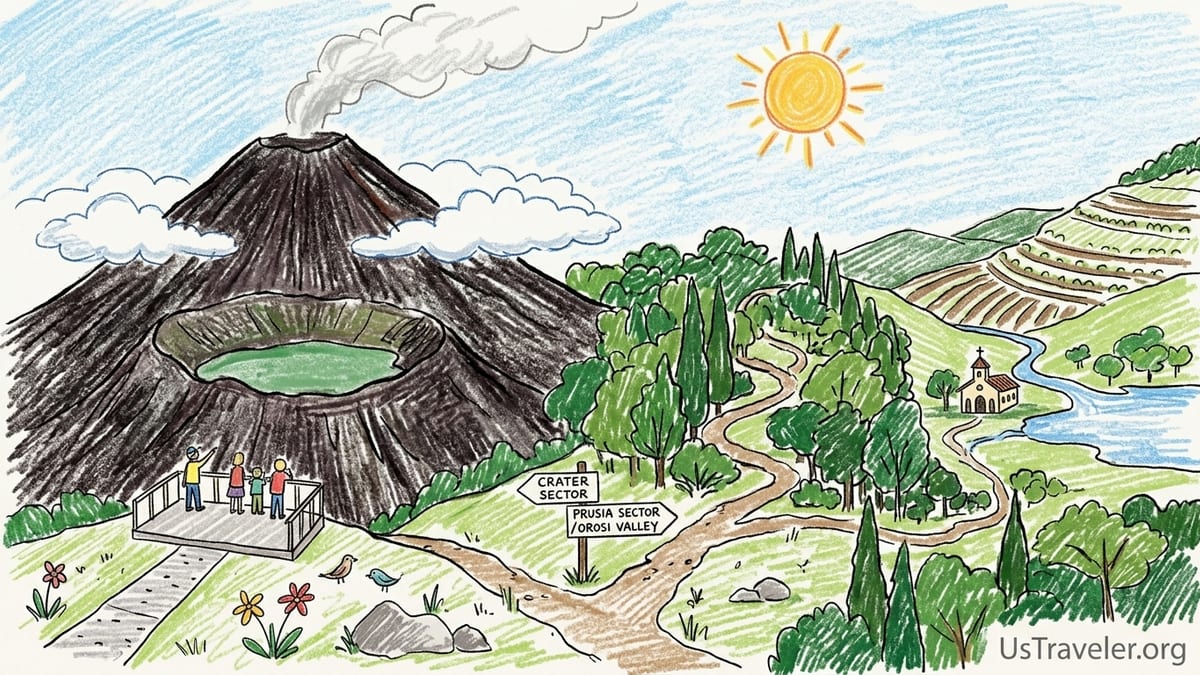
Understanding Irazú Volcano and Its Two Main Sectors
Irazú Volcano National Park sits above Cartago in Costa Rica’s Central Valley and reaches about 3,430 meters above sea level at the summit, making it the country’s highest active volcano. From San José, the drive to the main entrance typically takes around 1.5 to 2 hours, depending on traffic and hotel location. Most commercial tours focus on the crater lookout sector, but independent travelers sometimes also explore the Prusia sector on separate hiking outings.
The crater sector is what most visitors imagine when they book an Irazú tour. Paved access roads bring you close to the top and a short walk leads to viewpoints over the principal crater and secondary craters when conditions are clear. On a typical guided excursion from San José, you might spend 45 minutes to an hour at the crater area for photos, commentary and a short wander along the viewpoints before clouds move in.
The Prusia sector, often marketed separately as “Prusia Forest Reserve,” is a cooler, forested side of the park with a network of hiking trails rather than wide-open crater views. Here, you walk through cypress and native forest at slightly lower altitude, usually between about 2,400 and 2,700 meters. It is popular with locals from Cartago and San José who drive up for half-day hikes, but it is rarely included in standard bus tours because it adds extra driving and requires more time on foot.
For most travelers buying an organized day trip from San José, “Irazú Volcano tour” almost always means the crater sector only. If you also want a forest hike in Prusia, you will usually need a private driver or rental car and to plan a separate visit, or negotiate a custom tour that allows time at both sectors.
Morning Visibility, Altitude and Weather Considerations
Visibility is one of the most important practical factors in choosing an Irazú tour. Because of the volcano’s altitude, clouds often build up as the day warms. Many guides and travelers report the best chances of seeing the craters clearly earlier in the morning, typically before late morning or midday, especially in the rainy season months. A classic itinerary leaves San José around 6:30 to 7:00 a.m., reaches the summit after 8:30 a.m. and aims to finish the crater visit before midday cloud cover becomes more likely.
The high altitude also affects how you feel on arrival. At over 3,000 meters, the air is notably cooler and thinner than in San José. Temperatures can feel close to winter conditions for tropical standards, with cold wind and damp mist even when the capital is warm and sunny. On a full-day combination tour that continues to Cartago and Orosi Valley after the crater, you may appreciate layering: a warm jacket and hat for the summit, then lighter clothing as you descend to the milder climate around 1,000 to 1,400 meters in the valley.
Because of the altitude, most operators keep walking distances at the crater sector relatively short: enough to reach the viewpoints and explore the main lookout platforms. If you know you are sensitive to altitude, it is worth choosing a tour that does not linger too long at the summit and instead spends more time at lower stops such as the Lankester Botanical Garden or the colonial church in Orosi. Many full-day combinations balance an hour or so on the volcano with several hours at lower elevations to keep the experience comfortable.
Weather can vary significantly between seasons. In the dry season, roughly December through April, you may enjoy more frequent clear mornings but should still expect cold wind at the summit. During the green season, roughly May through November, the landscape on the slopes turns vividly green and the Orosi Valley looks lush, but afternoon showers are common, another reason why Irazú visits are typically scheduled first thing in the day.
Half-Day Irazú and Cartago Tours: What You Actually Get
Half-day Irazú excursions from San José usually run around 6 to 7 hours, including transit and hotel pickups. Typical itineraries leave early in the morning, drive straight to the crater sector, allow about an hour at the summit and then stop in Cartago city on the way back. In Cartago, many tours include a visit to the Basílica de Nuestra Señora de los Ángeles, the country’s most important pilgrimage site, and sometimes a brief look at central ruins or the main square before returning to San José for a late lunch or early afternoon.
In terms of pricing, recent listings show shared half-day Irazú plus Cartago tours starting in the approximate range of 80 to 120 US dollars per person from San José, depending on the size of the group, the operator and whether breakfast is included. Private versions can be higher. These products generally include transport, bilingual guide and park entrance; some also supply a simple breakfast stop on the way up, while lunch is often not included, as you typically return to San José by early afternoon.
For travelers on a tight schedule who mainly want to see the crater and get a quick sense of Cartago’s religious history, a half-day tour is usually sufficient. You wake early, enjoy the summit in the morning, photograph the green crater lake or cloud-filled caldera if visibility allows, and then walk through the basilica before being dropped back at your hotel. This format works well if you are combining it with an afternoon museum visit in San José or if you are trying to fit an Irazú visit into the day before an evening flight.
However, what you gain in efficiency you lose in depth. On a half-day excursion there is usually no time for extended valley viewpoints, hot springs or a relaxed walk through Orosi’s countryside. The route from Cartago back to San José often follows the main highway directly, skipping side roads into the valley. If you are the kind of traveler who values slower exploration and photography, or you are unlikely to return to the Central Valley, the extra hours offered in full-day combination tours can be worthwhile.
Full-Day Irazú, Orosi Valley and Lankester Garden: How the Combinations Work
Full-day Irazú packages that include Cartago, Orosi Valley and Lankester Botanical Garden typically run about 8 to 10 hours door to door. A common schedule has pickup around 6:30 a.m. at central San José hotels, a morning visit to the crater sector, and then a progressive descent through Cartago city, the Lankester Botanical Garden just outside Cartago and finally the Orosi Valley, often with a sit-down lunch at a restaurant overlooking the river or Cachi Lake.
Several tour operators currently publish similar formats. One example marketed through major resellers is a 10-hour “Irazú Volcano, Orosi Valley and Lankester Gardens” day trip that includes hotel pickup in San José, guided visit to the crater, short stop at Cartago’s basilica, guided walk in the Lankester Botanical Garden and time in Orosi before returning in the late afternoon. Another operator advertises an Irazú-Lankester-Orosi combination in the roughly 140 to 160 US dollar range per person, including lunch and park fees, highlighting the contrast between the stark volcanic summit and the lush orchid gardens and rolling valley below.
These longer tours justify the extra time by spreading out experiences across different altitudes and themes. After the stark, wind-swept crater, you step into the sheltered paths of Lankester, which is managed by the University of Costa Rica and known for extensive collections of orchids, bromeliads and ferns displayed in carefully planned areas. Later, you continue into the Orosi Valley, one of the most scenic regions in Cartago province, where the Reventazón River, coffee plantations and the Cachi Dam create sweeping viewpoints. Many tours include a visit to the Iglesia de San José de Orosi, often cited as one of the oldest churches still in use in Costa Rica, and some add viewpoints over Cachi Lake or short stops at additional ruins.
In practice, a full-day Irazú plus Orosi and Lankester itinerary gives you three distinct flavors of the Central Valley in one outing: high-altitude volcanic landscape, botanical research garden and rural-colonial valley. If you have just one spare day in San José and want that day to feel complete rather than rushed, these 8 to 10-hour combinations usually deliver better overall value than a quick half-day that only touches the volcano and Cartago’s basilica.
Comparing Crater-Only vs Multi-Stop Tours: Time, Cost and Experience
When comparing crater-only tours with multi-stop excursions, it helps to look at how each hour of your day is used. A half-day Irazú and Cartago product may dedicate roughly 3 to 4 hours to driving, 1 hour at the volcano and 30 to 60 minutes in Cartago. You spend roughly half your tour time in the vehicle and only a brief period walking or learning at each stop. Prices tend to reflect the shorter duration and fewer inclusions, with meals and some entrance fees sometimes left to the traveler.
By contrast, an 8 to 10-hour Irazú plus Orosi and Lankester trip might still involve about 4 hours total driving, but you gain extended time at additional stops. You might enjoy an hour or more in the botanical garden, 45 minutes to an hour in Orosi and valley viewpoints, and better-paced transitions that leave room for a proper included lunch. The price per person is usually higher, but the cost per hour of guided experience can actually feel similar once you factor in the extra inclusions.
The choice comes down to priorities. If your main goal is simply to stand on a high volcano, check the crater off your list and be back in San José quickly, a half-day crater-focused tour is efficient and usually cheaper. This is especially true for travelers who are already visiting other lush valleys or gardens elsewhere in Costa Rica, such as Monteverde cloud forest or Arenal’s rainforest, and do not feel they need more botanical or rural scenery.
If, however, you are not visiting many other regions or you are based in San José for only a short time, the combined Irazú, Cartago, Orosi and Lankester products often provide a more satisfying snapshot of the country. You will see a working provincial capital, a historic basilica, internationally recognized gardens and a classic agricultural valley with coffee and sugar cane, all in addition to the volcano. For many visitors who are unlikely to return soon, that extra context justifies a full-day commitment and slightly higher cost.
Pickup Logistics, Tour Length and How to Read the Fine Print
Most Irazú tours from San José include hotel pickup in central neighborhoods and often in nearby areas such as Escazú or Heredia for an additional fee. Shared tours usually operate small to medium coaches, which means pickup rounds can take 30 to 60 minutes as the vehicle stops at multiple hotels before leaving the city. When comparing a half-day listing that claims “6 hours” to a full-day listing advertising “10 hours,” keep in mind that those durations typically count hotel pickups and drop-offs, not just time at attractions.
Many operators schedule Irazú combinations on set days of the week and in one language group per departure, while others run daily in both Spanish and English. Departure times around 6:00 to 7:00 a.m. are common, with returns to San José around 2:00 to 3:00 p.m. for half-day tours and 4:00 to 6:00 p.m. for full-day combinations. If you have an evening flight from San José, be cautious about booking a full-day tour on the same day, as traffic or weather delays on the mountain road can sometimes slow the return.
When you read tour descriptions, look carefully at what is included. Some crater-only tours list “Irazú Volcano and Cartago” but only drive past certain landmarks without stopping. Others clearly state a guided walk inside the Lankester Botanical Garden or specify entrance to the Iglesia de San José de Orosi’s small museum. Check whether national park and garden entrance fees are included or payable on arrival, and whether lunch is part of the package or at your own expense. In the current market, many full-day Irazú, Orosi and Lankester combinations are sold as all-inclusive of admissions and lunch, while simpler half-day Irazú tours may keep the base price lower by excluding some extras.
It is also wise to confirm whether your accommodation is within the pickup zone. Boutique hotels or vacation rentals outside the usual circuits might require meeting at a central hotel, or you may need to arrange a short taxi ride to the designated pickup point in San José. Clarifying these details in advance helps you avoid rushed early-morning logistics and ensures you are not surprised by added transfer fees.
Which Additional Stops Really Justify a Full-Day Trip?
Not every extra stop turns a crater visit into a meaningful full-day trip. The most compelling additions typically combine different themes so the day feels varied rather than repetitive. Orosi Valley gives you sweeping landscapes, rural life and colonial architecture very different from the stark summit. Lankester Botanical Garden provides a curated, educational experience focused on orchids and tropical plants, with shaded paths that contrast nicely with the windy open crater. Together, these stops form a coherent narrative of Costa Rica’s natural and cultural diversity in a compact area.
Cartago on its own, while historically important, may not need more than a short visit unless you are particularly interested in religious architecture or local markets. For many travelers, a brief guided stop at the basilica and perhaps a look at nearby ruins is enough. By contrast, time in Orosi can feel more immersive: many tours include a traditional Costa Rican lunch served on a terrace facing the valley or near the river, where you can linger longer than you would in city traffic.
Some itineraries also add hot springs complexes in the Orosi region, such as local haciendas with thermal pools, or longer scenic drives along the lake shore and Cachi Dam. These additions extend total tour time toward the 10-hour mark and can be worth it for travelers seeking relaxation after the windy summit. If you enjoy soaking in thermal water and do not plan to visit the better-known hot springs regions like Arenal, choosing an Irazú plus Orosi hot springs variation can be a smart way to incorporate that experience without another long transfer elsewhere in the country.
On the other hand, simply adding a quick photo stop in the valley without meaningful time to walk, eat or explore may not justify a full-day price tag. When comparing combination products, look for itineraries that promise at least an hour in Lankester, a sit-down lunch in Orosi and specific valley viewpoints. Those details indicate that the operator is not just padding the schedule but investing time in each stop, which is what turns an Irazú excursion from a basic outing into a memorable Central Valley day trip.
The Takeaway
Choosing between a half-day Irazú and Cartago tour and a full-day combination with Orosi Valley and Lankester Botanical Garden comes down to how deeply you want to experience Costa Rica’s Central Valley. A shorter excursion satisfies travelers who mainly want the thrill of standing on the rim of an active volcano and briefly seeing the country’s former capital before returning to the city.
Full-day tours, by contrast, transform the outing into a varied journey from cold, windswept summit to warm valley landscapes and meticulously curated gardens. For visitors with only one free day in San José, or for those unlikely to explore other regions, these 8 to 10-hour itineraries often feel more rewarding and better justify the early start.
Regardless of which format you choose, try to prioritize a morning crater visit for the best odds of clear views, prepare for significant altitude and chill at the summit, and read the fine print to ensure admissions and key stops such as Lankester and Orosi are truly included. With those basics covered, an Irazú day trip from San José can be one of the most memorable highlights of a Central Valley stay.
FAQ
Q1. Is a half-day Irazú tour from San José enough time to see the volcano?
A half-day tour is usually enough time to reach the crater sector, enjoy the main viewpoints and make a brief stop in Cartago before returning to San José early to mid-afternoon. It is ideal if your priority is the volcano itself and you prefer a shorter outing.
Q2. What is the main difference between the crater sector and the Prusia sector at Irazú?
The crater sector focuses on short walks to viewpoints over the volcanic craters at higher altitude, while the Prusia sector offers forested hiking trails at slightly lower elevation without direct crater views. Most organized tours from San José visit only the crater sector.
Q3. Why do most Irazú tours leave San José so early in the morning?
Tours leave early to reach the summit before clouds typically build up and reduce visibility, especially in the rainy season. Morning departures also help avoid heavier city traffic and allow time for additional stops such as Cartago, Orosi and Lankester on full-day itineraries.
Q4. How much do Irazú Volcano tours from San José usually cost?
Recent shared half-day Irazú and Cartago tours often fall in the approximate 80 to 120 US dollar range per person, while full-day combinations including Orosi Valley and Lankester Botanical Garden commonly range higher, roughly into the 140 to 160 US dollar bracket depending on inclusions.
Q5. Are entrance fees to Irazú National Park and Lankester Botanical Garden included in tours?
Many full-day combination tours include national park and garden entrance fees in the advertised price, while some simpler half-day tours exclude one or more admissions to keep the base cost lower. Always check the inclusions section carefully before booking.
Q6. What should I wear for an Irazú Volcano, Orosi Valley and Lankester Garden day trip?
Dress in layers so you can handle cold, windy conditions at the over 3,000-meter summit and milder temperatures in Cartago and Orosi. A warm jacket, long pants, closed shoes and a hat or beanie are useful for the volcano, while a lighter layer and rain jacket are practical for the valley and gardens.
Q7. Can I visit both the crater sector and Prusia sector on the same day from San José?
It is logistically possible with a private driver or rental car, but uncommon on shared tours. Including both sectors would require cutting out other stops like Orosi and Lankester or extending the day significantly, so most visitors choose either a crater-focused tour or a separate Prusia hiking day.
Q8. Is lunch usually included on full-day Irazú, Orosi and Lankester tours?
Many 8 to 10-hour combination tours include a traditional Costa Rican lunch, often served at a restaurant with views of the Orosi Valley or Cachi Lake. Half-day crater tours are less likely to include lunch, as you typically return to San José by early afternoon.
Q9. Are Irazú tours suitable for travelers sensitive to altitude?
The crater sector sits above 3,000 meters, so some visitors may feel short of breath or light-headed. Tours usually keep walking distances modest at the summit and then descend to lower altitudes for the rest of the day. If you are very sensitive, consider consulting a doctor before travel and choose an itinerary that does not linger long at the top.
Q10. How far in advance should I book an Irazú Volcano tour from San José?
For peak travel periods such as major holidays and dry-season weekends, booking at least several days to a week in advance is advisable, especially for full-day combinations. Outside those times, you may find availability closer to departure, but reserving ahead still helps secure preferred dates and hotel pickup.