


Costa Rica’s Central Valley is where many travelers get their first taste of the country, often landing in San José and heading straight for the cloud forests or beaches. Yet just outside the capital, the hills around Heredia, Alajuela and Poás Volcano hold some of the country’s most rewarding experiences: working coffee farms where you can walk the rows of glossy coffee trees, watch beans being milled and roasted, and sip a fresh cup with sweeping valley views. For most visitors, the choice comes down to three marquee tours – Doka Estate, Café Britt and Starbucks’ Hacienda Alsacia – plus a handful of smaller, more intimate fincas. This guide compares them side by side so you can match the right farm to your time, budget and style of travel.
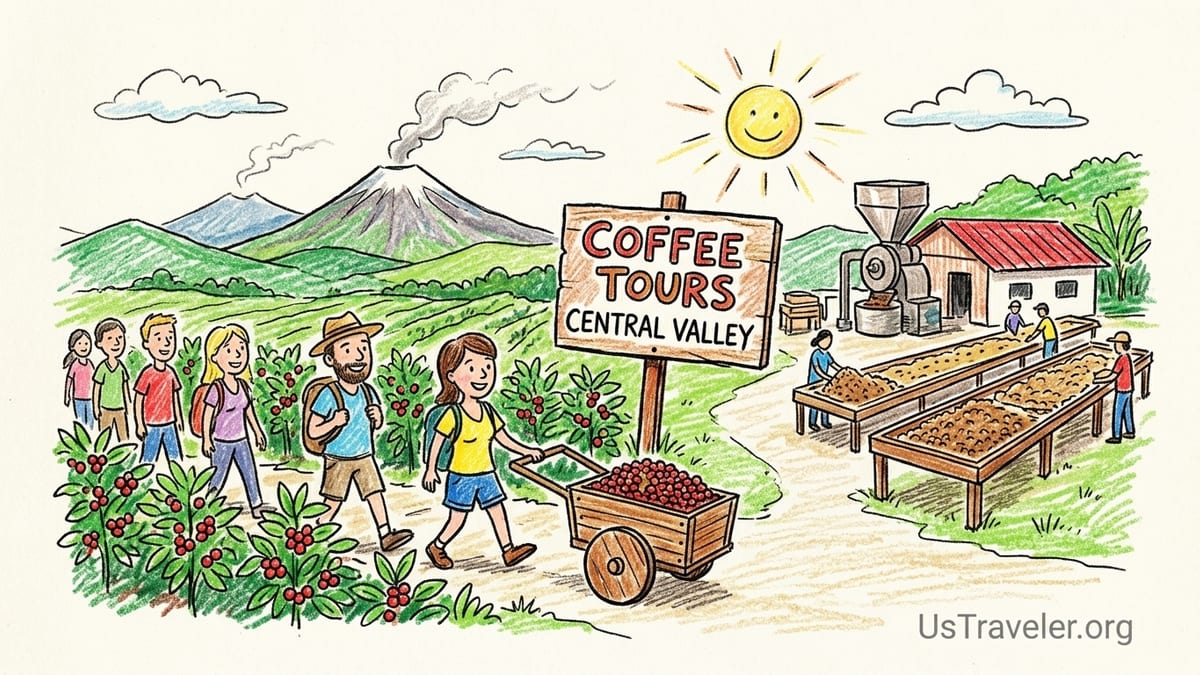
How Central Valley Coffee Tours Work Today
Most coffee tours in the Central Valley are designed with time-pressed travelers in mind. Standard experiences run between about 1.5 and 3 hours, which pairs well with an airport arrival or a single free morning in San José. Operators typically offer a mix of walking through the fields, visiting the beneficio or wet mill, seeing drying patios or raised beds, watching the roasting process, and ending with a structured tasting or at least a couple of brewed samples. At larger estates you can also expect a café, gift shop, restrooms and ample parking. Smaller organic farms may feel more like a family visit, with fewer facilities but more space to ask technical questions.
The coffee season shapes what you actually see. In the Central Valley, harvest generally begins around November and continues through February or March, with some variation depending on altitude and weather. Visit in January, for example, and you are likely to watch pickers moving through the rows with baskets, see cherries being depulped and tanks full of fermenting beans. Arrive in May and you will walk past green trees without fruit, learning the theory of processing while the mill itself may be quiet. All the main estates operate tours year-round, but if a live harvest is important to you, aim your trip for peak season and book the first morning slot for cooler walking conditions.
Prices have crept up in recent years, especially at the most polished attractions. As of 2026, typical adult rates cluster roughly between 30 and 50 US dollars for standard coffee tours, with discounts for children and sometimes packages that include lunch or transport from San José or airport hotels. Because Poás Volcano National Park now uses timed entries and can close temporarily due to emissions, many visitors book a combined Poás plus coffee itinerary through a local agency or their hotel, which helps with permits and logistics.
Doka Estate: Classic Working Plantation Near Poás
Doka Estate, in the hills above Alajuela, presents itself first and foremost as a traditional working coffee farm. The Vargas family has operated on these slopes for generations, and you feel that history as you wander past century-old machinery still in use and long drying patios filled with parchment coffee in season. On a typical tour you might start among the trees, learning how shade, altitude and volcanic soils affect flavor, then move into the wet mill to watch the old pulpers and channel systems that separate cherries by density.
Processing demonstrations at Doka are hands-on when harvest is in full swing. Visit around December or January and you are likely to see trucks arriving with red cherries, hear the clatter of the mechanical dryers and smell the sweet, fermenting mucilage as guides explain different processing styles. Outside the main harvest, staff use small batches and detailed explanations to show each step. Tastings usually feature several roasts of Doka’s own beans, sometimes paired with house liqueurs or chocolates, and there is ample time in the café to order pour-overs or espresso drinks.
Doka tours generally last about 2 to 2.5 hours, which makes them easy to combine with either Poás Volcano in the morning or La Paz Waterfall Gardens in the afternoon. A private driver or small-group tour can pick you up in San José, stop at Doka for a mid-morning coffee experience, then continue up to Poás in time for your crater-view window. Families find Doka manageable for children, thanks to open spaces, animals on the property and short walking distances, although the explanations lean more educational than theatrical. Transport-inclusive packages are widely sold through local agencies and hotels, making this one of the most straightforward choices if you want a classic plantation plus Poás in a single day.
Café Britt: Theater, Tasting and Shopping Near Heredia
Café Britt, located in Mercedes Norte de Heredia, pioneered Costa Rica’s modern coffee-tour concept and still leans into a more theatrical style than its competitors. The classic Britt Coffee Tour is essentially a part walking tour, part outdoor show: guides move groups between small stages in the gardens and processing areas, acting out the history of coffee in Costa Rica with plenty of jokes and audience participation. If you are traveling with teens, multi-generational families or anyone who might glaze over at technical agronomy talks, this format can be a major plus.
The working-plantation feel at Café Britt is more curated than rustic. You do stroll among coffee trees and see elements of processing and roasting, but the emphasis is on storytelling and sensory experience rather than spending long periods in the fields. Tastings are a highlight. Guests typically sample several brewed coffees side by side, learning to distinguish roasts and flavor notes, and may try chocolate-covered coffee beans and other Britt products. For travelers who want to quickly understand Costa Rican coffee styles and pick up gifts, the large factory store is as important as the tour itself.
Britt tours tend to run about 1.5 to 2 hours, with optional add-ons like a buffet lunch at the on-site Don Próspero restaurant. Because the estate sits close to central Heredia rather than on the direct road to Poás, it is not as natural a pairing with the volcano as Doka or Hacienda Alsacia. You can certainly visit Britt in the morning and Poás in the afternoon with a private driver, but most people combine Britt with downtown San José or Heredia sightseeing instead. Transport from city hotels is available through the company and through third-party operators. In terms of family suitability, Café Britt is one of the most child-friendly options: the performance style, shorter walking segments and on-site café and playground-like lawns help keep younger visitors engaged.
Hacienda Alsacia: Starbucks’ Showcase Farm on Poás’ Slopes
Hacienda Alsacia, Starbucks’ lone company-owned coffee farm, has quickly become one of the most talked-about tours in the Central Valley. Set on the slopes of Poás Volcano above Alajuela, it serves both as a research and development center and as a visitor showcase, with a striking open-air café overlooking steep green rows of coffee. Compared with traditional estates, the infrastructure here feels modern: the reception and café sit under solar panels, the visitor center is sleek, and interpretive displays weave Starbucks’ global sourcing story into the farm narrative.
The standard farm tour usually lasts about 2 to 2.5 hours and focuses strongly on sustainable agriculture and innovation. Guests walk through test plots where different coffee varieties and hybrids are grown, look at nurseries of young plants and learn about disease-resistant strains and climate adaptation. Guides explain how Starbucks works with producers around the world, using examples from Alsacia’s experimental lots. Processing demonstrations include modern equipment and clear visuals; while you may not see the same antique machinery found at Doka, you do get a sense of how large-scale specialty chains think about consistency and quality.
Tastings at Alsacia often feature coffees roasted on-site specifically from the farm’s harvest, including limited Starbucks Reserve lots that are difficult to find elsewhere. The café’s drinks menu includes familiar Starbucks beverages alongside pourovers of Hacienda Alsacia beans, making it easy for casual coffee drinkers and enthusiasts to enjoy the space together. Day tours frequently pair Alsacia with Poás Volcano and sometimes La Paz Waterfall Gardens. Because of its location directly on the Poás road, you can have breakfast with a view at the farm, take the mid-morning tour, then continue up to the national park for your timed entry. Families should note that while the content can be detailed, the physical route is not overly demanding, and children often enjoy the café, viewpoint and short walks.
Smaller Estates: Intimate, Educational Alternatives
Alongside the big three, a handful of smaller farms and eco-lodges in the Central Valley offer deeply personal coffee experiences. Finca Rosa Blanca, for example, sits in the hills above Heredia and cultivates shade-grown organic coffee on a relatively small scale. Its tours tend to be longer and more detailed, often running 2.5 to 3 hours and weaving in discussions of agroforestry, birdlife and organic composting. Instead of large groups, you may find yourself in a small party following your guide through forested slopes, stopping to look at soil health, interplanted fruit trees and signs of wildlife.
Processing at these boutique farms is typically small-batch and sometimes shared with neighboring producers, so the focus shifts from big machinery to craft and philosophy. At an organic finca you may see micro-mills, raised African beds for drying, and manual sorting tables, with guides explaining the financial realities of specialty coffee. Tastings can feel more like cuppings in a roastery than like the café-style samples at larger estates, and you are more likely to encounter experimental lots such as honey-processed or natural coffees. For serious coffee lovers eager to ask questions about fermentation curves or export markets, this intimacy is a major advantage.
These smaller tours are less likely to include transportation, so you will often need to arrange a rental car or private driver. Their locations, while still in the Central Valley, are not always directly on major tourist routes, so combining them with Poás is possible but may require more drive time or an overnight stay at the property. Family suitability varies: some organic farms describe their tours as best for older children or adults due to the complexity of the explanations and the terrain. If you are traveling with young kids and want a small-farm feel, it can be worth emailing ahead to ask about shorter or customized visits.
Comparing Tours: Experience, Duration and Practicalities
When you compare Doka Estate, Café Britt, Hacienda Alsacia and smaller fincas side by side, clear patterns emerge. Doka offers the most traditional working-plantation feel, with historic equipment and a straightforward farm-to-cup storyline. Café Britt emphasizes performance and product, ideal for travelers who want an entertaining overview and time to shop. Hacienda Alsacia blends scenic design with a strong focus on research and Starbucks’ global operations, while small estates lean into intimacy, organic practices and detailed technical discussions. All four categories will walk you through fields, show some form of processing and offer coffee to taste, but the tone and depth differ significantly.
Duration is another key factor. If you have just a short layover day, a 1.5 to 2 hour Café Britt tour plus transfers may fit best. With a bit more flexibility, you could spend 2 to 2.5 hours at Doka or Alsacia and still visit Poás in the same day. Travelers who want to linger and ask questions might reserve a half day for an organic farm tour, especially if cupping is included. Tour start times also matter. Many estates schedule mid-morning and early afternoon departures; pairing a 9 a.m. coffee tour with an early Poás park entry can be tricky, so you may opt to visit the volcano first at opening, then stop at a coffee farm on the way back down.
Transportation can quietly determine your choice. Doka and Alsacia appear on many standard San José and airport-hotel itineraries, including full-day Poás combinations where a van handles all logistics. Café Britt, situated closer to Heredia, is convenient if you are staying north of San José or do not plan to visit Poás at all. Smaller estates often require advance coordination and may not advertise hotel pickups; in practice, many travelers arrange a local driver through their lodge. If you are comfortable renting a car, the drive times from San José to most Central Valley farms range from about 45 minutes to 1.5 hours, depending on traffic and road conditions.
Seasonality, Harvest and Family Considerations
The Central Valley’s coffee harvest season, typically November through February with some activity on either side, reshapes these tours. At Doka Estate, this is when you are most likely to observe pickers at work, see cherries flowing through channels and walk past patios lined with drying coffee in parchment. Hacienda Alsacia’s research focus means there is always something to see in the nurseries and test plots, but visiting in peak harvest increases your chances of watching active processing. Café Britt maintains its show-like format year-round, using demonstrations to explain each step even when the mill is quieter.
Outside harvest, tours tilt more toward education and landscape appreciation. You might learn to identify different stages of coffee tree growth, walk through blooming coffee with its sweet jasmine-like scent in the early rainy season, or compare green and ripening cherries on later-season visits. For some travelers this quieter period is just as rewarding, especially if you prefer smaller tour groups and lower overall visitor numbers in the Central Valley. Prices and schedules generally stay stable across the year, though the weeks around Christmas and New Year can sell out, particularly for popular Poás plus coffee combinations.
For families, the main question is attention span rather than difficulty. Paths at Doka, Café Britt and Hacienda Alsacia are usually well maintained and suitable for school-age children, with only moderate hills. Britt’s theatrical style and snack opportunities make it especially forgiving for younger kids, while Doka’s open spaces and visible machinery tend to fascinate children who like seeing how things work. Hacienda Alsacia’s café, scenic decks and relatively short walking segments fit well for mixed-ages groups. More in-depth organic tours at smaller farms may be better targeted to teens and adults who can engage with discussions about sustainable farming and global coffee economics.
Planning a Combined Poás and Coffee Day
Many travelers want to see the steaming crater of Poás Volcano in the morning and taste fresh Central Valley coffee in the afternoon. Doing both in one day is entirely feasible, but it requires attention to timing. Poás Volcano National Park operates on timed entries with morning and midday slots and sometimes closes briefly due to changes in volcanic emissions. A common pattern is to book an 8 a.m. entry, arrive at the park gate a bit early, spend your allotted time at the crater and trails, then drive back down the mountain to a coffee farm for a late-morning or early-afternoon tour.
In this scenario, Doka Estate and Hacienda Alsacia are the most logical pairings. Both sit along routes commonly used between Alajuela and Poás, and many tour operators sell packages such as “Poás plus coffee farm and waterfalls” that incorporate one of these estates. For instance, you might be picked up at a San José hotel around 6 a.m., reach Poás for your crater visit, then continue to Hacienda Alsacia for a 10:30 a.m. or 11 a.m. tour, finishing with lunch at the café and a relaxed drive back. Alternatively, you could reverse the order in poor weather, starting with a mid-morning Doka tour and aiming for a clearer crater view in the afternoon, depending on park availability.
Pairing Café Britt or a smaller estate with Poás is still possible, just a bit less direct. A private driver can shuttle you from San José to Poás, then across to Heredia for an afternoon Britt show and tasting, or up winding rural roads to an organic farm. Because these routes are less linear, it helps to build in generous buffers between activities and to confirm tour times well in advance. Regardless of which estate you choose, carry a light jacket for the cooler, windy conditions at Poás, then peel layers off as you descend into the warmer coffee-growing zones.
The Takeaway
If your priority is a classic, hands-on plantation experience that combines easily with Poás, Doka Estate is a strong all-rounder, offering working-farm credibility, active processing in season and accessible tastings. Travelers who value lively storytelling, shorter tours and a large selection of coffee and chocolate gifts often gravitate toward Café Britt in Heredia. Those curious about Starbucks’ role in global coffee sourcing and sustainability, or who want some of the best volcano views from a café terrace, will likely find Hacienda Alsacia especially memorable.
Smaller estates, meanwhile, reward visitors who have the time and interest for deeper dives into organic practices, agroforestry and specialty processing. They may lack big shops and polished visitor centers, but they compensate with intimate groups and the chance to talk directly with farmers. In all cases, booking ahead, especially in the November to February harvest window and for any itinerary that includes Poás Volcano National Park, will give you more control over timing and help you secure early morning slots with clearer skies.
Ultimately, there is no single “best” coffee tour in Costa Rica’s Central Valley, only the best fit for your schedule and style. Whether you are sipping a farm-grown pour-over on a terrace above Hacienda Alsacia, laughing along with guides at Café Britt, tracing the path of a cherry through antique machinery at Doka, or tasting micro-lots at a shaded organic finca, these tours add a rich, rooted dimension to any Central Valley stay.
FAQ
Q1. Which Central Valley coffee tour is best for combining with Poás Volcano in one day?
Doka Estate and Hacienda Alsacia are usually the most convenient for a same-day Poás visit because they sit on or near the main routes between Alajuela and the national park, and many tour operators already package them together.
Q2. How long do the main coffee tours at Doka, Café Britt and Hacienda Alsacia take?
Most standard tours at these estates run roughly 1.5 to 3 hours, with Café Britt on the shorter end and Doka and Hacienda Alsacia often closer to 2 to 2.5 hours including tastings and time in the café or shop.
Q3. When is the best time of year to visit for an active coffee harvest experience?
The Central Valley harvest typically runs from about November through February, with peak activity around December and January, so visiting in this window gives you the best chance to see cherries being picked and processed.
Q4. Are these coffee tours suitable for children and families?
Yes, Doka, Café Britt and Hacienda Alsacia are generally family friendly, with manageable walking and engaging guides, while more in-depth organic farm tours at smaller estates tend to be better for older children and teens who enjoy detailed explanations.
Q5. Do the coffee farms provide transportation from San José or airport hotels?
Larger estates such as Doka, Café Britt and Hacienda Alsacia often work with local operators to offer hotel pickups or can be booked as part of full-day tours, while smaller farms more commonly expect visitors to arrive by rental car or private driver.
Q6. How far in advance should I book a coffee tour in the Central Valley?
During the November to February harvest and holiday periods it is wise to reserve at least several days to a week ahead, especially if you want specific time slots or are combining the visit with a timed entry to Poás Volcano National Park.
Q7. What should I wear and bring for a coffee tour near Poás?
Comfortable walking shoes, light layers, a rain jacket in the wet season and sun protection are recommended, since you will be outdoors among the coffee trees and weather can shift quickly in the highlands.
Q8. Can I visit more than one coffee farm in a single day?
It is possible, for example pairing a morning at Hacienda Alsacia with an afternoon at Café Britt, but most travelers find that one in-depth tour plus time to enjoy the café and views is more relaxed and rewarding.
Q9. Do the tours include coffee tastings or cuppings?
All of the major estates include some form of tasting, with Café Britt and Hacienda Alsacia focusing on brewed samples and product lines, while some smaller farms and specialty lodges offer more formal cupping-style experiences for enthusiasts.
Q10. Are Central Valley coffee tours still worthwhile if I visit outside the harvest season?
Yes, even when cherries are not being picked, tours provide valuable insight into cultivation, processing methods and sustainability, and you can still walk the fields, see equipment and enjoy fresh coffee in scenic settings.