


Costa Rica’s Central Valley is far more than a transit zone between the airport and the beaches. Within a couple of hours of San José you can stand on the rim of active volcanoes, walk through misty cloud forest, sip coffee on family farms, explore elegant museums and theaters, and wind down beside rivers in the green Orosi Valley. With good roads and compact distances, it is easy to link these experiences into full, satisfying days rather than racing through a checklist of attractions.
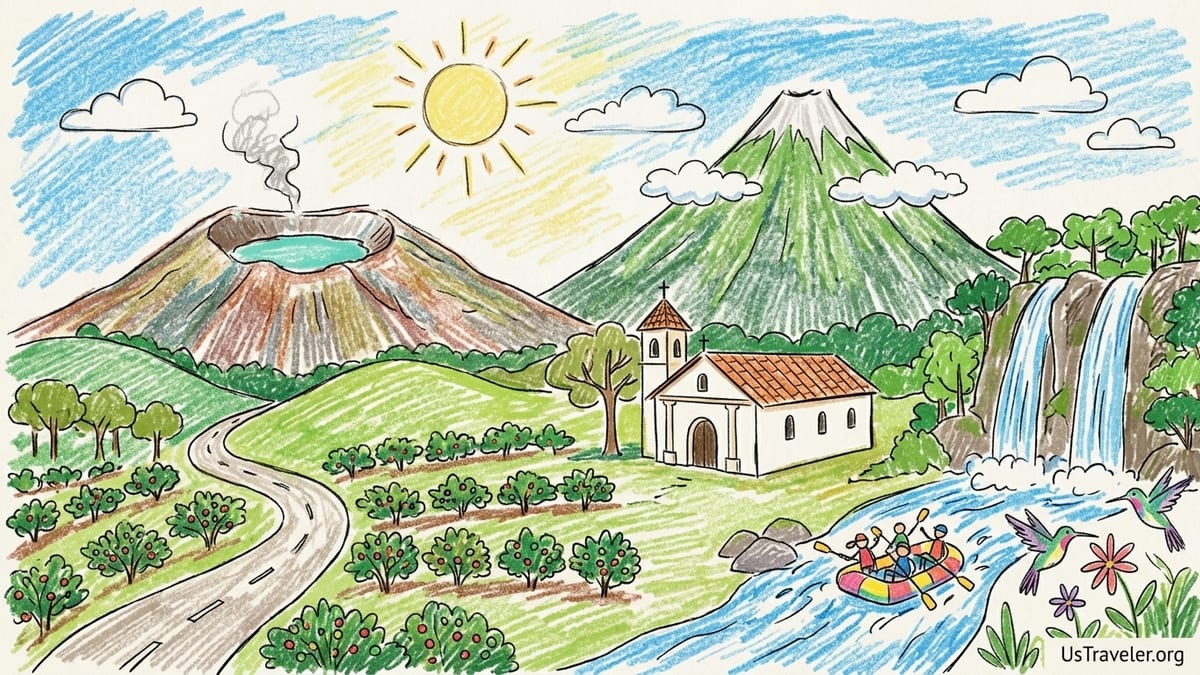
How to Structure Your Days in the Central Valley
The Central Valley’s biggest advantage is proximity. From San José, Poás Volcano, Irazú Volcano, the La Paz Waterfall Gardens, Cartago and the Orosi Valley are all roughly 45 to 90 minutes away by car. This means you can pair a morning at a volcanic crater with an afternoon coffee tour, or combine museums in the capital with a cloud forest walk, without changing hotels every night. Many travelers base themselves in San José, Heredia or Cartago for two or three nights and treat the region as a hub of easy day trips.
To keep your planning simple, think in themes instead of individual stops: a “volcano day,” a “coffee and waterfalls day,” a “wildlife and cloud forest day,” a “culture and history day,” and an “adventure and rivers day.” Each theme can be built around one marquee attraction and then rounded out with nearby sights and meals. For example, pairing Poás Volcano National Park with La Paz Waterfall Gardens creates a full highland day, while Irazú Volcano combines naturally with Cartago’s historic core and the Orosi Valley.
Driving conditions are generally good on main highways, though mountain roads can be narrow and winding. Leaving cities by 6:00 or 7:00 in the morning helps you beat commuter traffic and gives you the best chance of clear crater views before clouds build up. Organized day tours from San José and the airport-area hotels bundle transportation, entrance fees and guides, which can be useful if you do not want to rent a car or navigate national park booking systems in Spanish.
The official tourism board highlights the region’s iconic volcano national parks and the cultural institutions in downtown San José, especially the National Theatre and the major museums. Building your days around these anchors ensures you are seeing the Central Valley’s signature experiences, then tailoring the rest of the schedule to your interests in nature, coffee, culture or adrenaline.
Volcano Days: Poás, Irazú and Nearby Towns
For many visitors, the classic Central Valley experience is standing at the rim of an active crater. Poás Volcano National Park lies roughly 90 minutes from central San José by car, a bit less from airport-area hotels near Alajuela. Entry requires an advance timed reservation purchased online, and recent visitors still report a 20-minute viewing limit at the main crater lookout, although on quieter days rangers may be flexible. Arrive at the park entrance early in the morning to maximize your odds of a clear view into the turquoise crater lake before clouds and fog roll in later in the day.
A typical Poás day starts with a pre-dawn departure, coffee and a light breakfast in Alajuela or a roadside soda, then the short walk from the visitor center to the viewing platform. The main trail is paved and gently sloped, so it suits most fitness levels, but the altitude can make the air feel thinner than expected. After your crater viewing time, you can extend the visit with short forest trails and the park’s small exhibits before continuing to nearby attractions such as La Paz Waterfall Gardens or a coffee plantation for lunch.
Irazú Volcano, the highest active volcano in Costa Rica, offers a very different experience and is best combined with Cartago and the Orosi Valley. From San José, plan 1.5 to 2 hours of driving, much of it climbing through dairy farms and potato fields. On clear mornings you can look down into the wide green crater and, when conditions cooperate, see carpets of clouds below and Pacific and Caribbean views on the horizon. Temperatures are cool and wind can be strong, so pack a fleece, waterproof shell and light hat even if San José feels warm when you depart.
Many travelers drive up to Irazú for opening time, spend an hour walking the crater viewpoints and the nearby Prusia sector forest trails, then descend to Cartago by late morning for a hot chocolate and a stroll. From there you can either return to San José or continue into the Orosi Valley for coffee farm visits and river views. The combination of stark volcanic landscapes in the morning and green valleys in the afternoon makes for one of the most varied single days in the Central Valley.
Coffee Country: From Plantation Tours to Valley Views
The hills ringing the Central Valley are covered in coffee, and spending half a day on a working finca helps explain why Costa Rican beans are famous worldwide. Around Heredia, Alajuela and the western slopes of Poás you will find several plantations that welcome visitors with guided walks through the fields, demonstrations of processing and roasting, and tastings. Many tours last two to three hours, with departures in the morning or early afternoon, and often include a traditional snack such as gallo pinto or fresh tortillas.
Closer to Cartago and the Orosi Valley, coffee feels more small scale. Terraced fields cloak the hillsides between highways and villages, and it is common to see pickers working the slopes in season between roughly November and March. Some family-owned farms offer informal tours arranged through local guesthouses, where you might spend a couple of hours walking the plots, learning how shade trees and soil are managed, then ending with a cup brewed with beans grown just a few meters away. Prices for these experiences are usually modest compared to more polished plantation attractions near the capital.
You can easily fold coffee into other themed days. For example, a Poás volcano morning pairs naturally with lunch at a nearby coffee estate cafe, looking out over rows of plants and learning about how altitude and volcanic soil influence flavor. In the Orosi Valley, stopping at a roadside stand for locally roasted beans on the way back from Tapantí cloud forest gives you a tangible souvenir that links directly to the landscape you have just walked through.
Planning ahead is useful because some coffee tours require reservations, particularly in the busiest travel months of December to April. Ask about language options if you prefer an English-speaking guide, and confirm whether transport from your hotel is included or whether you will need to drive yourself to the farm’s reception area on narrow country roads.
Wildlife, Waterfalls and Cloud Forest Trails
If you want a single, wildlife-rich destination near the Central Valley, La Paz Waterfall Gardens, roughly 45 minutes from the San José airport and about 20 minutes from Poás Volcano National Park, is the most convenient. The privately run nature park includes several impressive waterfalls, orchid and hummingbird gardens, and an animal sanctuary with species such as jaguars, pumas, sloths and monkeys. The loop trail through the cloud and rainforest areas, combined with time at the viewing platforms, can easily fill three or four hours, and some visitors choose to spend nearly a full day on the property.
La Paz charges a higher entrance fee than most public national parks, and lunch at the on-site buffet or cafe adds to the cost, but the trails are well built, signage is clear, and the wildlife viewing is very reliable. This makes it a good choice if you are traveling with children, have limited mobility, or want to guarantee close-up views of emblematic animals without committing to multi-day rainforest trips. Many Poás day tours from San José include La Paz in the same itinerary, bundling the logistics for you.
For a wilder feel, the Orosi Valley’s Tapantí-Macizo de la Muerte National Park protects steep cloud forest slopes, rivers and waterfalls. The park entrance lies about 30 minutes by car from the village of Orosi, and once inside you will find signed trails of varying lengths, picnic tables by the river and viewpoints where, on clear days, you can glimpse a distant high waterfall. Birdwatchers appreciate Tapantí for its hummingbirds and other highland species, and it is a good place to experience the cool, damp atmosphere of a true cloud forest without traveling to more distant destinations.
Because Tapantí is one of Costa Rica’s rainiest spots, it is wise to pack a lightweight waterproof jacket, quick-drying clothing and plastic bags for electronics, even in the “dry” season. Trails may be muddy and roots slick, so sturdy shoes with good grip are more important than in city parks. You can combine Tapantí with lunch in Orosi and a visit to the valley’s viewpoints for a full nature-focused day that feels far removed from San José despite being less than two hours away by car.
Culture and History: San José Museums, National Theatre and Cartago
The Central Valley’s cultural heart is downtown San José, where a cluster of museums and the National Theatre sit within easy walking distance of each other. The National Theatre, opened in the late 19th century, is the city’s most famous building, with an ornate lobby, marble staircases, allegorical ceiling paintings and red-velvet performance hall. Guided tours run on set schedules in both Spanish and English, and attending a concert or dance performance in the evening is a memorable way to experience the space in use rather than just as an architectural monument.
Nearby, the Pre-Columbian Gold Museum showcases intricate gold pieces, ceremonial objects and explanatory exhibits that place indigenous cultures in context before the Spanish arrival. The National Museum, housed in a former military barracks with bullet-scarred walls from the 1948 civil conflict, combines natural history, archaeology and modern political history, including Costa Rica’s notable decision to abolish its army. The Jade Museum, one of the most modern institutions in the region, holds one of the largest pre-Columbian jade collections in the Americas and uses interactive displays to explore themes of identity, trade and daily life.
A single “culture day” in San José might begin with a mid-morning guided tour of the National Theatre, followed by lunch in one of the cafes around the Plaza de la Cultura, then an afternoon split between the Gold and Jade museums or the National Museum and an evening performance if schedules align. Entrance fees are moderate by international standards, and combination tickets or resident discounts may be available, so ask at the ticket desks. Taxis and ride-hailing apps can quickly return you to airport-area hotels after dark if you do not wish to stay downtown.
Cartago, about 45 minutes from San José by car or commuter train, adds a distinct layer of history to your Central Valley plans. Once the colonial capital, it is best known for the Basilica of Our Lady of the Angels, an important pilgrimage site that blends Byzantine and colonial architectural influences. A short walk away, the ruins of the old Santiago Apóstol church stand roofless in a central square, offering atmospheric stone arches and gardens. You can easily explore Cartago’s compact center in a few hours on foot, then continue onward to the green slopes of Irazú or the Orosi Valley for the afternoon.
Orosi Valley: Slow Travel in a Green River Basin
The Orosi Valley, southeast of Cartago, often surprises visitors who have just come from busier hubs like La Fortuna or Manuel Antonio. The landscape is a patchwork of coffee plantations, forest, rivers and small villages, framed by the slopes of Irazú Volcano and the cloud forests of Tapantí. The road into the valley crosses old bridges and skirts the Cachí Reservoir, with signed viewpoints such as Mirador de Orosi and Mirador de Ujarrás where you can pull over to look out across the entire basin, dotted with farms and church steeples.
In the village of Orosi itself, the star attraction is the Iglesia de San José de Orosi, one of the oldest churches still in use in Costa Rica. Its simple white facade and clay-tiled roof contrast with the lush hills around it, and a small museum displays colonial-era religious art and artifacts. The church and adjoining square form a natural pause point on the way to or from Tapantí National Park, and you will often see local families and day trippers enjoying ice cream or roasted pejibaye palm fruits from nearby stalls.
The ruins and park at Ujarrás, a short drive away, offer another glimpse of colonial history amid green lawns and flowerbeds, with the remains of a 17th-century stone church. Between these sites, you will pass roadside stands selling local cheese, strawberries and coffee, along with simple sodas serving casado plates and trout from nearby fish farms. It is easy to fill a relaxed day here with short walks, scenic viewpoints, meals with valley produce and a sense of being far from city noise without long drives.
For those staying overnight, small lodges and guesthouses along the river or higher on the hillsides provide cool nights, birdsong at dawn and opportunities to explore footpaths that do not appear in guidebooks. A two-night stay allows one full day in Tapantí and another divided between Orosi’s church and museum, Ujarrás, the viewpoints and perhaps a casual coffee farm visit, all at a pleasantly unhurried pace.
Adventure and Active Days around Turrialba and Rivers
On the eastern side of the Central Valley, the countryside around Turrialba town has become a base for more adventurous activities without the crowds of some coastal hubs. While Turrialba Volcano itself remains closely monitored and formal crater access can change depending on activity levels, the broader region offers canyoning, white-water rafting and mountain biking, all within day-trip distance of Cartago or overnight stays in rustic lodges. Outfitters based in Turrialba and the Pacuare River corridor typically include transportation, gear and lunch in their packages.
Rafting on the Pacuare River, often run as a full-day trip from San José or Turrialba, is one of Costa Rica’s signature adventure experiences, combining class III and IV rapids with calm pools, waterfalls tumbling off canyon walls and opportunities to spot toucans or herons between stretches of paddling. For those who prefer to stay drier, canyoning excursions near Turrialba take you rappelling down waterfalls and scrambling through narrow ravines, with harnesses, helmets and guides handling the technical side so that you can focus on the scenery.
Closer to the Orosi Valley and Tapantí, adventure is softer but still engaging. Trails climbing the hills above the valley make for steep but rewarding hikes, and the Camino de Costa Rica long-distance route passes through the region, offering sections that day hikers can sample with local guiding support. Mountain biking on rural roads between coffee fields is another option, and some lodges keep a stable of bikes for guests to use on self-guided loops.
When planning active days, consider how altitude and weather will affect your comfort. Even if temperatures feel mild, hiking uphill in wet conditions on cloud forest trails can be demanding. Packing quick-drying layers, a small waterproof backpack and a change of clothing in the car or tour vehicle will make it easier to transition from muddy boots on the trail to a casual cafe in town on the way home.
The Takeaway
Instead of treating the Central Valley as a brief stop between flights and beaches, it is worth devoting at least three or four full days to the region. One day can focus on Poás Volcano and La Paz Waterfall Gardens, another on museums and the National Theatre in downtown San José, a third on Irazú Volcano and Cartago’s historic core, and a fourth on the Orosi Valley and Tapantí’s cloud forest. Travelers with more time can add coffee farm visits and adventure outings near Turrialba for a rounded picture of highland life.
Because the valley’s attractions sit relatively close together, you can mix themes: a volcano morning with a coffee tasting, or a museum visit followed by dinner in a mountain town. Using the official volcanic national parks and flagship cultural institutions as anchors, then layering in waterfalls, wildlife refuges, botanical gardens and small villages, transforms the Central Valley into one of the most varied regions in Costa Rica. With a bit of planning, your time here can balance scenery, culture, wildlife and activity in a way that feels rich rather than rushed.
FAQ
Q1. How many days should I spend in Costa Rica’s Central Valley?
Most travelers find that three to four full days is enough to visit at least one volcano, explore San José’s main museums and theatre, and spend time in the Orosi Valley. If you want to add rafting near Turrialba or multiple coffee tours, plan five or more days.
Q2. Do I need a rental car to visit Poás, Irazú and the Orosi Valley?
A rental car provides the most flexibility for early crater visits and spontaneous stops, but it is not essential. Organized day tours operate to Poás, Irazú, La Paz Waterfall Gardens and Cartago, and some hotels can arrange private drivers for Orosi and Tapantí. If you are comfortable with winding roads and local traffic, driving yourself makes it easier to combine several spots in one day.
Q3. Is advance booking required for Poás Volcano National Park?
Yes, visitors are generally required to purchase timed-entry tickets online before arrival, and same-day slots can sell out during busy seasons. It is wise to book your preferred morning time a few days in advance and arrive at the park entrance at least 30 minutes before your slot to allow for check-in and the short walk to the crater viewpoint.
Q4. What should I wear for volcano and cloud forest visits in the Central Valley?
Conditions at high elevations can be chilly, windy and damp even when San José feels warm. Pack long pants, a light fleece, a waterproof or windproof jacket, and closed-toe shoes with good tread. In cloud forest areas like Tapantí and around La Paz, quick-drying fabrics and a small umbrella or rain jacket are helpful because rain showers are common year-round.
Q5. Are La Paz Waterfall Gardens suitable for young children or older travelers?
Yes, La Paz is designed for a wide range of visitors, with well-constructed trails, railings and frequent rest spots. Some sections involve stairs and can be tiring, but families with strollers and older travelers often focus on the animal exhibits, hummingbird gardens and the most accessible waterfall viewpoints. Taking your time and planning a relaxed lunch in the on-site restaurant helps keep the day manageable.
Q6. Can I visit Irazú Volcano and the Orosi Valley in one day?
It is very feasible to combine the two. A common pattern is to drive to Irazú for opening time, spend one to two hours at the crater and viewpoint trails, then descend to Cartago for a brief stop at the basilica before continuing to the Orosi Valley for lunch, viewpoints and a visit to the colonial church or Tapantí’s lower trails.
Q7. Are San José’s museums and National Theatre safe to visit independently?
The central museum and theatre district is busy during the day and commonly visited by independent travelers. Normal urban precautions apply: keep valuables secure, avoid displaying expensive items and be cautious with bags in crowded areas. Many visitors feel comfortable walking between the National Theatre, Gold Museum, Jade Museum and National Museum during daylight hours and using taxis or ride-hailing services after dark.
Q8. When is the best time of year to explore the Central Valley?
The Central Valley is a year-round destination, with relatively mild temperatures compared to the coasts. The drier months from about December to April offer more stable conditions for crater views and city wandering, while the wetter months bring greener landscapes and fewer crowds. In very rainy periods, prioritize flexible plans and allow extra time in case of showers or fog at high elevations.
Q9. Is the Orosi Valley a good place to stay overnight or just for a day trip?
Both options work well. As a day trip, you can visit the Orosi viewpoints, colonial church, Ujarrás ruins and perhaps Tapantí’s easiest trails. Staying one or two nights in a small lodge or guesthouse lets you slow down, enjoy cool evenings by the river, sample local coffee and explore additional hikes without rushing back to the city.
Q10. Are adventure activities near Turrialba appropriate for beginners?
Many rafting and canyoning outfitters near Turrialba cater to beginners and families, providing certified guides, safety briefings and all necessary equipment. When booking, specify your comfort level and ask about typical water levels and rapid classes for your travel period. Even if it is your first time, you can usually choose routes that emphasize scenery, moderate thrills and plenty of guidance rather than extreme difficulty.