


Costa Rica practically invented the modern eco lodge. From glass-walled suites in the Monteverde cloud forest to boat-in hideaways on the Osa Peninsula, the country’s most distinctive places to stay are designed around wildlife, conservation and low-impact comfort rather than standard resort templates. Choosing between rainforest, cloud forest, volcano or ultra-remote Osa can shape your entire trip, so it pays to understand how these lodge types differ in access, comfort level and on-the-ground experience.
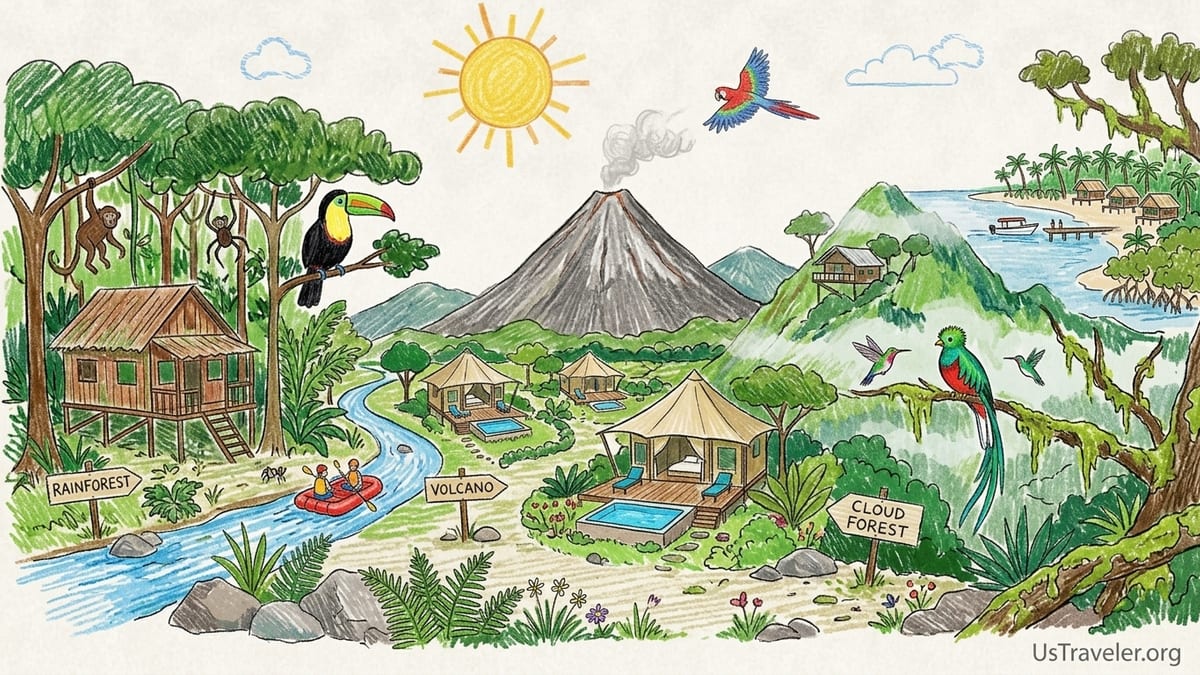
Understanding Costa Rica’s Eco Lodge Landscape
Eco lodges in Costa Rica are less a single category and more a spectrum. At one end you have rustic jungle cabins powered by solar panels and lanterns; at the other, high-end tented camps with private hot-spring plunge pools and serious sustainability credentials. What connects them is a focus on nature immersion and a conscious effort to reduce environmental impact, whether through renewable energy, careful water management or supporting nearby communities.
In practical terms, most eco lodges fall into a few clear geographical niches. Rainforest properties cluster along the Caribbean lowlands, the central and southern Pacific coast and river valleys like Pacuare. Cloud forest lodges sit in cooler, higher-elevation areas such as Monteverde and San Gerardo de Dota. Volcanic-area eco stays ring Arenal and, to a lesser extent, Rincón de la Vieja and Turrialba. The Osa Peninsula combines several of these elements in one of the most biodiverse corners of the country, with some of Costa Rica’s most remote and wildlife-rich accommodation.
Prices range widely. A high-end eco lodge such as Nayara Tented Camp near Arenal often runs around 1,000 to 1,600 US dollars per night for a tented villa in peak season, typically including breakfast and sometimes a few activities. Mid-range rainforest lodges like Arenal Observatory Lodge or family-friendly options around Sarapiquí may fall closer to 180 to 350 US dollars per night, while simpler cabins and tented camps in remote areas can dip below that if you are willing to accept shared transport, fewer amenities and very limited air conditioning.
Regardless of budget, the eco focus has real-world implications. Trail lighting may be minimal to protect wildlife. Air conditioning can be restricted or absent. Meal plans might rely on fixed menus using local ingredients rather than large buffets. For some travelers, these are the very features that make an eco lodge stay feel authentic; for others, they require a bit of mindset adjustment compared with conventional resorts.
Rainforest Eco Lodges: Immersed in Green
Rainforest eco lodges are what many travelers picture when they imagine Costa Rica: dense foliage, howler monkeys at dawn and open-air decks looking into a sea of green. In regions such as Sarapiquí, Tortuguero, the central Pacific and the Golfo Dulce, lodges often sit within or next to private reserves that act as wildlife corridors. Guests frequently spot toucans, agoutis, sloths and poison dart frogs without leaving the property.
On the Golfo Dulce side of the Osa region, Playa Nicuesa Rainforest Lodge is a good example of a modern rainforest eco retreat. Set between primary forest and a calm bay, it is accessible only by boat from the town of Golfito, which immediately gives it a secluded feel. The lodge offers guided rainforest hikes, kayaking and dolphin or seasonal whale-watching excursions. Night walks and early-morning birding on the property mean you do not have to be particularly active or experienced to enjoy serious wildlife viewing.
Another widely recommended model is Pacuare Lodge on the Pacuare River, reached primarily by white-water rafting. Guests arrive after several hours on the river, then sleep in large suites or bungalows with plunge pools and canopy views. Electricity is limited, lighting is soft and there is a strong emphasis on local employment and cultural experiences with nearby communities. Meal plans are typically full board, with refined cuisine that far exceeds what many travelers expect in such remote surroundings.
For families or travelers wanting road access, rainforest areas like Sarapiquí and the Caribbean lowlands have more conventional access patterns. Properties here are usually reached via paved or well-graded gravel roads and may offer partial air conditioning, swimming pools and flexible meal plans. However, you will want to confirm how “rainforest” the experience really is, as some hotels describe themselves this way despite being just off a main road with less intact habitat on-site.
Cloud Forest Lodges: Mist, Quetzals and Cooler Nights
Cloud forest eco lodges bring a different atmosphere. At elevations around Monteverde or San Gerardo de Dota, clouds often drift through the trees at eye level, moss and orchids hang from branches and temperatures drop noticeably after sunset. For travelers who overheat easily in the lowland rainforest, this can be a major advantage, and the cooler climate reduces the need for air conditioning almost entirely.
In Monteverde, Senda Monteverde Hotel and Cloud Forest Lodge sit within walking distance or a short drive of private reserves and the Monteverde Cloud Forest Reserve. Both work closely with local conservation efforts and emphasize low-impact design, from water-saving measures to habitat-friendly landscaping. Rooms tend to be glass-fronted or feature large picture windows, making birdwatching from your bed or deck a real possibility. Early morning guided walks often focus on finding the resplendent quetzal, mixed-species bird flocks and elusive mammals like coatis.
Dantica Cloud Forest Lodge in San Gerardo de Dota shows how cloud forest properties can feel even more remote. Perched on the slopes above the Savegre River valley, it faces steep forested hills rather than towns or highways. The lodge has a strong sustainable tourism philosophy, using green roofs, careful wastewater treatment and local materials. Here, the soundtrack is more about rushing rivers and bird calls than howler monkeys. Nights can be genuinely cold by tropical standards, so most rooms rely on duvets and heaters rather than fans.
Cloud forest lodges often operate on a modified American plan: breakfast included, with optional half or full board. Nearby villages like Santa Elena or San Gerardo host small restaurants, but foggy night driving and narrow mountain roads mean many guests choose to dine on-site most evenings. For families, check policies carefully; some higher-end Monteverde properties skew adult-oriented, while others provide family suites, kids’ menus and early dinner times suitable for younger travelers.
Volcanic-Area Eco Stays around Arenal and Beyond
Volcanic regions such as Arenal and Rincón de la Vieja offer a hybrid experience that appeals to travelers wanting eco credentials along with classic resort comforts. Lodges here sit amid secondary forest or farmland with easy access to hot springs, zip-lines and adventure activities. The views of Arenal Volcano on a clear morning can be spectacular, yet road access from San José or Liberia is relatively straightforward compared with the Osa Peninsula.
Arenal’s eco-focused properties run from small, family-owned inns to upscale resorts. Arenal Observatory Lodge, located on the quieter southern flank of the volcano, has its own trail system through regenerating forest and pasture. Guests can birdwatch from observation decks, hike to waterfalls and join guided night walks without leaving the property. Rooms are simple but comfortable, with fans instead of widespread air conditioning in many categories, reflecting the lodge’s conservation ethos and hillside breezes.
At the luxury end, Nayara’s group of properties near La Fortuna, including Nayara Tented Camp, position themselves as high-end eco retreats. Tented suites on stilts come with private plunge pools fed by thermal water, extensive native planting around the grounds and a commitment to conservation and community projects. While room rates can surpass four figures per night in peak periods, they include a level of privacy and comfort more comparable to a boutique resort than a rustic jungle lodge.
Elsewhere in the volcanic belt, smaller eco lodges near Rincón de la Vieja and Turrialba integrate geothermal features into their design, from natural hot-spring pools to mud treatments. These properties tend to be easier to reach by rental car, often via paved roads with only short gravel stretches. This relative accessibility makes volcanic eco lodges a strong choice for first-time visitors who want some wilderness feel without long domestic flights or boat transfers.
Wildlife Lodges and Remote Osa Peninsula Stays
The Osa Peninsula is where Costa Rica’s eco lodge concept reaches its wildest expression. Described by biologists as one of the most biodiverse places on earth, the region’s lowland rainforest, mangroves and marine habitats host tapirs, all four Costa Rican monkey species, scarlet macaws, abundant reptiles and, offshore, dolphins and whales. Eco lodges here often sit on private forest reserves adjacent to or within easy boat reach of Corcovado National Park and Golfo Dulce.
Lapa Rios Lodge, set in more than a thousand acres of protected rainforest, is frequently cited as one of the country’s most immersive eco-wildlife experiences. Guests sleep in open-air bungalows on ridgelines with ocean and forest views, and it is common to see monkeys, macaws and coatis from your terrace. The lodge has long-standing sustainability credentials, employing local staff, limiting guest numbers and operating off-grid where practical. Stays are usually priced on an all-inclusive basis, wrapping guided hikes, birding outings and most meals into the nightly rate.
Playa Nicuesa Rainforest Lodge and Playa Cativo Lodge on the Golfo Dulce are classic boat-access properties. Reaching them typically involves a domestic flight or long drive to Golfito or Puerto Jiménez, followed by a boat transfer across the gulf. Once there, you are effectively committed to the lodge’s activity program and meal plan; there are no nearby towns to wander into for dinner. This isolation has clear benefits: dark skies, prolific wildlife in and around the property and a sense that the outside world has receded.
Further along the coast and near Drake Bay, smaller lodges and tented camps cater to travelers focused on Corcovado day trips and offshore snorkeling at Isla del Caño. Properties like Corcovado Wilderness Lodge combine boat-access seclusion with structured wildlife excursions and comfortable bungalow-style accommodation. Electricity may be limited to certain hours, and full-board meal plans are the norm, as resupplying these lodges is logistically demanding. For families with younger children, the remoteness can be magical but also challenging; motion-sensitive kids, picky eaters or anyone with medical needs might be better served by a base in Drake Bay town with more flexible options.
Sustainability Credentials, Comfort and Practicalities
Many of Costa Rica’s standout eco lodges participate in the national Certification for Sustainable Tourism program, or work with international bodies such as Rainforest Alliance. These certifications evaluate aspects like energy use, waste management, water treatment, conservation initiatives and community engagement. Names such as Lapa Rios, Pacuare Lodge, Monteverde Lodge and similar properties frequently highlight high-level certification as a core part of their identity, though the exact labels and scores can shift over time.
From a guest perspective, sustainability shows up in small but noticeable ways. Expect refillable glass water bottles instead of disposable plastic, biodegradable toiletries in dispensers instead of single-use minis and food menus that lean heavily on local produce and seasonal ingredients. Some lodges maintain on-site organic gardens, reforest former pastureland or fund local schools and conservation groups. Others invest in low-impact infrastructure like solar water heaters, composting systems and wildlife-friendly lighting.
Comfort levels vary across the spectrum. Many high-end eco lodges now offer powerful ceiling fans, dehumidifiers and, in some cases, discreet air conditioning units that run on limited schedules. Rustic properties, especially on the Osa Peninsula or along remote rivers, may rely solely on natural ventilation. Before booking, clarify how rooms are cooled, whether windows are screened and if any categories offer air conditioning, particularly if you are traveling in the hot, humid months from February through May.
Guided walks are one of the main advantages of staying at an eco lodge. On-site naturalist guides know where wildlife tends to congregate, how to spot well-camouflaged species and how to manage safety on muddy or root-laced trails. Many lodges bundle at least one guided activity per day into the rate, such as a dawn birding walk, waterfall hike or night tour. Others price activities a la carte. When comparing options, factor in that a nightly rate which includes guides, equipment and transport can represent better value than a cheaper room that requires paying separately for everything once you arrive.
Access, Isolation and Family Suitability
One of the most important yet overlooked variables is how isolated a property really is. In Costa Rica, “remote” can describe everything from a 20-minute bumpy drive off a paved road to a lodge that requires a domestic flight, a long boat ride and a wet landing on an unpaved beach. On the Osa Peninsula, for instance, many high-end eco lodges are boat-in only and sit at least an hour from the nearest town. Once you are there, you will eat at the lodge restaurant, join lodge-organized tours and rely on their schedule for boat transfers.
By contrast, eco-focused hotels near Arenal or Monteverde often lie a short drive from towns with multiple restaurants, supermarkets and tour operators. A family staying near La Fortuna can spend the day at a canopy adventure park or hot springs complex and still be back at a lodge with forest views and birdlife before sunset. In Monteverde, it is common to walk from your hotel to nearby cafes and then join a guided night walk arranged by an independent operator, blending flexibility with immersion.
Families should weigh the trade-off between immersion and convenience. Very isolated Osa lodges can be magical for wildlife-loving teens who are happy without strong internet and nightlife but may feel restrictive for younger children who need playgrounds, varied food options or easy medical access. Road-access rainforest or cloud forest lodges, especially those within 20 to 40 minutes of a town, often provide a more balanced base. Look for properties that advertise family suites, kid-friendly meal options and shorter, gentler trails on-site.
Transportation logistics also affect cost. Boat transfers, 4WD shuttles and domestic flights quickly add to the overall price of a stay. An eco lodge that looks expensive at first glance might represent fair overall value if airport transfers, full board and guided activities are included. Conversely, a relatively affordable nightly rate at a road-access property can still lead to higher total trip costs if you are paying for every transfer and tour separately. Before booking, request a clear breakdown of what is included, typical transfer times and any seasonal access issues, such as rough seas that can affect small boats on the Pacific coast.
The Takeaway
Costa Rica’s eco lodges are not interchangeable. A boat-in rainforest retreat on the Osa Peninsula, a misty cloud forest lodge in Monteverde and a volcanic eco resort near Arenal each offer distinct experiences, levels of isolation and comfort trade-offs. Your choice should be driven by what you most want from the trip: waking to howler monkeys and scarlet macaws outside your bungalow, watching clouds roll through moss-draped branches or soaking in hot springs with volcano views after a day of hiking.
For travelers who prioritize wildlife and are comfortable with limited connectivity and structured days, Osa Peninsula lodges like Lapa Rios or Golfo Dulce hideaways such as Playa Nicuesa can be trip-defining. Those wanting cooler nights, hummingbird-filled gardens and strong conservation ethos with relatively easy access should lean toward Monteverde or San Gerardo de Dota. Visitors looking for a blend of adventure tourism, hot springs and soft-eco credentials might be happiest around Arenal or Rincón de la Vieja.
Whichever region you choose, scrutinize each lodge’s sustainability practices, access logistics, meal plans and family policies before booking. Ask specific questions about air conditioning, power schedules, what wildlife is regularly seen on-site and how guided experiences are organized. With realistic expectations and a clear match between lodge style and travel priorities, Costa Rica’s eco accommodations can deliver some of the most memorable stays in the country.
FAQ
Q1. Are Costa Rica’s eco lodges suitable for young children?
Many eco lodges welcome families, particularly around Arenal and Monteverde where access is easier and trails are gentler. Ultra-remote Osa Peninsula properties can be exciting but may feel intense for very young children due to heat, boat transfers and limited medical access, so parents should assess their child’s comfort level and consult the lodge before booking.
Q2. Do most eco lodges in Costa Rica have air conditioning?
Not always. In cloud forest areas, properties typically rely on cool night temperatures and do not install air conditioning at all. Lowland rainforest and Osa lodges often prioritize natural ventilation and fans to reduce energy use, though some higher-end rooms offer partial or limited-schedule air conditioning, so it is important to confirm in advance if this is essential for you.
Q3. How expensive are top eco lodges in Costa Rica compared with standard hotels?
High-end eco lodges can cost significantly more per night than conventional hotels, especially in peak season, but rates often include guided activities, transfers and full-board meal plans. When you factor in everything that is bundled, the overall trip cost can be closer to that of a mid-range hotel stay where tours and meals are priced separately.
Q4. Are guided wildlife walks really necessary or can I explore on my own?
Most eco lodges allow self-guided walks on marked trails, but guided outings add considerable value in rainforest and cloud forest environments where animals can be hard to spot. Naturalist guides know calls, tracks and habits, greatly increasing your chances of seeing key species and helping you stay safe on slippery or exposed sections of trail.
Q5. How isolated are the Osa Peninsula’s rainforest lodges in practice?
Many Osa lodges are genuinely remote, often requiring a domestic flight or long drive followed by a boat transfer. Once you arrive, there are usually no nearby towns or alternative restaurants, and you rely on the lodge for activities, meals and transport. This isolation is a major part of the appeal but may not suit travelers who prefer independent exploring or strong connectivity.
Q6. What sustainability certifications should I look for when choosing an eco lodge?
In Costa Rica, the national Certification for Sustainable Tourism is widely used, and some properties also work with international programs such as Rainforest Alliance. While certification is not the only measure of responsibility, lodges that publish clear information about their energy use, waste management and community projects tend to be more transparent about their impact.
Q7. Do eco lodges cater to special diets like vegetarian or gluten-free?
Most established eco lodges are accustomed to accommodating dietary requirements, as many of their guests come from international markets. It is still important to notify the property well before arrival and to confirm whether they can handle strict allergies, as remote lodges receive food supplies infrequently and rely on limited storage space.
Q8. Is renting a car recommended for staying at eco lodges?
For road-access properties around Arenal, Monteverde and some rainforest regions, renting a car offers flexibility and can save on transfer costs if you are comfortable with mountain and rural driving. For boat-access Osa lodges and river lodges, private or shared transfers arranged by the property are usually more practical, and a rental car would sit unused during your stay.
Q9. When is the best time of year to stay at an eco lodge in Costa Rica?
The drier months from roughly December through April generally offer sunnier skies and easier trail conditions in many regions, although “green season” from May to November can provide lusher rainforest, fewer crowds and lower rates. Microclimates vary, so it is wise to check typical conditions for your specific region and lodge before finalizing dates.
Q10. How far in advance should I book a popular eco lodge?
Iconic eco lodges, especially on the Osa Peninsula and around Arenal during major holidays, can fill many months in advance. For peak dates such as Christmas, New Year or Easter week, booking six to twelve months ahead is common, while shoulder-season visits sometimes allow more flexibility, particularly at mid-range properties.