


In Costa Rica’s South Pacific, the right lodge can completely change your trip. This coastline and the Osa Peninsula are remote, humid and wildly beautiful, and small details like a ceiling fan that actually moves air, or whether your boat drops you in knee-deep surf, matter far more than they would in a city hotel. I have learned this the slow way, over a series of trips where howler monkeys became my alarm clock, my hiking boots never quite dried, and full-board jungle lodges either felt like extraordinary value or unjustified indulgence. This guide focuses on the stays that genuinely improved my time in the South Pacific, organized by travel purpose rather than town, so you can decide what kind of lodge is worth paying extra for.
How I Chose and Personally Tested South Pacific Lodges
Before diving into specific recommendations, a quick note on scope. The South Pacific of Costa Rica broadly covers the Costa Ballena towns of Dominical, Uvita and Ojochal, then curves around the Golfo Dulce to the Osa Peninsula, including Drake Bay and Puerto Jimenez. Over several years I have spent multiple nights in a mix of remote boat-in lodges, car-accessible boutique hotels and family-run cabinas. Every property described as personally tested below is based on at least one genuine overnight stay, not a site inspection or hosted lunch. I also cross-checked current details like transfer logistics, wet landing procedures and meal plans through recent guest reports and official descriptions, since operations in this region evolve with tides, park regulations and seasons.
In this article I organize places by travel purpose: best wildlife lodge, best beach stay, best remote jungle experience, best car-accessible base, best for couples, best value, best for families and best splurge. In a few cases I briefly mention additional lodges that I have only researched, not stayed at, and those are clearly separated so you can weigh them differently. The goal is not another ranked list of “top hotels” but a realistic look at what you actually get for the money in one of Costa Rica’s most complex regions to visit.
Finally, a word on expectations. Even at the high end, South Pacific lodges operate in dense rainforest with heavy rainfall, intense humidity and limited infrastructure. Power cuts happen. Boots stay damp. Boat landings can be wet and awkward. The lodges that stand out are not the ones that eliminate all inconvenience, but those that make the wildness feel like part of the pleasure rather than a chore.
Best Wildlife Lodge: Boat-In Jungle, Macaws at Breakfast
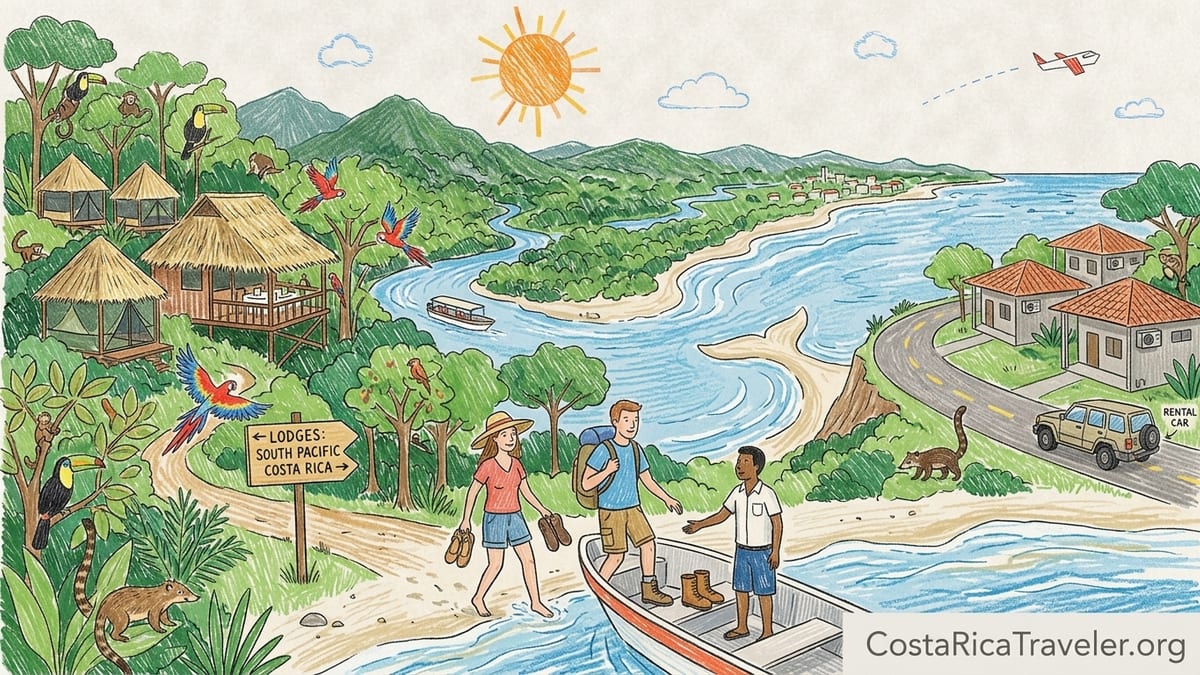
For pure wildlife, my standout stay has been at a small boat-in lodge near Drake Bay, set on a hillside wrapped in secondary rainforest with a narrow strip of beach below. To reach it, I traveled by road to Sierpe, then joined the open launch that threads down the Sierpe River and out through the mangroves before turning into open Pacific swell. About an hour and a half later we slowed in front of the lodge and the captain nosed the bow toward a pocket of sand. The landing was wet, calf-deep in warm surf, and I was grateful I had packed sandals in hand luggage so my boots could stay relatively dry for later hikes.
The first hint this place was different came at check-in. There is no paved path, only a steep jungly trail up to the main house, where staff met us at the beach and quietly whisked our larger bags up the hill. I checked into a tent bungalow on a wooden platform, with zippered canvas walls and full insect screening. Beds were simple but very comfortable with firm mattresses and good-quality linens, and each was wrapped in a well-secured mosquito net that actually closed without gaps. There was no air-conditioning, only a ceiling fan and the constant cross-breeze from the ocean, but in practice this worked. At night temperatures dropped slightly and the combination of fan and sea air made sleep possible even in peak humidity. If you sleep hot, it is worth splurging on a unit with better airflow and a position higher on the hill.
Bathrooms were straightforward: tiled floors, basic but functioning Western toilets and open showers with on-demand hot water. Water temperature drifted a bit and it took a light hand on the tap to avoid going from warm to very hot or cool, but I found it manageable. The bigger factor was humidity. Towels, swimsuits and even my quick-dry shirts never became completely crisp, just less damp. The lodge offers laundry at an extra charge; on a four-night stay I made use of this and it was worth it simply to reset a few items. Boots lived on the deck railing and never fully dried, which is one reason I would pack a second pair of lighter trail shoes for afternoons around the property.
Wildlife around the grounds was constant and close. Scarlet macaws screeched through at eye level almost every afternoon, landing in almond trees near the dining deck. Howler monkeys acted as early alarm clocks from around 5 a.m., their roars echoing up the hillsides. In three days I saw white-faced capuchins, coatis, agoutis and at least four species of hummingbird without leaving the property. Night walks organized by the lodge revealed tree frogs, spiders and the reflective eyes of sleeping lizards. Because the lodge controls its own small trail network and keeps groups small, encounters rarely felt crowded.
Best Beach Stay: Sleep to Surf, Not Traffic
When the priority shifts from deepest jungle to falling asleep to waves, I look for a balance between direct beach access and enough elevation to catch breezes. On the Osa, one of my most satisfying nights with the ocean close at hand was in a simple wooden cabin set on stilts above a cove reachable only by boat. There were no glass windows, just half-height walls and insect screening under a metal roof, so the soundscape was pure Pacific surf and jungle insects. The bed was basic but solid, with a thick mosquito net that hung low enough to tuck completely under the mattress. I was initially skeptical about the lack of air-conditioning and even a fan, but the entirely open construction meant heat did not pool. Sheets felt a bit damp from ambient humidity, yet I slept well, lulled by the waves and a thunderstorm on the roof.
The beach itself was the reward here. Unlike the debris-strewn town beach in Drake Bay, this cove was clean, with brown sand and gentle enough waves for daily swimming outside of heavy swell. There was no pool, which may be a drawback for some families, but I found the ocean more than sufficient. The trade-off is that the beach is not patrolled. There are no lifeguards, and swimming is at your own judgment. At high tide the sand strip narrows, and landings and departures involve hopping out of the boat into knee-deep water, so packing in waterproof or easily dried bags is important.
Breakfasts were cooked to order and taken at communal tables in an open-sided dining room. Eggs, gallo pinto, tropical fruit and good local coffee formed the backbone of every morning. Lunches and dinners were plated rather than buffet, with a surprising range given the remote kitchen. Fresh fish appeared frequently and there were always salads and at least one vegetarian option at dinner. Given that independent restaurants require a long boat ride into town, full-board here felt like real value rather than constraint, even if you occasionally crave more variety. Electricity was provided by a combination of solar and generator, with power available in rooms during core hours and in the dining area into the evening. Wi-Fi covered the main house but not the cabins, which I found a blessing rather than a flaw.
One underappreciated detail for a beach-focused stay in this region is luggage handling. At this lodge, staff coordinated with the boatmen so larger suitcases could be passed directly from boat to shore crew without guests wading with them. On arrival and departure, porters carried all checked bags up and down the hill, which made a real difference on slippery jungle steps after rain. Those small logistical touches can be worth paying extra for when you are wet, tired and still in travel mode.
Best Remote Jungle Experience: Wonderful, But Know the Trade-offs
If your dream is to feel truly away from it all, the remote jungle lodges near Corcovado National Park deliver that sensation powerfully. On my most isolated stay, after flying into Palmar Sur and transferring by road to a river embarkation point, I boarded a long boat for a two-hour ride through mangroves and along the coast. The arrival was via classic wet landing on a narrow, often rocky beach. From there, staff loaded luggage into a tractor-pulled trailer while guests climbed aboard for a steep ascent through the forest to the lodge. There were no roads and no neighbors in sight, only dense, dripping rainforest and the faint glimpse of sea beyond.
Cabanas here aimed for more comfort than rustic tent platforms. My room had solid walls, screened windows and, importantly, a ceiling fan with several functional speed settings. In the heavy afternoon heat the fan made indoor time tolerable. There was no air-conditioning, and power came from a local grid and on-site systems, so lights occasionally flickered during heavy storms. Outages were rare on my stay, and when they did occur they were brief and well-handled, with flashlights in every room. Bathrooms had tiled open showers with decent water pressure and stable hot water, which I appreciated after long, muddy hikes. The lodge provided rubber boots in a range of sizes, and mine were indispensable. Trails stay wet here; my own hiking shoes remained perpetually damp, and the loaner boots were the only footwear that kept my feet reasonably dry in the forest.
Wildlife viewing was outstanding but came with the structural limitations of being deep inside protected habitat. Guided hikes into Corcovado started early, with breakfast served at first light and boat transfers timed to the tides. Over two days I saw tapir tracks, multiple monkey troops, sloths, peccaries and an impressive range of birds. Back at the lodge, toucans and tanagers visited fruiting trees near the pool, and night hikes produced frogs, insects and the occasional snake sighting with guides. Monkeys provided a regular dawn chorus that easily penetrated cabin walls. For wildlife lovers this is exactly the point, but light sleepers should pack earplugs.
The trade-offs are mostly about freedom and food. Remote lodges usually run on fixed, full-board meal plans with set dining times and a rotating menu. At the property I stayed, meals were generous and fresh, with plenty of vegetables and fruit, and by the second day staff remembered personal preferences. There was, however, no possibility of wandering out for a different restaurant or an evening drink in town. You eat where you sleep, with the same small set of fellow guests, which some travelers find wonderfully social and others mildly claustrophobic. Given the cost of provisioning by boat and the inclusion of guided excursions with naturalists, I felt the full-board rate was justified, but I would not choose this style of lodge for more than four or five nights unless I were on a focused wildlife trip.
Best Car-Accessible Base: Flexibility and Lower Transfer Stress
Not every South Pacific trip needs a boat-in arrival. If you prefer to drive your own rental car and keep transfers simple, the coastal stretch around Uvita and Ojochal offers small hotels and lodges that still feel close to nature without requiring rivers and wet landings. In this category my most useful base has been a modest hillside hotel above Uvita, reachable entirely by road. The final approach is on a steep gravel track, and in the rainy season a high-clearance vehicle or four-wheel drive is strongly recommended, but there is no need to coordinate around river tides or boat schedules.
Rooms here were compact but thoughtful, with firm beds, proper mattresses and effective air-conditioning that ran quietly enough to sleep. Humidity is still a factor; even with AC I found that clothing dried slowly unless hung directly in the stream of cool air. Showers were hot and reliable, with fully enclosed stalls that helped keep the rest of the bathroom from feeling damp. Windows and doors sealed properly, which limited insects; I encountered a few small ants and one gecko over several nights but never mosquitos inside the room. There was no mosquito netting around the bed, which at first worried me, but in practice window screening and the uphill location away from standing water made this a non-issue.
Breakfasts were included and served on an open terrace with long views down to the Marino Ballena coastline. The spread leaned more hotel than homestay: buffet-style gallo pinto, fruit and pastries, plus eggs cooked to order. There was no full restaurant beyond breakfast, but this turned into a strong point, as the hotel sits within a short drive of several excellent independent restaurants in Uvita and Ojochal. After a couple of nights in full-board jungle lodges, I appreciated being able to choose a simple soda one night and a more polished bistro the next, then return to a cool, dry room. Wi-Fi was strong enough for remote work, with only occasional blips during evening thunderstorms, and the property had a small but refreshing pool with partial ocean views.
Electricity reliability was better here than at more remote sites, as the hotel is connected directly to the regional grid. Short outages remain possible in big storms, but over a four-night stay I experienced only one brief cut of around ten minutes. There was no dedicated on-site tour desk, yet the front desk team regularly booked whale-watching in Marino Ballena National Park, canyoning and waterfall rappelling, surfing lessons and day trips to Corcovado with local operators. Because you are not locked into a package, you can comparison-shop both price and style of excursions, which appeals to travelers who prefer control over each element of their itinerary.
Best for Couples: Secluded Bungalows and Quiet Evenings
For couples, the sweet spot in the South Pacific is often a mid-sized lodge that feels intimate but not isolating. On the Osa, my favorite romantic setting has been a cluster of wooden bungalows on a bluff between Drake Bay and Corcovado, reachable only by boat yet close enough to other properties that you do not feel marooned. Arriving again involved a wet landing, with staff on the beach ready to take bags while guests walked through the shallows. Steep stairs led up to the main lodge and bar, where the view swept across palm-fringed coves and dense hillsides.
Our bungalow had polished wood floors, high ceilings and screened windows on three sides, plus a large balcony with a hammock and chairs. The bed was king-sized with a supportive mattress and a well-fitted mosquito net that we ended up using more for psychological comfort than necessity, as mosquitos were limited at our elevation. There was no air-conditioning, but two quiet fans kept air moving, and by late evening the combination of fans and ocean breeze made it comfortable to sleep under only a top sheet. The bathroom was semi-open, with plenty of hot water and good water pressure. We did battle slightly with humidity; swimsuits left on the balcony never fully dried, and my partner’s leather sandals absorbed enough moisture to feel clammy. Plastic or webbing footwear fares better here than untreated leather.
Breakfast and dinner were both included and served at individual tables rather than communal ones, which preserved a sense of privacy. Menus changed daily and were more inventive than standard lodge fare, with well-seasoned fish, fresh salsas and occasional desserts worth lingering over. There was a small bar with a short cocktail list and a solid house rum punch. Nights were quiet; after dinner most guests drifted back to their decks to listen to the forest. Wi-Fi was limited to the main lodge and bar and intentionally absent from rooms, encouraging conversation and early nights. We were woken once by howler monkeys in the pre-dawn hours and once by a torrential downpour on the roof, both part of the experience rather than real annoyances.
From a logistical standpoint, this kind of couples lodge handles many details that can otherwise feel stressful. Staff arranged our boat transfers in coordination with domestic flights, stored luggage between check-out and departure boats, and ensured bags were carried to and from rooms. They also worked with local guides for snorkeling at Isla del Caño and day hikes in Corcovado, bundling excursions into multi-night packages. For two people sharing a room, the rates felt high but not unreasonable once transfers, tours and all meals were considered. The main limitation is choice: unlike staying in Drake Bay town, you do not have multiple dinner options or easy evening walks, so you should be comfortable leaning into a quiet, early-to-bed rhythm.
Best Value and Best for Families: Honest Comfort Without Frills
Value in the South Pacific is rarely about finding a bargain in absolute terms and more about paying for the elements that matter to you while skipping ones that do not. For families, that usually means prioritizing safety, uncomplicated food and enough space to spread out. The boat-in lodge near Drake Bay that I mentioned earlier as a wildlife standout also works well for active families with older children. Tent platforms and simple cabins sleep three or four, meals are hearty and informal, and the beach directly in front of the lodge offers easy supervised play between excursions. I would not, however, recommend this specific setup for families with very young children, as the combination of steep paths, boat landings and open staircases adds complexity.
Breakfasts and dinners at that lodge are included and have a homestyle feel: buffet-style mains with rice, beans, salads and a protein, plus simple desserts. Kids who eat a reasonably varied diet tend to do well; extremely picky eaters might struggle more than in a town where you can hunt down pizza or burgers. Rooms lack air-conditioning, relying instead on fans and natural airflow. For families used to cool, sealed bedrooms, this takes adjustment, and parents should be prepared for everyone’s clothes and electronics to live in a constant state of “slightly damp.” On the plus side, the constant outdoor focus and limited Wi-Fi help pull children away from screens and into real-world exploration.
For budget-conscious couples or small groups who prefer to avoid boat logistics entirely, simple cabina-style hotels along the Costa Ballena represent another kind of value. During a stay in a family-run property near Ojochal, I had a basic but clean room with two double beds, a quiet ceiling fan, optional air-conditioning available for a surcharge and a compact bathroom with a fully enclosed shower and instant hot water unit. Mosquito screens were intact, and I encountered very few insects inside. Breakfast was included and straightforward, with eggs, toast, gallo pinto and fruit. There was no pool, but a short drive led to uncrowded beaches where parking was free or low-cost. The biggest value here was flexibility: with a car and multiple nearby restaurants and grocery stores, you can tailor both your food spending and daily activities.
These simpler properties rarely have dedicated tour desks, but owners are usually well connected and happy to call trusted guides for whale-watching, snorkeling at Marino Ballena or day trips south to the Golfo Dulce. Wi-Fi performance varies; at my Ojochal stay it was adequate for email and basic browsing but staggered when multiple guests streamed video at night. Electricity reliability was generally strong, with the occasional evening brownout in heavy storms but no prolonged outages. For travelers willing to trade polished amenities for local atmosphere and lower nightly rates, this style of stay can free up budget for private guides or extra nights elsewhere.
Researched but Not Personally Tested: Other Notable South Pacific Lodges
There are several highly regarded lodges in the South Pacific that consistently appear in guidebooks and guest reports and that I have researched in depth, but not yet stayed at. Because I cannot vouch for them from personal overnights, I include them here in a separate section for your own consideration. On the Osa Peninsula, sophisticated eco-lodges such as Lapa Rios and Bosque del Cabo are frequently cited by travelers for high levels of comfort combined with serious wildlife experiences. They operate on remote headlands or hilltops overlooking the Golfo Dulce and Pacific, usually with inclusive meal plans, guided hikes and strong sustainability programs. Access is often by road rather than boat, though the final kilometers can be rough and seasonally muddy.
Near the northern boundary of Corcovado National Park, lodges like Casa Corcovado and Corcovado Wilderness Lodge are classic examples of boat-in jungle hotels positioned close to prime wildlife habitat. Reputable operators describe arrival by river and sea, followed by wet landings on beaches and transfers up to the lodges by tractor or four-wheel-drive vehicles. Stays usually include full-board and guided excursions into the park, with a three-night minimum recommended or required to make the most of the transfer effort. Guest accounts routinely mention diverse wildlife sightings around the properties, from monkeys and macaws to frogs on night walks, along with the practical realities of humidity, occasional power cuts and limited or lobby-only Wi-Fi.
Along the Costa Ballena, mid-range and upscale hotels on the hills above Dominical and Uvita offer car-accessible alternatives that still feel immersed in forest. Some pair infinity pools with sweeping views over Marino Ballena National Park, and many emphasize strong air-conditioning, reliable hot showers and multi-restaurant access down in town over deep jungle immersion. Because I have not yet slept in these specific rooms or tested details such as mattress firmness, noise levels or real-world Wi-Fi stability, I stop short of recommending particular names here. Instead, I suggest using the criteria outlined in earlier sections to interrogate any property you are considering: Is there a fan as well as AC in case of power cuts? How are mosquitos handled? Are meals included, and if so, what does that mean in practice?
When weighing personally tested versus researched-only options, consider your own risk tolerance. If you are traveling in peak rainy season or with young children, the reassurance of firsthand experience may matter more. If you are an independent traveler comfortable with uncertainty, then well-reviewed lodges that clearly explain their access, meal plans and wildlife focus can expand your options beyond the set I have personally sampled so far.
The Takeaway
Choosing the right hotel or lodge in Costa Rica’s South Pacific is less about star ratings and more about being honest with yourself about what kind of inconvenience you are willing to embrace in exchange for immersion in one of the most biodiverse regions on earth. Remote, boat-in properties near Corcovado deliver astonishing wildlife and a thrilling sense of isolation, but they lock you into fixed meal plans and schedules, and they make last-minute changes difficult. Car-accessible bases around Uvita, Ojochal or Puerto Jimenez provide flexibility, stronger Wi-Fi and easier restaurant variety, yet they dilute the sense of being deep in the forest. Beach-focused lodges trade constant wildlife for surf at your doorstep, and couples-oriented retreats prioritize views, privacy and quiet over family features.
From my own nights spent under mosquito nets, listening to howler monkeys at dawn and storms at midnight, a few lessons stand out. Spend extra on airflow, whether that means well-positioned fans, screened windows or air-conditioning where available. Ask specific questions about wet landings, luggage handling and electricity schedules before you book, so you can pack appropriate footwear and keep expectations realistic. Think carefully about how much you value independent dinner choices; in truly remote spots, a good on-site kitchen and full-board plan can turn from a perceived limitation into a highlight of the trip. Finally, accept that in the South Pacific your boots may never quite dry and your hair may frizz, but the trade-off is waking up somewhere that feels vividly alive. The best lodges are the ones that transform those realities into part of the adventure rather than obstacles to endure.
FAQ
Q1. Do I really need to worry about wet boat landings at South Pacific lodges?
Yes, many Osa Peninsula and Drake Bay lodges still involve stepping out of a small boat into shallow surf. That can mean calf-deep water, wet sandals and slippery sand or rocks. It is important to ask your lodge how arrivals work and to pack sandals or water shoes plus a small waterproof bag for valuables, while letting staff handle larger luggage transfers whenever they offer.
Q2. Are air-conditioned rooms worth paying extra for in this region?
Air-conditioning can be a real comfort in the South Pacific’s humidity, but it is not essential everywhere. In fully open cabins with strong ocean breezes and good fans, sleep can be comfortable without AC. It becomes more valuable in enclosed rooms at lower elevations or for travelers who sleep hot or are visiting in the rainiest, stickiest months. If your budget allows, consider at least a few AC nights at a car-accessible base to recover between more rustic stays.
Q3. How bad are mosquitos and other biting insects at jungle lodges?
Insects are present but vary widely by microclimate, season and lodge design. Properties on breezy hillsides or right above the ocean often have fewer mosquitos than low, still areas near mangroves or rivers. Well-maintained screens, fans and properly fitted bed nets make a big difference. You should still bring repellent, long sleeves for dusk and a small tube of anti-itch cream, but at well-run lodges insects are usually a manageable annoyance rather than a trip-ruiner.
Q4. Is full-board good value, or should I look for bed-and-breakfast only?
In remote, boat-in lodges, full-board is usually good value because there are no alternative restaurants without a long and costly transfer. The rate often includes generous breakfasts and dinners, and sometimes lunches and guided excursions. In car-accessible areas like Uvita or Ojochal, bed-and-breakfast or room-only can be better, since nearby restaurants give you more variety and control over cost. Matching the meal plan to the lodge’s location is key.
Q5. What should I pack for humidity and constantly damp conditions?
Focus on quick-dry clothing, synthetic or merino rather than heavy cotton or leather. Two pairs of light hiking shoes or sandals, plus rubber boots if the lodge does not provide them, help you rotate footwear. A few lightweight microfiber towels, dry bags for electronics and important documents, and spare plastic bags for muddy gear all make life easier. Expect that nothing will feel completely dry and plan around that reality instead of fighting it.
Q6. How reliable is Wi-Fi at South Pacific lodges?
Wi-Fi at remote jungle lodges is often limited to common areas and can slow significantly in bad weather or at busy evening hours. Car-accessible hotels in towns like Uvita, Ojochal or Puerto Jimenez usually have more stable connections suitable for email, browsing and occasional calls. If you must work remotely, build at least a few nights in those better-connected locations into your itinerary instead of relying on a single remote eco-lodge.
Q7. Are South Pacific lodges suitable for young children?
Some are, but you need to choose carefully. Boat-in lodges with steep, unrailed paths, open balconies and long transfer days can be tiring and risky for toddlers. Families with younger children may do better in car-accessible hotels with pools, short walks to the room and access to shops and clinics. Older kids who enjoy wildlife and hiking often thrive at more adventurous lodges, provided parents are realistic about heat, early mornings and limited internet.
Q8. How many nights should I stay at a remote Corcovado or Drake Bay lodge?
Three to four nights is a good minimum to justify the travel time while avoiding cabin fever. That allows one or two long wildlife excursions, a snorkeling or boat day and at least one quieter day around the lodge. Very long stays can start to feel repetitive unless you are on a specific birding, photography or research-focused trip, especially when all meals and evenings happen in the same small setting.
Q9. What is the best way to manage luggage on boat transfers and steep lodge paths?
Bring one main bag that can be carried by a handle or strap and one small daypack with valuables, water and a change of clothes. Avoid loose items and fragile hard-sided cases that are awkward in boats. Most lodges have staff who will carry larger bags up steep trails, so accept their help, tip appropriately and keep your own hands free for balance during wet landings or muddy climbs.
Q10. How do I decide whether to prioritize wildlife, beach or convenience when choosing a lodge?
Start by being honest about your main goal for this trip and your tolerance for heat, early mornings, basic infrastructure and limited choice. If you dream of tapirs, monkeys and deep forest, accept some discomfort and choose a remote wildlife-focused lodge. If you want lazy swims and sunsets, prioritize beach access and strong fans over deepest jungle. If easy logistics and restaurant variety matter most, opt for car-accessible bases and treat more remote lodges as shorter, focused side trips.