


Costa Rica’s Caribbean coast feels like a different country from the Pacific side: more Afro-Caribbean flavor, fewer high-rises and a constant trade-off between jungle, beach and backwater canals. Puerto Viejo, Cahuita and Tortuguero each have their own hotel scene, and choosing the right style of stay can shape your entire trip. This guide breaks the region into real markets rather than one generic ranking, and compares concrete hotel types from Aguas Claras style design boutiques to simple Tortuguero packages that bundle boats, meals and wildlife tours.
How the Caribbean Coast Hotel Scene Works
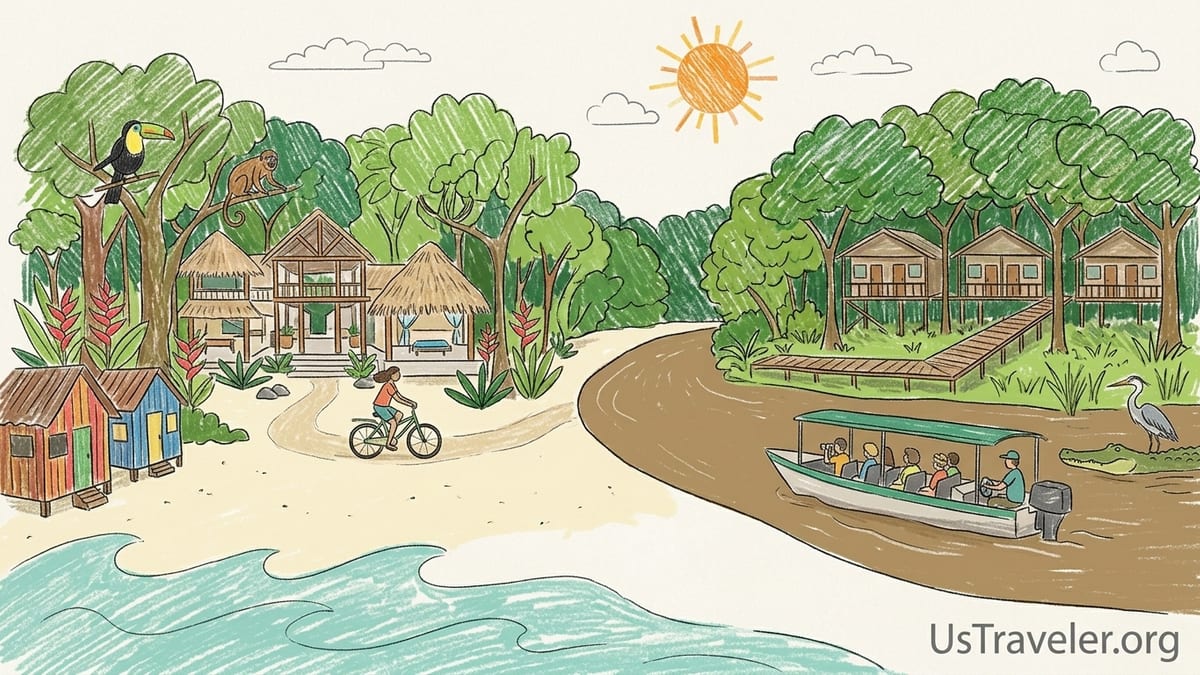
Caribbean Costa Rica is not a place of big all-inclusive resorts. Instead, you find clusters of small hotels threaded along the coast and canals, each neighborhood with a slightly different feel. Puerto Viejo has the deepest hotel market, with everything from five-star-feeling boutique properties like Hotel Aguas Claras on Playa Chiquita to budget cabinas set back from the road. A few minutes up the coast, Cahuita has a quieter, village atmosphere with simple beachfront guesthouses near its national park. Tortuguero, farther north and only accessible by boat or small plane, has a compact but specialized lodge scene focused on wildlife and all-inclusive style packages.
What differentiates these areas is not just price but the setting and structure of your days. In Puerto Viejo, most travelers book room-only or breakfast-included rates and spend their time biking to different beaches, cafes and cocktail bars. In Cahuita, you might walk from a small hotel on Playa Negra or near the park entrance straight onto hiking trails and calm swimming coves. In Tortuguero, your lodge is your entire world for a few days, with set meal times, scheduled canal safaris and guides pointing out toucans and caimans from the boat.
Understanding these differences helps you choose a base that fits your trip style. If you want freedom and nightlife, a boutique stay near Puerto Viejo’s Cocles or Playa Chiquita beaches is ideal. For a mellow, walkable village with easy national park access, Cahuita shines. For concentrated wildlife and a no-logistics experience, a Tortuguero canal lodge with transport and meals included can be worth every dollar, especially in turtle nesting season.
Puerto Viejo Boutique Hotels: Design, Dining and Adult-Focused Stays
Puerto Viejo’s boutique hotels are where Caribbean Costa Rica feels most polished. Properties such as Hotel Aguas Claras on Playa Chiquita have raised the bar with art-filled bungalows, lush tropical landscaping and direct access to quiet beaches. Aguas Claras markets itself as a boutique luxury hotel with individually curated suites, a pool, on-site restaurant and a small beach club area across the road, where guests can step onto Playa Chiquita’s pale sand and reef-protected water. Rooms typically start in the mid to high three figures per night in peak season, reflecting its high-end positioning rather than mass-market resort pricing.
In and around Puerto Viejo town and along Playa Cocles you also find smaller design hotels aimed at couples and adults seeking style without full-on luxury rates. Typical features include intimate pools framed by heliconias and palms, simple but thoughtful breakfasts, and rooms with outdoor showers or private decks. Most of these hotels offer breakfast-included rates, with guests heading out to nearby restaurants for lunch and dinner. This creates a very different rhythm from Tortuguero’s lodge packages: you control where you eat and when, and can easily combine beach time with cocktails or live music in town.
Transport logistics for Puerto Viejo boutiques are straightforward by Caribbean standards. Many hotels can arrange private shuttles from San José or La Fortuna, but most visitors either rent a car or use shared shuttles that drop off in town. Once checked in, many guests switch to bicycles, which are widely available for rent and make it easy to reach Cocles, Playa Chiquita or Punta Uva. Parking at boutique hotels is usually on-site but often informal, so self-drivers should be comfortable with narrow driveways and the occasional muddy patch during the rainy months.
Compared with Tortuguero lodges, wildlife at Puerto Viejo boutiques is more about casual encounters: howler monkeys in the trees at breakfast, a sloth above the driveway, agoutis crossing the garden. Serious wildlife excursions, such as visits to the nearby Jaguar Rescue Center or guided hikes in the Gandoca–Manzanillo Wildlife Refuge, are arranged as separate tours rather than baked into your room rate. This suits travelers who want a stylish base and the flexibility to structure their own days.
Beachfront Stays Around Puerto Viejo: Sand, Surf and Simple Comfort
True beachfront properties in the Puerto Viejo area range from simple rustic cabins to mid-range hotels with pools and on-site restaurants. The experience here is defined by your proximity to the sand rather than elaborate amenities. On Cocles and Playa Negra, many hotels sit just behind a strip of palms with paths that lead directly to the beach. You might trade high-end interiors for the simple pleasure of stepping from your room to the shoreline in under a minute, hearing the surf all night and watching sunrise with your feet in the sand.
In this category, rooms often run from modest double digits per person in low season for basic cabinas to mid three figures per night for more polished beachfront hotels with air conditioning and pools. Many restaurants and beach shacks are within walking distance, so full board is uncommon. A typical day might involve grabbing breakfast at your hotel or a nearby café, renting a surfboard directly on Cocles, then wandering back barefoot to your hammock. Pools, when they exist, are usually compact but welcome on days when Caribbean swells are too rough for swimming.
Beach conditions vary dramatically by spot. Cocles is a known surf beach, with red flags and strong currents that demand caution for inexperienced swimmers. Playa Chiquita and Punta Uva, by contrast, usually have gentler waves and sections of reef that create calmer, turquoise pools in normal conditions. When booking beachfront stays, pay close attention to which beach a property fronts and ask about seasonal conditions if swimming is a priority, particularly if you are traveling with children.
In terms of wildlife, beachfront properties south of Puerto Viejo town are surrounded by thicker forest and often see more activity in their gardens, from toucans and oropendolas to troops of howler monkeys. At night you may hear frogs and cicadas loudly, so light sleepers should pack earplugs. However, you will not get the dense canal and wetlands wildlife of Tortuguero, nor the close-at-hand sloths that sometimes frequent the inland gardens of boutique design hotels, so it is worth thinking about whether you value immediate beach access or a slightly more jungly, set-back location.
Cahuita Stays: Village Calm Beside a National Park
Cahuita, about a 30-minute drive north of Puerto Viejo, has a smaller and more relaxed hotel scene centered around two areas: the streets near the entrance to Cahuita National Park, and the black-sand stretch of Playa Negra. Here, properties tend to be modest in scale and price, with a mix of small hotels, guesthouses and cabina-style accommodations. You will not find the same concentration of design-led boutiques as Puerto Viejo, but you gain a quieter, more walkable base where the park and town are within easy reach on foot.
Near the park entrance, simple hotels and guesthouses offer the convenience of strolling to the white-sand beaches and forest trails of Cahuita National Park in a few minutes. Typical amenities include fans or air conditioning, small pools and breakfast included. Travelers who want to spend several days hiking, spotting wildlife and swimming inside the park appreciate being able to walk in early, before day-tripping crowds, and return to their hotel for an afternoon siesta or dip in the pool. Expect moderate per-night rates that are often lower than comparable accommodations in Puerto Viejo.
On Playa Negra, beachfront and near-beach hotels offer a more spread-out, residential feel, with coconut palms, black volcanic sand and fewer people overall. Some, like family-run guesthouses with pools and gardens, combine simple rooms with pretty grounds and direct beach access. Staying here suits travelers who want a peaceful, semi-rural vibe and do not mind a 10 to 20 minute walk or short taxi ride into the main village for dinner. The sea on Playa Negra can have stronger waves and a wilder feel than the more sheltered sections of the park, so it is appreciated more for walks and sunsets than for calm swimming.
Wildlife access from Cahuita is excellent relative to the level of development. The national park is one of the best places on the Caribbean side to see capuchin monkeys, howler monkeys, raccoons, coatis and a variety of birds along flat, well-maintained trails. Guided walks at the park entrance are reasonably priced and can be arranged on the spot, making it easy to add a half-day nature outing without pre-booked packages. Unlike Tortuguero, however, boat-based canal tours are limited and most wildlife viewing is on foot rather than from a kayak or motor launch.
Tortuguero Canal Lodges: All-Inclusive Style Wildlife Bases
Tortuguero sits on a narrow sandbar between the Caribbean Sea and an inland canal system, with no road access to the village or lodges. This isolation has produced a highly specialized hotel market. Most properties along the main canal operate as lodges that bundle boat transport from mainland docks, meals and guided tours into package-style stays of two to four nights. Options range from large, good-value lodges such as Evergreen, Mawamba, Pachira and Laguna to more upscale, smaller properties like Manatus or independent lodges upriver.
A typical mid-range lodge package includes round-trip boat transport from a Caribbean-side dock, two or three nights of lodging, all meals served buffet-style and several guided activities. Common inclusions are a village visit, at least one early-morning canal safari and a guided walk on lodge trails or inside Tortuguero National Park. Some lodges add night turtle walks in season at an additional cost, along with optional extra canal tours or kayaking. Prices vary, but for a two-night package many travelers can expect to pay a few hundred dollars per person, reflecting the bundled logistics and full-board nature of the stay.
The physical setting of Tortuguero lodges differs sharply from Puerto Viejo or Cahuita hotels. Rooms are usually in wooden or concrete blocks connected by covered walkways beneath towering trees, with screened windows rather than full glass, and ceiling fans instead of air conditioning at some properties. Pools tend to be central gathering points, ringed by loungers and often overlooking the canal. You will not find groomed beaches with chairs here; the Caribbean shore opposite the canal is typically rough, brownish water with strong currents, and most visitors do not swim in the ocean. Instead, the canal and backwater creeks are the focus, with boats gliding past caimans, herons, bats and occasionally swimming monkeys.
Transport included in Tortuguero packages is a major difference from other parts of Caribbean Costa Rica. Instead of arranging your own car or shuttle all the way to a hotel gate, you usually meet a lodge representative at a designated dock near La Pavona or similar departure points. After leaving your luggage with staff, you board a covered boat that winds through banana plantations and forest fragments before reaching the lodge. On departure, the lodge coordinates your boat back to the dock and onward land transfers, making Tortuguero feel self-contained and logistically easy for travelers willing to follow a set schedule.
Comparing Trip Styles: Boutique Coast vs Beachfront Simplicity vs Canal Immersion
Choosing between an Aguas Claras style boutique stay, a simple beachfront cabina and a Tortuguero canal lodge comes down to your ideal daily rhythm. In Puerto Viejo’s boutique hotels, your day might start with an à la carte breakfast in a stylish open-air restaurant, followed by a few hours at the hotel pool or a quick walk to a mellow beach cove. After lunch at a nearby café, you might join a chocolate tour or yoga class, then return for cocktails by the pool and dinner at one of Puerto Viejo’s better restaurants. This suits travelers who value design, food and flexibility as much as nature.
By contrast, a beachfront cabina near Cocles, Playa Negra or Cahuita’s coast is about simplicity and constant access to the sea. Expect a more casual, sometimes rustic environment where you rinse sand off your feet at the outdoor shower, store your surfboard under the deck and fall asleep to the roar of the waves. Meals are at local sodas and beach shacks, and wildlife viewing happens incidentally on beach walks or casual bike rides. For many independent travelers, this is the most authentic-feeling Caribbean experience, albeit with fewer polished touches than a high-end boutique or lodge.
A stay in Tortuguero feels structured and immersive. Wake-up calls before dawn are normal for canal safaris, breakfast follows immediately afterward and mid-day heat is for hammocks and pool time. Guides are central figures who interpret the landscape and ensure you spot as much wildlife as possible in a concentrated timeframe. While some travelers find the buffet meals and group tours slightly regimented, others appreciate not having to plan anything once they step onto the boat. Compared with Puerto Viejo and Cahuita, nightlife here is minimal and your days revolve around nature rather than restaurants or bars.
Many visitors combine these styles in a single itinerary, spending two or three nights in Tortuguero for wildlife, then transferring to Puerto Viejo or Cahuita for five or six nights of beach time. When planning, consider that Tortuguero packages already include most meals and activities; you may want a hotel-only rate in Puerto Viejo afterward to keep overall costs balanced. Also factor in travel time between regions, as reaching Tortuguero from San José or the Caribbean coast can take several hours of driving and boat transfers each way.
Practical Booking Tips and When to Go
Booking strategy varies by region. In Puerto Viejo’s deeper hotel market, boutique properties and popular beachfront hotels can sell out months in advance for Christmas, New Year and Easter weeks, as well as for some school holidays in North America and Europe. Outside those peaks, travelers often have more flexibility, especially in May, June and September, but design-forward spots with limited rooms still reward early reservations. Comparing inclusions is important: a higher nightly rate that includes breakfast, bikes and yoga classes may be better value than a bare-bones room that requires paying separately for everything.
In Cahuita, where there are fewer hotels, availability can tighten around local holidays, but many properties remain bookable closer to arrival in shoulder seasons. Because the village is small, it is worth checking the exact location of your stay relative to the park entrance or Playa Negra. Those traveling without a car often prefer being within a short walk of restaurants and the park, while self-drivers may enjoy the extra space and quiet of outlying beachfront guesthouses. As with Puerto Viejo, double-check whether your room has air conditioning or just a fan, especially for visits in more humid months.
Tortuguero’s lodge market runs on fixed packages and has very clear high and shoulder seasons. Turtle nesting, roughly from July to October with some variation, is peak time and should be booked well in advance if specific lodges are important to you. Outside those months, prices can be modestly lower and lodges less full, while wildlife viewing on the canals remains strong year-round. When comparing lodges, look at exactly what is included: some packages cover park entrance fees, extra canal tours or guided night walks, while others limit inclusions to one boat tour and a village visit, with additional excursions charged separately.
Across all three regions, travelers should be realistic about Caribbean weather. Showers can blow through at any time of year, though the coast often sees relatively drier periods around February to March and again in September to October, with variations by year. Rather than chasing a perfect forecast, think in terms of your tolerance for humidity and rain. Boutique hotels tend to offer more comfortable indoor spaces to retreat to during downpours, while beachfront cabinas and Tortuguero lodges rely more on covered outdoor decks and simple lounges. Packing lightweight rain gear, quick-dry clothing and a dry bag for boat transfers to Tortuguero is far more important than trying to pinpoint a completely dry week.
The Takeaway
The hotel landscape in Caribbean Costa Rica is best understood as a set of distinct markets rather than a single ladder of “best” properties. Puerto Viejo’s boutique hotels, led by design-driven stays near Playa Chiquita and Cocles, offer a stylish, food-forward base with easy access to multiple beaches and a lively town scene. Beachfront cabinas and mid-range hotels along Cocles, Playa Negra and Punta Uva prioritize direct sand access and a laid-back, barefoot rhythm. Cahuita delivers a quieter, village-centered experience next to one of the coast’s most rewarding national parks, with modest guesthouses and small hotels suited to walkers and wildlife lovers.
Tortuguero, in turn, is its own universe of canal lodges operating on package models that bundle boats, meals and guided wildlife activities. You trade the freedom of choosing each restaurant and beach for the ease of an all-in-one nature immersion. For many travelers, the ideal trip involves time in both worlds: a few days in Tortuguero to focus on canals and turtles, followed by a longer stay on the south Caribbean beaches to savor Afro-Caribbean culture, surfing, snorkeling and slow mornings in a hammock.
If you frame your choices around trip style rather than only star ratings, you are more likely to land in the Caribbean Costa Rica that matches your imagination, whether that is a polished boutique like Aguas Claras, a humble cabina on black sand or a stilted room above a Tortuguero canal. From there, the details of pools, meal plans and transport fall naturally into place.
FAQ
Q1. Is Puerto Viejo or Cahuita better as a base for first-time visitors?
For most first-time visitors, Puerto Viejo works better if you want a mix of beach-hopping, restaurants and nightlife, while Cahuita is ideal if you prioritize a calm village feel and easy access to a national park.
Q2. How many nights should I spend in Tortuguero?
Two nights is enough for most travelers to fit in canal safaris, a village walk and a turtle tour in season, while three nights offers a more relaxed pace with extra time at the pool.
Q3. Do Tortuguero lodge packages usually include transport?
Most established lodges bundle boat transport from a designated dock to the lodge and back into their packages, and some also help arrange the land shuttle to and from major hubs like San José or the Caribbean coast.
Q4. Can I swim at the beach in Tortuguero?
Swimming in the ocean at Tortuguero is generally not recommended due to strong currents and rough surf, so visitors usually swim in their lodge pools instead of the sea.
Q5. Are Puerto Viejo boutique hotels suitable for families with children?
Some boutique hotels welcome children and have family bungalows, but others are adults-focused, so it is important to confirm age policies and room configurations before booking.
Q6. Is it necessary to rent a car on the Caribbean coast?
It is not strictly necessary; many visitors rely on shared shuttles, taxis and bicycles around Puerto Viejo and Cahuita, but a rental car offers more flexibility for exploring beaches and making grocery or ATM runs.
Q7. When is the best time to visit for turtle nesting in Tortuguero?
The main nesting season for green turtles typically runs from around July into October, with some variation by year, and night tours during that window should be booked in advance.
Q8. How far in advance should I book hotels in Puerto Viejo?
For peak periods like Christmas, New Year and Easter, it is wise to book boutique and beachfront hotels several months ahead, while shoulder seasons often allow more flexibility.
Q9. Is Cahuita safe to walk around at night?
Cahuita is generally a relaxed village, but as in most coastal towns, it is sensible to stick to lit streets, avoid carrying valuables and use taxis for longer, darker stretches after dinner.
Q10. Can I combine Tortuguero with Puerto Viejo or Cahuita in one trip?
Yes, many itineraries pair two or three nights in Tortuguero with several nights on the south Caribbean beaches, and shuttles or private transfers can connect the regions in a single travel day.