


Tortuguero is one of Costa Rica’s most distinctive destinations: a roadless village on a thin jungle peninsula, reached only by boat or plane, wrapped in canals and nesting sea turtle beaches. In 2026, most visitors still arrive on all-inclusive lodge packages from San José, but independent travelers can also stitch together shuttles, public buses and river boats. Understanding how transport, lodges, meals and tours fit together is essential before you book.
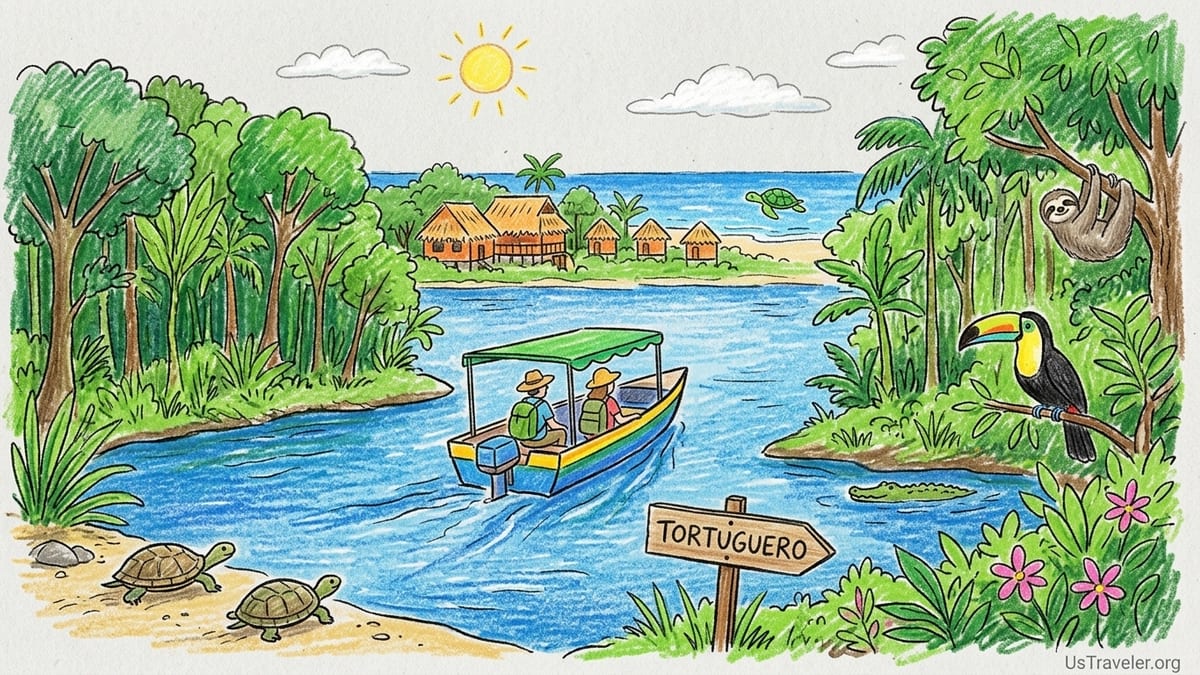
How Tortuguero Packages Work in 2026
Tortuguero has no direct road access, so current 2026 packages from San José typically bundle almost the entire journey: early-morning pickup in the Central Valley, ground transport across the Caribbean lowlands, a riverboat transfer to the village, lodge accommodation, most or all meals, and at least one guided canal tour. Operators ranging from Evergreen Lodge and Pachira Lodge to smaller outfits like Eco Tours Costa Rica and Wildlife Tours Costa Rica market near-identical logistics, with prices that vary mainly by lodge category, season and length of stay.
Typical all-inclusive prices this year for a 2-day / 1-night package from San José hover around the high 200s to high 300s US dollars per person based on double occupancy, while common 3-day / 2-night packages land in the low 300s to low 400s range. For example, one 2-day package marketed through a Tortuguero specialist site lists double-occupancy rates around 396 US dollars per person before tax through November 2026, while 3-day options with midrange jungle lodges frequently publish rates between roughly 350 and 450 US dollars per person in high season. These are not bare-bones trips: they normally include at least four to six meals, a bilingual naturalist guide and several boat or village excursions.
Because the boats that serve Tortuguero depart from specific docks such as La Pavona or Caño Blanco, packages are built around these fixed departure times. Your bus or shuttle does not simply “drop you in town”; it delivers you to the pier in time for the lodge or public boat, and from there everything is choreographed. Travelers who try to replicate the route independently can certainly do so, but must pay close attention to early departures, limited boat schedules and potential delays on Route 32 between San José and the Caribbean coast.
A key implication of this structure is that you rarely save money by stripping pieces out of a package. Lodges and tour companies negotiate wholesale rates for buses and boats, and many explicitly state that unused segments, such as meals or a village tour you decide to skip, are nonrefundable. You are buying a bundled experience, not a menu of separate services.
2-Day / 1-Night Tortuguero Packages: What You Actually Get
The classic 2-day / 1-night Tortuguero package is designed for travelers with very limited time who still want to glimpse the canals and wildlife. A representative itinerary starts with a 6:00 to 6:30 a.m. pickup from central San José, Heredia or Alajuela, followed by a highway drive north and east, a hearty Caribbean-style breakfast stop near Guápiles, and then a transfer to the river dock at La Pavona. There, you board a covered boat for a one to one-and-a-half-hour ride along the jungle canals before disembarking directly at your lodge pier late morning or around midday.
Once at the lodge, you check into a simple but comfortable bungalow or cabin. Midrange properties like Evergreen, Aninga or Pachira Lodge typically include a welcome drink, buffet lunch, a free afternoon by the pool or on nature trails, and an optional guided visit to Tortuguero village and the Sea Turtle Conservancy interpretation center later in the day. Dinner is usually buffet style, with a mix of rice and beans, salads, grilled meats and vegetarian options. Packages often provide 24-hour coffee and tea stations rather than in-room kettles, which suits the rustic jungle atmosphere.
Most 2-day itineraries also squeeze in at least one guided canal tour, often at dawn on day two. You rise around 5:30 or 6:00 a.m., sip coffee while the forest wakes up, then board a low-slung motorboat with your naturalist guide to explore narrow side channels of Tortuguero National Park. The emphasis is on spotting howler monkeys, sloths, caimans, iguanas, herons and kingfishers in the soft morning light. After a two- to three-hour excursion, you return for a full breakfast, check out and begin the journey back to San José, arriving mid to late afternoon.
In 2026, sample pricing for these 2-day / 1-night bundles from San José often starts in the high 200s US dollars per person in low season and climbs toward roughly 350 to just under 400 US dollars in high season for standard double rooms, excluding the 13 percent Costa Rican value-added tax where it is not already factored in. Single travelers typically pay a supplement that can push the total closer to 400 or more, while triple-occupancy rates are lower. Turtle nesting night tours, when in season, are frequently treated as optional add-ons and may cost an additional 30 to 50 US dollars per person, plus the national park entrance fee, which has its own separate charge structure.
3-Day / 2-Night Packages: Why Many Travelers Prefer an Extra Night
While it is possible to enjoy Tortuguero in a single overnight, many Costa Rica specialists and lodges recommend a 3-day / 2-night stay. The extra night adds breathing room and often an additional guided activity without dramatically increasing the trip cost. For instance, a representative 3-day / 2-night package marketed by Eco Tours Costa Rica in 2026 lists prices around 430 US dollars per person in shoulder periods, with small seasonal variations. Other operators advertising stays at Pachira, Evergreen or similar lodges highlight base rates starting around 299 to 350 US dollars per person for budget windows, rising into the low to mid 400s in peak dates.
The logistics of day one are almost identical to the 2-day package: early San José pickup, breakfast near Guápiles, riverboat transfer and arrival at the lodge before or just after lunch. The main differences appear in how your time in Tortuguero is structured. With two nights, you can spread out the classic activities: one dawn canal tour on day two, a guided walk along forest trails or the beach another morning or afternoon, and an unhurried visit to the village and turtle museum without feeling rushed to check out.
Many 3-day itineraries specifically note two or more separate boat excursions, plus a naturalist-led hike. For example, some lodge programs describe an afternoon visit to Tortuguero village and the Sea Turtle Conservancy facility on day one, followed by a canal tour early on day two and free time by the pool or in hammocks later that day. If you travel during turtle season, the tour provider may coordinate an optional night walk on either of your two evenings, increasing the chances that conditions and park quotas align.
From a value perspective, the incremental cost of adding a second night often translates into an extra 120 to 180 US dollars per person relative to a one-night package when comparing similar lodge categories and seasons. Since that amount includes another full day of boat access, guiding and at least three additional meals, travelers who are not on the tightest schedules frequently conclude that the 3-day option offers better overall value and a more relaxed immersion in Tortuguero’s canal environment.
Breaking Down the Inclusions: Transport, Lodges, Meals and Tours
Whether you choose a 2-day or 3-day package, the core components are largely the same. Ground transport from the San José area is usually in an air-conditioned tourist coach or minibus, with hotel pickups starting around 6:00 a.m. Lodges often cluster arrivals at a shared breakfast restaurant along Route 32 or near Guápiles, where multiple tour buses converge. From there, you transfer to smaller vehicles or continue on the same bus to the La Pavona dock, a simple but busy embarkation point where boats line up according to lodge or public service.
The boat segment from La Pavona to Tortuguero typically lasts between one and one-and-a-half hours, meandering along the La Suerte and other canals through lowland rainforest. Lodge-based boats usually carry 10 to 30 passengers under a roofed canopy, with open sides for viewing wildlife. For independent travelers using public boats, ticket prices reported in recent years hover around the equivalent of 7 to 10 US dollars per person one way, paid in local colones at the small ticket counter on the dock, with luggage piled at the front of the boat.
Lodge accommodation in these packages is generally in simple, screened bungalows or multi-unit cabins rather than luxury suites. Properties like Pachira, Evergreen and Aninga feature ceiling fans instead of air conditioning in many rooms, though some upgraded categories now advertise limited AC. Expect private bathrooms with solar-heated water, basic furnishings and the constant sounds of the jungle at night. More upscale options in the area may include larger rooms, more polished landscaping and quieter locations along side canals, which can be worth the premium for light sleepers.
Meals are typically buffet style, emphasizing fresh fruit, gallo pinto, salads and straightforward main dishes. A 2-day package normally includes breakfast on the outbound drive, lunch and dinner on day one, breakfast in Tortuguero on day two, plus a lunch stop on the way back toward San José. A 3-day itinerary adds at least one more lunch and dinner, and possibly an extra breakfast depending on departure times. Guided activities almost always include at least one canal tour and a village visit, with the option of adding turtle nesting walks in season and, at some lodges, short night walks focused on frogs and nocturnal creatures.
Turtle Nesting Season, Canal Wildlife and When to Go
Tortuguero’s headline attraction remains its sea turtles. The main green turtle nesting season typically runs from roughly July through October, with peak laying usually in August and September, although exact timing varies by year. During these months, many packages highlight the option to add a regulated night turtle tour for an extra fee. You walk with a licensed local guide under park rules, using red-filtered lights or no lights at all, moving quietly along specific beach sectors when rangers signal that a turtle is laying. Photography is heavily restricted to protect the animals, and tours run only when conditions and quotas allow.
Outside turtle season, Tortuguero still delivers outstanding wildlife viewing. The morning and late afternoon canal tours focus on monkeys, sloths, river turtles, basilisk lizards, caimans and abundant birdlife: kingfishers, herons, toucans and occasionally rare species like the agami heron. Even in the off-season, reviewers consistently describe the boat excursions as having a “mini Amazon” feel, with overhanging branches, mist on the water and howler monkeys calling from the canopy. Many travelers who visit in months like January or March leave feeling that the canals were the highlight, even if they never saw a turtle.
Weather on Costa Rica’s Caribbean coast follows patterns different from the Pacific. While heavy rain is possible in any month, September and October, which are peak turtle months, can be relatively drier than August or November, although this can flip from year to year. December through March often brings a mix of showers and sunny breaks. Because Route 32 is prone to closures after landslides or during heavy rain, travelers on fixed schedules may want to plan at least one buffer night in the San José area before international flights, especially in the wetter months.
For many visitors, a practical sweet spot is to combine Tortuguero with the northern plains or Caribbean coast over six to eight days: two or three nights in Tortuguero, then continue on to La Fortuna, Sarapiquí or Puerto Viejo using lodge-arranged shuttles or independent connections. Many lodges and tour companies advertise onward transport from Tortuguero directly to these destinations for a supplement, which can simplify logistics and avoid backtracking to San José.
Independent Travel: Shuttles, Public Buses and DIY Boat Connections
Travelers who prefer more flexibility or lower costs can reach Tortuguero without a package, but doing so requires extra attention to timing. The classic independent route from San José involves an early-morning public bus from the capital’s Caribbean terminal to the small town of Cariari, then a second bus to the La Pavona dock, followed by a public boat to Tortuguero village. Total travel time often falls between five and seven hours, depending on connections and road conditions, and you pay as you go rather than in one bundle.
Recent traveler reports suggest that the public boats from La Pavona to Tortuguero typically run several times per day, with common departures in late morning and mid-afternoon, often clustered between about 9:00 a.m. and 4:00 or 4:30 p.m. Exact timetables can shift, and operators sometimes hold the last boat to wait for the incoming bus from Cariari, but it is risky to rely on making a very late afternoon connection. Ticket prices in recent years have hovered around a few thousand colones per person, roughly equivalent to under 10 US dollars, with extra charges for bulky luggage. There is no need to buy tickets far in advance, as you generally purchase them on arrival at the dock.
Another common independent strategy is to use a shared or private shuttle straight from San José, La Fortuna or Puerto Viejo to La Pavona, then connect to the public boat. Several shuttle companies advertise early-morning departures timed for the first or second boats, and costs from San José often fall in the roughly 40 to 60 US dollar range per person one way in shared vehicles, with private transfers costing significantly more but offering more schedule control. Some travelers who rent cars choose to drive themselves to La Pavona, park in the paid lot near the dock and continue to Tortuguero by boat while leaving the car on the mainland.
In Tortuguero village itself, independent travelers can stay in budget guesthouses or small hotels that cost far less than lodge packages, sometimes under 20 to 30 US dollars per person per night for dorm beds or simple rooms. Canal tours and turtle walks can then be booked locally through small agencies or directly with licensed guides, with typical combined prices for a night turtle tour plus a daytime canoe or motorboat excursion around 60 to 80 US dollars per person, plus national park fees. For slow travelers who do not mind piecing things together and who value local interactions, this approach can be appealing, but it shifts all responsibility for missed connections and delays onto you.
Comparing Value: Who Should Book 2-Day, 3-Day or DIY
Choosing between a 2-day and 3-day package or independent travel from San José comes down to time, budget and travel style. The 2-day / 1-night packages are most suitable for visitors with tight itineraries who want an efficient, mostly hassle-free glimpse of the canals and perhaps a village visit. You trade a very structured schedule and a relatively long transit day for the certainty of having everything prearranged, and your cost per day is higher because the logistics are intense for such a short stay.
The 3-day / 2-night option typically suits travelers who can spare an extra day and want a deeper immersion in the jungle atmosphere at only a modest price increase. When you spread the total cost across the extra night, the per-day rate often decreases slightly, and you gain flexibility to work around rain, potential turtle tour cancellations or park closures. For many couples and families, the incremental cost of perhaps 150 US dollars per person for another night, two more boat outings and more relaxed mornings feels reasonable given the effort of reaching Tortuguero in the first place.
Independent travel becomes compelling when you want to control each element, stay in budget accommodations, or link Tortuguero directly with other parts of the country without a prepackaged structure. A solo backpacker might spend far less than 300 US dollars total for two or three nights in Tortuguero by choosing dorm accommodation, public buses and local boatmen, at the cost of a more complicated transit day and variable comfort. On the other end of the spectrum, higher-end travelers sometimes combine a charter flight from San José with a stay at a boutique canal lodge, avoiding the long bus and boat combination altogether.
One nuance worth noting is that some midrange operators and online travel agencies sell similar Tortuguero packages at slightly different price points depending on group size and booking channel. If you are traveling with three or four people, it is sometimes possible to negotiate small discounts or added-value inclusions, such as a complimentary extra activity or a more flexible onward transfer, especially outside peak dates. However, core costs such as park entrance fees, turtle tour permits and taxes tend to be fixed, so it is wise to treat offers that seem far below prevailing market ranges with caution.
FAQ
Q1. Is a 2-day / 1-night Tortuguero tour from San José really enough time?
For a quick taste of the canals, a 2-day / 1-night package is workable, but your schedule will be very compressed and most of your first and second days are spent in transit. Many travelers feel that 3 days / 2 nights offers a better balance between travel time and time actually on the water and in the village.
Q2. How much do Tortuguero packages from San José typically cost in 2026?
Most mainstream lodge-based packages from San José cost roughly from the high 200s to the low or mid 400s US dollars per person, depending on whether you choose 2 days or 3 days, the lodge category, the season and whether taxes are included in the advertised price.
Q3. Are turtle nesting tours included or extra?
In many programs turtle nesting tours are optional add-ons, especially during the main green turtle season from about July to October. Expect to pay an additional fee for the night walk itself plus the separate national park entrance charge for turtle sector access.
Q4. Can I travel to Tortuguero independently without a tour package?
Yes. You can combine public buses or shuttles from San José to Cariari or La Pavona with the public boat to Tortuguero village and then stay in independent lodges or guesthouses, booking canal and turtle tours locally. This approach can be cheaper but requires more planning and flexibility.
Q5. How reliable are the public boats between La Pavona and Tortuguero?
Public boats usually run several times a day between roughly mid-morning and late afternoon, with schedules adjusted around bus arrivals. However, exact times can change and service generally stops by late afternoon, so it is safer to arrive early rather than risk missing the last departure.
Q6. What level of comfort should I expect at Tortuguero canal lodges?
Most canal lodges are rustic midrange properties with screened windows, ceiling fans and simple furnishings rather than full-service resorts. You can expect private bathrooms, mosquito nets where needed, extensive gardens and shared buffet meals, with some higher-end options offering more polished rooms and quieter locations.
Q7. Do I need to worry about road closures on the way to Tortuguero?
Route 32, which links San José to the Caribbean lowlands, can be affected by heavy rain, landslides or maintenance works that slow traffic. Package providers monitor conditions and adjust departure times when possible, but independent travelers should build in extra time and avoid planning tight same-day connections with international flights.
Q8. Are meals and drinking water included in Tortuguero tour packages?
Most 2-day and 3-day packages include breakfast on the road, buffet lunches and dinners at the lodge and often a lunch stop on the way back to San José. Filtered drinking water, coffee and tea are commonly available at central stations, though bottled beverages and alcoholic drinks cost extra.
Q9. Can I continue from Tortuguero to La Fortuna or Puerto Viejo without returning to San José?
Yes. Many lodges and tour operators offer onward transfers from Tortuguero to La Fortuna, Sarapiquí or the southern Caribbean coast for an additional fee, either bundled into your original package or arranged on site. Independent travelers can also combine boats and shuttles to connect these routes.
Q10. When is the best time of year to visit Tortuguero?
If seeing nesting sea turtles is a priority, plan for roughly July to October, with August and September often considered peak months. For canal wildlife and a mix of conditions, many visitors choose the drier spells that can occur in September, October or between December and March, keeping in mind that rain is possible year-round on the Caribbean coast.