


Cahuita National Park on Costa Rica’s southern Caribbean coast protects one of the country’s most important coral reefs. Snorkeling here is not a casual swim off the beach but a structured, guide-led experience designed to protect the reef while giving visitors close views of marine life. Understanding how local tours work, what is included, and how sea and weather conditions shape the day will help you choose the right Cahuita snorkeling trip and make the most of your time in the park.
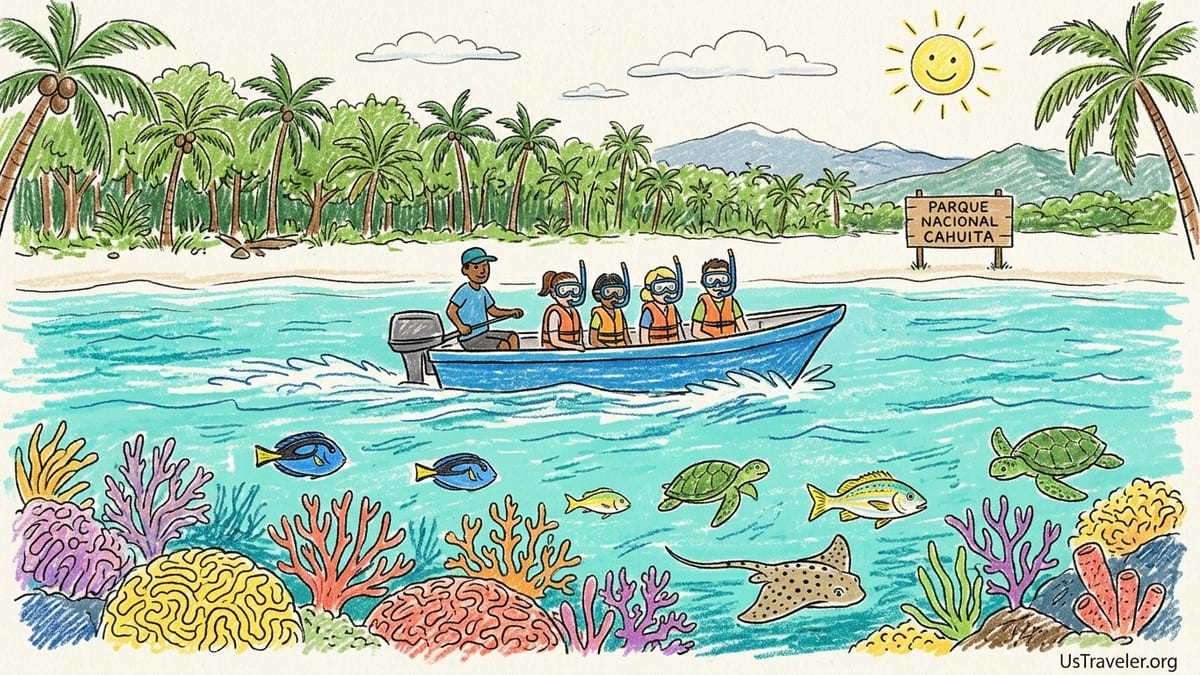
Why Cahuita Reef Snorkeling Is Done With Guides and Boats
Cahuita National Park protects a fringing reef that covers roughly 600 hectares, making it one of the most studied and biologically rich coral systems in Costa Rica. Local authorities and the community have agreed that access must be tightly managed to reduce damage from untrained visitors, careless fin kicks, and overcrowding on shallow coral heads. As a result, independent snorkeling from the shore within the main reef area is generally not allowed, and visitors are required to go with licensed local guides on organized tours that use small boats to reach designated mooring buoys.
In practice this means that while you can freely swim at the beaches inside the park, you will not be permitted to bring snorkel gear into the main protected reef zone on your own. Local guides are trained through national programs and registered with the park service, and they follow set routes and depth limits based on daily conditions. For travelers, this system ensures safety and a richer wildlife experience while channeling tourism income directly to the community that helps monitor and protect the reef.
Boat access also minimizes the time snorkelers spend finning over live coral. Instead of entering from shore and kicking long distances across fragile shallows, tours depart from Cahuita town’s small dock or beach, motor out beyond the surf line, and tie off at mooring buoys above deeper sections of reef. From there, guides lead small groups along natural sand channels and coral walls. The approach reduces broken coral and sediment clouds, both of which can harm the ecosystem, and it makes it easier for guides to adjust the route if visibility or currents change during the outing.
For visitors, the result feels less like a crowded beach activity and more like a curated nature excursion. Licensed operators usually limit group sizes, keep families together, and match nervous or first-time snorkelers with extra floatation. In return, travelers accept that this is not a do-it-yourself spot. If you are hoping to snorkel freely from the beach, you will be better served at other Caribbean locations, while Cahuita is best approached as a guided eco-tour.
What Cahuita Snorkeling Tours Typically Include
Most Cahuita reef excursions are half-day trips organized by small local outfits in Cahuita town or through hotels in nearby Puerto Viejo and Playa Cocles. A typical boat-based snorkeling-only tour runs about two to three hours on the water, while combo snorkel-and-hike experiences last four to six hours. Prices often fall in the range of about 55 to 75 US dollars per person for a shared tour, depending on whether hotel transfers, lunch, and a guided hike are included.
Standard inclusions usually cover a certified local guide, boat transport, a captain, mask, snorkel, fins, and safety gear such as lifejackets and sometimes short wetsuit vests or flotation belts. Many operators also provide fresh tropical fruit, purified drinking water, and dry storage on the boat for phones and small bags. Some, like Cahuita-based outfits advertising “combo snorkeling and hiking,” bundle a guided coastal walk in the national park trail system after the in-water portion, which can be a good value if you planned to hike anyway.
For example, a small operator in Cahuita might sell a combo tour at around 60 to 70 US dollars per person that includes hotel pick up in Cahuita or Puerto Viejo, a 1.5 to 2 hour boat snorkel session with two or three different reef stops, a fruit break at Punta Cahuita beach, and then a guided hike back along the coastal path to the park entrance. Another company’s snorkeling-only option may cost slightly less and focus on maximizing time on the reef, ideal for strong swimmers or repeat visitors who have already explored the trail system.
National park entry for Cahuita is managed via a voluntary donation at the main Kelly Creek entrance for most foreign visitors. However, some tour companies either include this suggested contribution in their rate or collect it separately before entering the park. When you book, ask whether park donations are already factored into the tour price and what currency is preferred. Carry some small Costa Rican colones or US dollars in cash in case the park kiosk is operating on donations directly from visitors that day.
Best Departure Times, Sea Conditions and Seasonality
In the southern Caribbean, sea and weather patterns differ from Costa Rica’s Pacific coast. The clearest water for snorkeling around Cahuita often comes in the relatively calm months of September and October and again in February and March, when wind and river runoff are usually lighter and visibility can extend many meters over the reef. In contrast, heavy rains or strong Caribbean swells can quickly reduce clarity, and park staff or tour operators may cancel reef trips at short notice if conditions are unsuitable.
Most operators schedule their main departures in the morning, typically between about 8:00 and 9:30 a.m. Morning trips generally offer the best combination of calm water, brighter light for viewing corals and fish, and a lower chance of thunderstorms. If you are staying in Puerto Viejo or farther south, shuttle pick up may start roughly an hour earlier to allow for the drive to Cahuita. Afternoon outings sometimes run in the drier months but are more vulnerable to onshore winds and choppier seas that can make the experience tiring for less confident swimmers.
Water temperatures in the Cahuita area are usually warm enough to snorkel comfortably without a full wetsuit for most of the year, often sitting in the upper 70s or low 80s Fahrenheit. However, people who chill easily or plan to spend long sessions in the water often appreciate a thin rash guard or neoprene top, which also provides sun protection. Caribbean sun can be intense even on hazy days, and reflections off the water amplify the effect, so long-sleeved swim shirts and reef-safe sunscreen are wise investments.
Because conditions change quickly, it is wise to build flexibility into your itinerary. If you have several days in the area, talk with your hotel or a local tour office on your first afternoon, ask them which day looks best that week, and book your snorkeling excursion then. During stretches of rough seas, some operators pivot to focusing more on the park’s hiking and wildlife viewing while pausing reef trips until clarity improves. A reputable guide will be transparent about visibility and will cancel rather than run a subpar or unsafe outing.
Wildlife You May See: From Coral Gardens to Coastal Rainforest
Underwater, Cahuita’s reef is known for hard and soft corals such as brain coral, elkhorn coral, sea fans, and finger-like formations that create complex three-dimensional habitat. Snorkelers often glide above shallow coral gardens interspersed with sand patches where schools of blue tangs, surgeonfish, and grunts feed. Butterflyfish, parrotfish, angelfish, and sergeant majors are common, and patient observers can spot camouflaged species like scorpionfish and flounder resting on the bottom or blending into rock outcrops.
Guides frequently point out larger or more elusive creatures when they appear. These may include shy nurse sharks resting under ledges, moray eels peeking from crevices, southern stingrays gliding just above the sand, or hawksbill and green sea turtles browsing among the seagrass beds. On some days, you may also see lobsters, cleaner shrimp, or sea cucumbers as part of the reef’s invertebrate community. The exact mix of wildlife changes with currents, time of day, and season, so no guide can guarantee particular sightings, but a trained eye increases your chances of noticing well-camouflaged animals.
Above the waterline, the experience broadens into a full coastal ecosystem. During the boat ride and surface intervals, you may watch brown pelicans diving, frigatebirds circling on thermals, or herons stalking the mangroves near shore. When you combine snorkeling with a national park hike, the list expands even further. The coastal trail between the Kelly Creek entrance and Punta Cahuita often produces sightings of white-faced capuchin monkeys, mantled howler monkeys calling from the canopy, three-toed or two-toed sloths wedged into tree forks, raccoons patrolling the beach, and iguanas sunning on branches.
Because local guides grew up in or near Cahuita, many know individual trees where sloths frequently rest or spots where poison dart frogs call after rain. A guide who spent the morning pointing out corals and reef fish may spend the afternoon explaining medicinal plants, bird songs, and traditional Afro-Caribbean uses of coastal resources. That combination of marine and terrestrial interpretation is what makes the snorkeling-plus-hiking format especially rewarding for travelers interested in ecology and culture, not just a quick swim.
How Snorkeling-Plus-Hiking Combo Tours Work
Combo tours that pair reef snorkeling with a national park hike are now one of the most popular ways to experience Cahuita. The day typically begins with hotel pick up in Cahuita or nearby towns and a short briefing at the park entrance or on the beach. After organizing masks, fins, and lifejackets, the group boards a small panga-style boat and motors out along the coast to the first reef stop. Snorkeling sessions usually last 30 to 45 minutes at each of two or three different spots, depending on sea conditions and the group’s comfort level.
Once the in-water portion is complete, the boat usually drops passengers at Punta Cahuita, a scenic point with white-sand beaches and forest backing the shoreline. Here the group may rest under the trees, enjoy sliced pineapple and watermelon, and reapply sunscreen while the guide transitions into a hiking role. After the break, you follow the coastal trail back toward the main entrance, often covering three to four kilometers at an easy pace with plenty of stops to look for wildlife and photograph the beaches.
Some operators keep the hike relatively short, focusing on interpretive stops near Punta Cahuita before arranging boat pickup back to town. Others, including outfits that advertise a “snorkel from Cahuita, hike back through the park” experience, walk the full section of coastline to the Kelly Creek entrance, where your driver meets you for the return transfer. Families with younger children often appreciate the flexibility to shorten the walking distance, while more active travelers enjoy making a loop that never feels repetitive.
For travelers based in Puerto Viejo, Manzanillo or Playa Chiquita, combo tours often include round-trip transport. A small shuttle collects passengers at guesthouses and cabins, brings them to Cahuita for the tour, and returns mid-afternoon. This arrangement avoids the need to navigate parking at the park entrance and lets visitors relax if they choose to enjoy a local Caribbean-style lunch or a cold drink in Cahuita village after the hike.
Booking, Choosing a Guide, and What to Bring
There are three main ways to book a Cahuita snorkeling tour: through your hotel, via a regional booking platform or travel agency, or directly on the street or beachfront in Cahuita. Many small hotels in Puerto Viejo and Cahuita work with a short list of trusted operators and can reserve spots with guides they know personally, often at similar prices to booking yourself. Online platforms list combo snorkel-and-hike trips and show recent reviews, which can be helpful in high season when tours fill quickly.
If you prefer a more spontaneous approach, you can walk into one of the small tour offices in Cahuita town or talk with guides who wait near the park entrance early in the morning. This route may allow some flexibility in price, especially if you form a small group or agree to join an existing departure. When negotiating, focus not only on cost but on safety and group size. Ask how many people will be on the boat, whether the guide is licensed to operate inside the park, and what happens if conditions turn poor on the day of the trip.
Regardless of how you book, plan to bring a swimsuit, towel, reef-safe sunscreen, a long-sleeved rash guard or light shirt, a hat, sunglasses with a strap, and sandals or water shoes suitable for boarding from the beach. For the hiking portion, lightweight walking shoes or sturdy sandals work well on the relatively flat, sometimes muddy coastal trail. A small daypack with a reusable water bottle, insect repellent, and a dry bag or zip bags for electronics is useful, even if the boat has dry storage. Most tours provide masks, snorkels and fins, but serious snorkelers who know they fit unusual face shapes or have strong preferences often choose to bring their own mask.
Cash is important for tips, donations, and small extras. Local custom expects a gratuity for good service, often around 10 to 15 percent of the tour price, divided between the guide and captain. There are no shops inside the park, so snacks or extra water should be purchased beforehand in Cahuita town. Alcohol is not appropriate on reef tours and is prohibited inside the national park; this is an eco-focused outing, not a party boat atmosphere.
Safety, Conservation Rules and Responsible Snorkeling
Cahuita’s status as a national park means that conservation rules are actively enforced. Guides will remind you not to stand on or touch coral, not to chase or harass sea turtles or other wildlife, and not to remove any shells, coral fragments, or living organisms from the reef. Fins and knees are the most common causes of accidental coral damage, so practicing a horizontal, slow flutter kick and staying aware of your buoyancy are key. If you are a weak swimmer, use the flotation offered by your guide and stay close so they can assist you if currents or waves increase.
Visitors are not allowed to bring their own snorkeling gear into certain areas of the park without a licensed guide, both to ensure supervision and to discourage uncontrolled access to fragile zones. Smoking, loud music, and littering are all prohibited inside the park, and waste disposal is taken seriously. Many operators encourage guests to use reef-safe sunscreen with minimal harmful chemicals and to apply it at least 20 minutes before entering the water to reduce the amount that washes directly onto the corals.
From a safety perspective, guided tours provide several advantages over independent exploration. Boats carry lifejackets, and guides are familiar with localized currents, shallow rock formations, and conditions near the surf zone. If someone experiences cramping, anxiety, or a leaking mask, the guide or captain can quickly assist or bring that person back to the boat. Children usually wear extra flotation vests, and guides may suggest that very young or nervous participants sit out stronger-swimming portions or remain closer to the vessel where they can hold onto a safety line.
Responsible travelers also consider their impact beyond the reef. Staying on marked trails during the hike prevents erosion and damage to sensitive plant communities. Respecting wildlife viewing distances, especially around monkeys and raccoons that may approach for food, helps reduce human-animal conflict. Choosing locally owned operators, eating in Cahuita’s small restaurants, and staying in locally run lodgings all contribute to a tourism model that encourages the community to continue protecting the national park and its reefs for future generations.
The Takeaway
Snorkeling the reef at Cahuita National Park is not a casual swim but a guided experience shaped by local conservation rules and community priorities. By joining a licensed boat tour, you gain access to some of Costa Rica’s healthiest Caribbean coral gardens while supporting efforts to protect them. In return, you agree to follow your guide’s instructions, respect restricted zones, and accept that sea and weather conditions may require last-minute adjustments or cancellations.
For most travelers, the combination of boat-accessed snorkeling and a guided hike along Cahuita’s coastal trail offers a full, immersive day in one of the country’s most distinctive landscapes. Warm Caribbean water, colorful coral, reef fish, and the chance of spotting turtles or rays blend with monkeys in the treetops and sloths resting above white-sand beaches. With realistic expectations, flexible timing, and a willingness to prioritize reef health over rigid plans, Cahuita can easily become a highlight of a Costa Rican itinerary.
FAQ
Q1. Do I really need a guide to snorkel in Cahuita National Park?
Yes, in practice visitors are expected to snorkel the main reef only with licensed local guides using authorized boats, both for safety and to protect the coral ecosystem.
Q2. How much does a typical Cahuita snorkeling or combo tour cost?
Shared boat-based snorkeling tours commonly cost around 55 to 75 US dollars per person, with combo snorkel-and-hike trips at the higher end depending on inclusions.
Q3. How long do Cahuita snorkeling tours last?
Snorkeling-only tours usually last about two to three hours on the water, while snorkel-plus-hike combos typically run four to six hours including the coastal walk.
Q4. What equipment is included, and can I bring my own gear?
Most tours include mask, snorkel, fins, and lifejackets. You can bring your own mask and snorkel, but independent use inside the park is restricted without a guide.
Q5. When is the best time of year to snorkel the Cahuita reef?
Conditions vary, but many operators report the clearest water around September and October and again in February and March when seas are often calmer.
Q6. What marine life am I likely to see while snorkeling?
Snorkelers often see hard and soft corals, reef fish such as parrotfish and angelfish, and sometimes sea turtles, rays, moray eels, or nurse sharks.
Q7. Are Cahuita snorkeling tours suitable for children and beginners?
Yes, many operators welcome families. Guides provide flotation and close supervision, though very young or nervous swimmers may stay closer to the boat.
Q8. How do snorkel-and-hike combo tours work in practice?
Most combos start with a boat trip and reef snorkeling, then drop the group at Punta Cahuita for a fruit break followed by a guided hike back along the coastal trail.
Q9. What should I wear and bring on a Cahuita snorkeling tour?
Wear a swimsuit, rash guard, hat, and secure sandals or light shoes. Bring reef-safe sunscreen, a towel, water, insect repellent, and a small daypack.
Q10. What happens if sea conditions are poor on the day of my tour?
If waves or visibility are unsafe or very low, reputable operators postpone or cancel reef trips and may offer alternate dates, different activities, or refunds according to their policy.