


Guanacaste is the Costa Rica most travelers dream about: long Pacific beaches, dry tropical forest, reliable sunshine and a laid-back “pura vida” rhythm. Yet its coastline and inland parks are surprisingly varied. Tamarindo, Papagayo, Playa Conchal, Playa Flamingo, Playas del Coco, Nosara, Sámara and Rincón de la Vieja each deliver a different version of Guanacaste, from surf-town buzz and yoga retreats to polished luxury resorts and volcanic adventure. Choosing the right mix can mean the difference between a crowded week in the wrong beach town and a perfectly balanced itinerary.
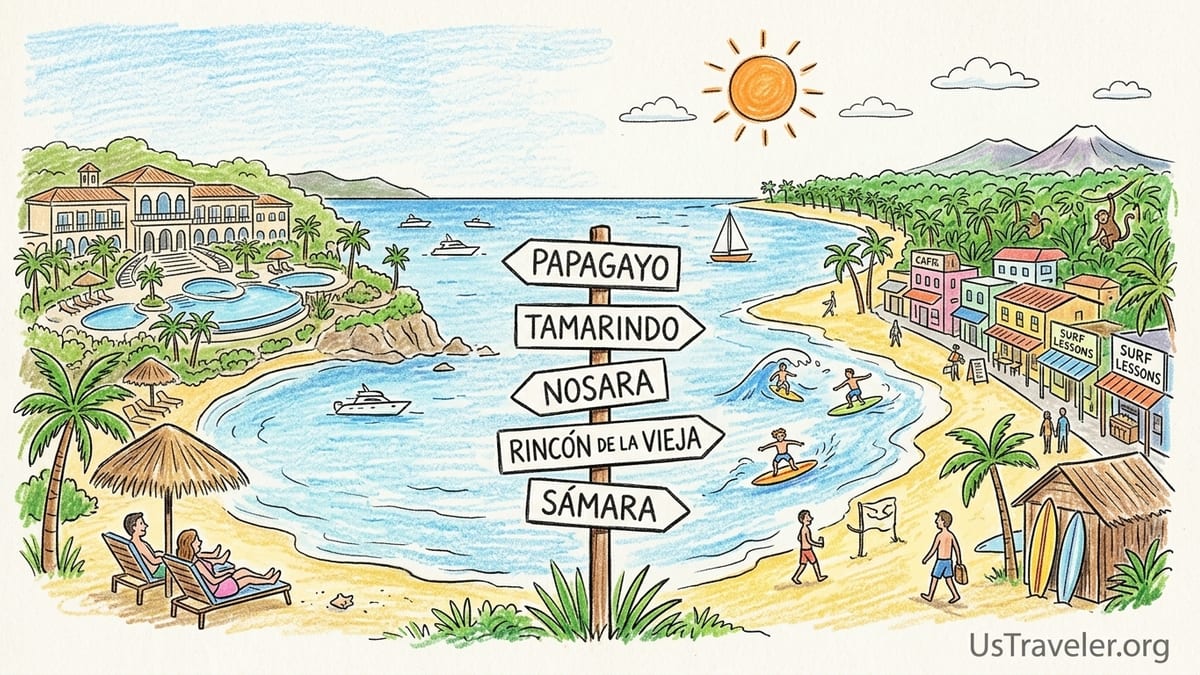
How These Guanacaste Hotspots Compare at a Glance
All eight destinations share the same broad region of northwest Costa Rica, but the experience on the ground varies sharply. Papagayo, anchored by luxury resorts like Four Seasons Resort Peninsula Papagayo and Andaz Costa Rica, is in a different universe from low-key Sámara or surfer-focused Nosara. Tamarindo feels like a classic Latin American beach town turned international hub, while nearby Playa Conchal and Playa Flamingo lean more resort and condo, with calmer water and fewer backpackers. Inland, Rincón de la Vieja is a national park and adventure base rather than a beach destination at all.
As a rule of thumb, Papagayo and Conchal skew strongly to upscale resort stays and are worth several nights if you want polished service, air-conditioned comfort and easy excursions. Tamarindo, Nosara and Sámara are the best choices for travelers seeking a sense of town life, walkable dining and independent hotels in a range of budgets. Flamingo and Playas del Coco work well as bases for boat trips and activities but are also easy to experience as day trips from neighboring beaches. Rincón de la Vieja is ideal for one or two nights in a lodge combined with day hikes, mud baths and canyon adventures.
When you map specific travel priorities, the picture becomes clearer. Surfing is strongest in Tamarindo and Nosara’s Playa Guiones, with lessons and board rentals lining the sand. Calm swimming is better at Playa Conchal, Sámara’s protected bay and many Papagayo coves. Nightlife peaks in Tamarindo and Playas del Coco. Wellness and yoga culture are most concentrated in Nosara, with Sámara and Papagayo’s high-end spas close behind. Families and couples can do well in almost any of these hubs, but they will find very different atmospheres and price points.
Tamarindo: Surf Town Energy and Nightlife Hub
Tamarindo is Guanacaste’s most famous beach town and one of Costa Rica’s official tourism flagships. It delivers a busy, walkable strip of restaurants, surf schools and bars parallel to a long golden beach. This is one of the best all-around bases for travelers who want a little bit of everything: beginner-friendly surf, active nightlife, varied dining and easy logistics, with Liberia Airport typically about an hour to 90 minutes away by road depending on traffic.
The surf here is the defining feature. Dozens of operator kiosks and shops line the main street and beach, with group lessons often starting around the equivalent of 50 to 70 US dollars for a 90-minute session including board rental. Schools such as Witch’s Rock Surf Camp and Iguana Surf run multi-day camps that package lessons, lodging and breakfast, drawing both solo travelers and families. The mellow beach break in front of town is forgiving for beginners, while more experienced surfers can head by boat or 4x4 to nearby spots like Playa Grande or Playa Langosta.
After dark, Tamarindo becomes Guanacaste’s nightlife capital. There are laid-back beach bars and sports bars alongside higher-energy clubs. A multilevel nightclub like Aqua typically hosts DJ nights, themed parties and happy-hour drink deals, and smaller venues offer live music. This makes Tamarindo attractive for groups of friends and younger couples who want evenings out rather than early nights. The trade-off is that it is not the quietest place, especially during high season and holiday weeks, so light sleepers will want accommodations set back from the main strip.
For families, Tamarindo can work very well if you lean into the activity mix. Parents with children commonly book condos or family rooms with kitchenettes and then schedule surf lessons, catamaran cruises, estuary boat tours in the nearby mangroves and horseback rides. Day trips to Playa Conchal, Flamingo or various canopy zip lines are straightforward. Tamarindo itself is worth three to five nights for most travelers, serving as a flexible base with enough infrastructure that you rarely need a car inside town.
Papagayo: Guanacaste’s Luxury Peninsula
Peninsula Papagayo, often simply called Papagayo, is Guanacaste’s top luxury enclave. This 1,400-acre peninsula holds Costa Rica’s highest concentration of five-star hotels, including Four Seasons Resort Peninsula Papagayo and Andaz Costa Rica Resort. Many suites and villas climb forested hillsides with panoramic gulf views, creating an experience that feels like a secluded eco-luxury bubble rather than a typical town. Rates reflect that reality, with entry-level rooms in high season often running several hundred US dollars per night or more at major properties.
Papagayo is exceptionally strong for couples, wellness-minded travelers and families who prioritize service and comfort. Four Seasons Papagayo, for example, has received a Forbes Travel Guide Five-Star rating for more than a decade in a row and promotes curated experiences for couples that combine boat trips, spa rituals and private dinners. Andaz Costa Rica offers multiple pools, including adults-only and family pools, a kids’ club, complimentary non-motorized water sports and a roster of guided outings, from snorkeling to cultural excursions inland. Many resorts include on-site spas, golf, tennis or pickleball, plus destination-style restaurants where dinner for two with drinks can easily approach or exceed 100 US dollars.
For swimming, Papagayo’s small coves are mostly calm, protected and ideal for children compared with Guanacaste’s surf beaches. Resorts often run their own beach clubs reached by short boat shuttles, and it is common to spend a day paddleboarding or kayaking in glassy morning water before an afternoon spa treatment. What Papagayo lacks is a genuine town center. Guests should expect to dine primarily on-property or at neighboring hotels reached by car or resort shuttle rather than bar-hopping on foot.
Because of its price point and self-contained feel, Papagayo works best for travelers planning at least three to five nights of relaxation. Many visitors pair it with more local-feeling beach towns or a volcano stay, using Papagayo as the splurge portion of a longer itinerary. It is also one of the closest coastal areas to Liberia Airport, with transfers that can take as little as 30 to 45 minutes to many resorts, which adds to its appeal for short getaways.
Playa Conchal and Playa Flamingo: Calm Water, Resorts and Marina Access
Playa Conchal regularly appears in roundups of Costa Rica’s most beautiful beaches thanks to its pale sand made from crushed shells and usually calm, clear water. There is no large town right on the beach; instead, the shoreline is backed by forest, beach clubs and a handful of upscale properties. The largest is an all-inclusive resort located slightly inland from the northern end of the beach, with pools, restaurants and package pricing that makes costs predictable for families and groups. Beach chairs and umbrellas are typically rented by local vendors along the sand, and simple ceviche and coconut stands give it a relaxed, informal feel.
For swimming and snorkeling from shore, Conchal is one of Guanacaste’s better bets. The gentle waves make it comfortable for children and less confident swimmers, especially close to the more sheltered ends of the bay. Local tour operators often sell affordable glass-bottom boat trips, banana boat rides and short snorkeling excursions right on the beach. The vibe here is quieter than in Tamarindo or Playas del Coco: evenings often mean a walk at sunset followed by dinner at a resort restaurant or a short drive to nearby Brasilito or Flamingo for more options.
Just north, Playa Flamingo has transformed in recent years with the opening of a modern marina complex. The new marina includes slips for yachts, charter boats, waterfront restaurants and condo-style accommodations that appeal to boaters and travelers who want easy access to the water without giving up comfort. From Flamingo’s docks you can book half-day sportfishing trips, sunset catamarans, scuba diving excursions to nearby islands and private boat charters. The beach itself is a crescent of pale sand facing largely west, excellent for sunset walks and swimming on calmer days.
Both Conchal and Flamingo can work as multi-night bases, especially for travelers who value calm water and easy access to boat trips over busy nightlife. Many visitors happily spend three nights here after a few nights in Tamarindo or Nosara, or they come over as a day trip. From Tamarindo, a taxi or rental car to Conchal or Flamingo often takes around 30 to 45 minutes depending on traffic and road conditions, making it realistic to spend the day on Conchal’s gentler waves before returning to Tamarindo’s restaurants and bars in the evening.
Playas del Coco: Convenience, Nightlife and Budget-Friendly Base
Playas del Coco, usually shortened to “Coco,” is one of the closest beaches to Liberia Airport and has long been popular with both Costa Ricans and international visitors. The town spreads around a wide bay with dark sand and relatively modest waves. While the water can be less pristine-looking than Conchal’s, Coco compensates with convenience and value. There is a dense grid of supermarkets, tour desks, souvenir shops and casual restaurants, so it is easy to arrive, buy groceries for a condo and arrange activities without speaking much Spanish.
Coco is a major jumping-off point for diving and snorkeling trips. Dozens of small operators line the main street and beachfront, offering double-tank dives to nearby sites and excursions to the Catalina Islands or Bat Islands for experienced divers, often starting in the range of 100 to 150 US dollars per person depending on gear and destination. Non-divers join afternoon sailing trips, dolphin-watching cruises and fishing charters. Many travelers also base themselves in Coco to do day trips inland to Rincón de la Vieja, nearby waterfalls or zip line parks while keeping the same accommodation.
At ground level, Coco has a down-to-earth, sometimes rowdy feel that appeals to budget-conscious travelers and those who prefer a busy bar scene to upscale resort life. There are sports bars showing North American games, beach bars with happy hour cocktail specials and late-night spots with loud music near the central park. Families do visit, especially those prioritizing condo-style lodging and easy logistics, but parents who prefer quieter evenings might pick Sámara, Conchal or Papagayo instead.
Playas del Coco works as either a two-to-four-night base or a simple day trip from Papagayo or Hermosa. If your priority is diving, fishing and nightlife rather than postcard-perfect sand, it can be an efficient and economical choice. If your focus is swimming and sunsets in a tranquil setting, Coco is better sampled for its restaurants and boat trips while you stay elsewhere.
Nosara and Sámara: Surf, Wellness and Laid-Back Beach Towns
Nosara and Sámara sit further down the Nicoya Peninsula and feel distinctly different from the resort enclaves to the north. Official Costa Rica tourism promotion highlights Nosara and Sámara, along with Tamarindo and Rincón de la Vieja, as flagship destinations, and on the ground that status translates into an established tourism scene with a clear identity. Nosara, especially the Playa Guiones area, is a surf and wellness hub. Sámara is a smaller, more traditionally Costa Rican beach town wrapped around a calm horseshoe bay.
Nosara’s Playa Guiones offers one of the country’s most consistent surf breaks, with a wide sandy beach and waves that work at multiple tides. This draws dedicated surfers, digital nomads and wellness retreat guests. Surf schools and shacks rent boards by the day or week, and weeklong surf-and-yoga retreats frequently bundle accommodation, breakfast, two daily yoga classes and guided surf sessions into per-person packages that can run to several hundred or more US dollars. The unpaved roads, tree canopy and relatively strict building height rules keep the area feeling low-rise and green, even as boutique hotels and organic cafes multiply.
Wellness is woven into Nosara’s DNA. Yoga studios offer multi-class passes, sound baths and workshops. Many hotels feature open-air shalas, plant-based menus and spa treatments that use local ingredients like volcanic clay and coffee scrubs. Evenings tend to be low-key: sunset on the beach, dinner in a jungle-view restaurant, then early nights for dawn surf sessions. Nosara suits travelers who are happy to trade convenience and pavement for character and community. It is a strong choice for a four-to-seven-night stay, particularly if you want to commit to surfing or yoga.
Sámara, by contrast, is more accessible and more immediately family-friendly. Its bay is protected by an offshore reef and a small island, which means much gentler waves than Guiones. Children and cautious swimmers can often float and splash comfortably close to shore, and stand-up paddleboarding and kayaking are popular options. Small hotels and guesthouses line the back streets and waterfront, and there is a clear central “strip” of simple beachfront restaurants where a family of four can often eat fish tacos or casado plates and drinks for a moderate price compared with resort dining.
For families and couples who want an easygoing town where everything is walkable and nightlife is limited to a few relaxed bars and occasional live music, Sámara is one of Guanacaste’s best bets. It works well as a three-to-five-night base, and many visitors combine it with inland volcano time or with Nosara for a mix of surf and swimming. Because shuttle transfers from Liberia or San José take longer on the Nicoya roads, these towns reward stays of at least several nights rather than quick one-night stops.
Rincón de la Vieja: Volcanic Adventure and Hot Springs
Rincón de la Vieja is an entirely different kind of flagship attraction: a national park and volcanic massif inland from Liberia. Rather than a single town, the area consists of lodges and ranch-style resorts spread along the park’s access roads. Visitors come here for hiking, canyoning, horseback riding, river tubing and hot springs rather than beaches. Many coastal travelers add one or two nights at Rincón de la Vieja to break up a pure beach itinerary with forest and geothermal landscapes.
Inside the national park, marked trails wind through dry tropical forest and past bubbling mud pots, fumaroles and waterfalls. Day passes are relatively inexpensive by international standards, and most hotels can arrange guided hikes that explain the geology and wildlife. It is common to spot monkeys, coatis and a wide variety of birds, especially on early-morning walks. Some trails close periodically for volcanic activity or weather-related safety reasons, so travelers should check current conditions with their lodge on arrival.
Adventure parks clustered around the park entrance offer one-stop packages that might combine a canopy zip line circuit, a rappel or via ferrata, river tubing on a canyon river and access to thermal pools and volcanic mud baths, often in full-day bundles starting around the equivalent of 80 to 120 US dollars per person. These complexes are particularly popular with families and groups, since everyone can choose their own level of adrenaline and regroup for lunch at an on-site buffet restaurant.
Rincón de la Vieja is not typically a place to spend a full week unless you are deeply focused on hiking or riding. Most travelers find that one or two nights is enough to enjoy a hike or two, an adventure-park day and an evening soaking in hot springs before continuing to the beach. It is realistically visited either as an overnight from Liberia, Papagayo, Coco or Tamarindo, or as a long day trip from these coastal bases for those who do not want to repack bags.
Choosing the Right Mix: Who Should Stay Where and For How Long
Matching destinations to travel style is the key to building an efficient Guanacaste itinerary. For luxury-first travelers and couples on a special trip, Papagayo and Playa Conchal stand out. A honeymoon might spend five nights in a suite at a Papagayo resort, taking advantage of spa treatments, private sunset sails and fine dining, then add two or three nights in Nosara or Sámara for barefoot beach time and simpler meals. Families who want both comfort and local flavor could split a week between Tamarindo and Conchal, or between Sámara and a Rincón de la Vieja lodge.
Surfers will get the most out of Tamarindo and Nosara. First-timers often appreciate starting in Tamarindo, where lessons are easy to book on arrival and the town offers plenty of distractions. More committed surfers may prefer Nosara’s Playa Guiones for its more consistent break, surfboard-heavy cafes and early-morning rhythm. In both places, a stay of at least four nights allows time to adjust to the swell and conditions. Day trips to Conchal, Flamingo or Coco can be added for snorkeling or diving without changing hotels.
For swimmers and young children, calmer water is the priority. In that case, Conchal, Sámara and many Papagayo coves are better choices than surf-heavy beaches. These destinations also align well with multi-generational trips where grandparents might spend the day by a pool or in a spa while parents and older kids go zip lining or horseback riding. A practical example: a family could base in a condo near Flamingo or Conchal for five nights, booking a catamaran sunset cruise one evening, a snorkel trip another morning and a single full-day excursion to Rincón de la Vieja for zip lines and hot springs.
Nightlife seekers and social travelers tend to do best in Tamarindo and Playas del Coco, which have the greatest density of bars, live music and late-night venues. These places also offer the widest range of budgets, from hostel dorms and simple cabinas to midrange hotels and villas. By contrast, wellness-focused guests may find the party atmosphere of Tamarindo or Coco distracting and gravitate toward Nosara’s yoga studios or Papagayo’s spa programs, where the day’s highlight is a sunrise meditation or couples massage rather than a last call at a club.
FAQ
Q1. Which Guanacaste beach town is best for first-time visitors?
For a first trip, Tamarindo is usually the easiest base thanks to its mix of surf schools, restaurants, tour operators and relatively short transfer from Liberia Airport.
Q2. Where should I stay in Guanacaste for luxury and privacy?
Papagayo is the top choice for high-end stays, with secluded five-star resorts and villas, calm coves and full-service amenities including spas and golf.
Q3. What is the best destination for beginner surfers?
Tamarindo and Nosara’s Playa Guiones are ideal for beginners, with sandy-bottom beach breaks, numerous surf schools and plenty of instructors offering small-group lessons.
Q4. Which beaches are safest for swimming with young children?
Playa Conchal, Sámara’s protected bay and many Papagayo coves generally have gentler waves and are more comfortable for cautious swimmers than surf-heavy beaches.
Q5. Is Rincón de la Vieja better as a day trip or overnight stay?
One or two nights at a lodge near Rincón de la Vieja allow time for both hiking and hot springs, but a long day trip from the coast is possible if schedules are tight.
Q6. Where will I find the best nightlife in Guanacaste?
Tamarindo has the liveliest nightlife, with bars and clubs, followed by Playas del Coco, which has a dense strip of sports bars and late-night venues near the beach.
Q7. Which destination is most suitable for a wellness or yoga retreat?
Nosara is the standout for wellness, with multiple yoga studios, retreat centers and hotels offering daily classes, while Papagayo adds high-end spa programs.
Q8. Are Tamarindo and Playa Conchal close enough for day trips?
Yes, travelers often stay in Tamarindo and visit Playa Conchal or Flamingo as day trips, with drives commonly taking around 30 to 45 minutes each way by car or taxi.
Q9. Is a rental car necessary in these Guanacaste destinations?
In towns like Tamarindo and Sámara you can walk most places and book tours with transport, but a car is useful for exploring multiple beaches or staying in Nosara.
Q10. How many nights should I plan for Guanacaste overall?
A week is a comfortable minimum, often split between one main beach base such as Tamarindo, Nosara or Papagayo and one additional stop like Conchal or Rincón de la Vieja.