


Guanacaste is Costa Rica’s classic sun-and-surf region, a sweep of Pacific coastline backed by volcanoes and dry tropical forest. For first-time visitors, the challenge is rarely whether to go, but how to make sense of the beaches, surf towns, all-inclusive resorts and inland parks that all advertise themselves as “Guanacaste.” This guide breaks the region into manageable bases and explains how they differ, so you can choose where to stay, when to come and how many stops you actually need.
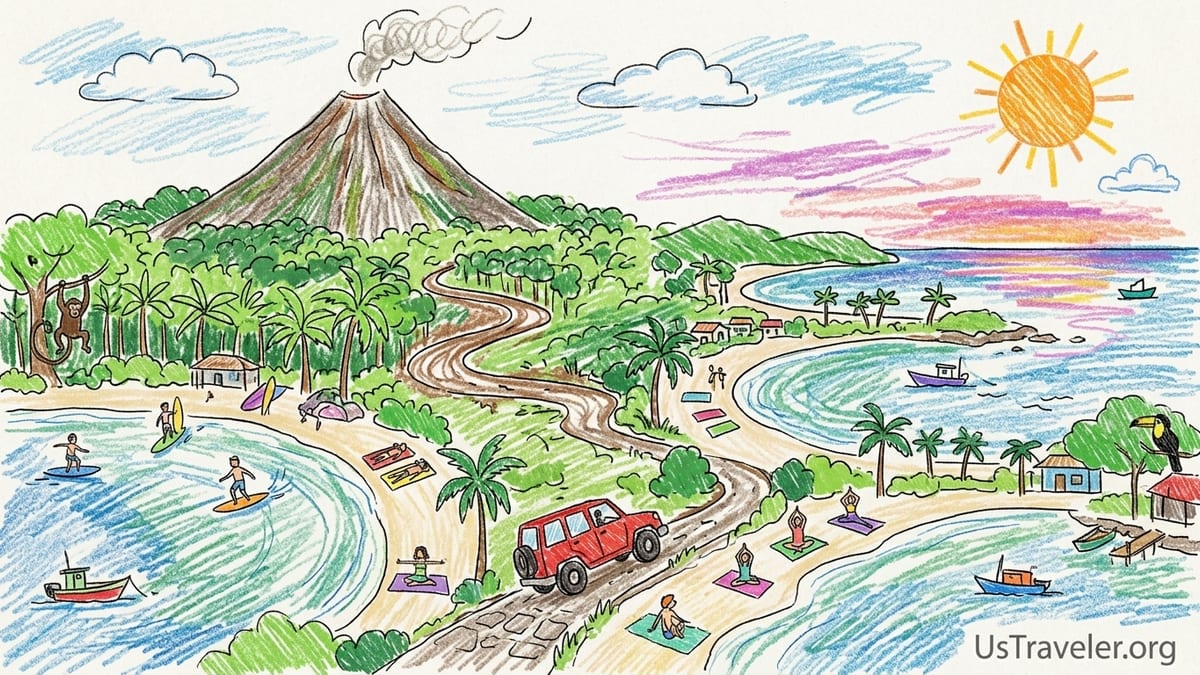
Where Guanacaste Is and How the Region Fits Together
Guanacaste occupies Costa Rica’s northwestern corner, running from the Nicaraguan border down along the Pacific and wrapping around the Nicoya Peninsula. The official tourism region covers more than 400 miles of coastline when you trace all the bays and headlands, along with a chain of volcanoes and protected forests inland. In practical terms, most visitors experience Guanacaste along a coastal arc between the Papagayo Peninsula in the north and Sámara on the Nicoya Peninsula, with the inland city of Liberia and nearby Rincón de la Vieja National Park providing the main gateway to the volcanic highlands.
The region is organized around several beach and town clusters that function as natural bases. To the north sits the Gulf of Papagayo and Playas del Coco, closest to Guanacaste Airport (LIR) and home to many large resorts and sheltered beaches. South of there, the Flamingo and Conchal area offers postcard-perfect white and golden sand coves, small marinas and mid-size resorts. Continuing down the coast, Tamarindo and nearby Avellanas form the liveliest surf and nightlife hub. Farther along the Nicoya Peninsula, Nosara and then Sámara shift the mood toward laid-back surf, yoga and family-friendly swimming. Inland, Liberia and Rincón de la Vieja anchor access to volcano trails, waterfalls, hot springs and wildlife-rich dry forest.
Because these hubs are strung along the same general coastline, distances are shorter than they look on a map, but driving times can still stretch due to narrow roads and occasional construction. As a rough guide, Papagayo and Playas del Coco sit about 30 to 40 minutes from LIR by paved highway, Flamingo and Conchal around 1 to 1.5 hours, Tamarindo roughly 1.5 hours, and Nosara or Sámara closer to 2.5 to 3.5 hours depending on road conditions. Rincón de la Vieja’s park entrances lie about an hour northeast of Liberia on paved and then compacted dirt roads, which is close enough for a day trip from virtually any northern Guanacaste beach base.
For a first visit of one week, many travelers choose one primary beach base and add a day trip or overnight inland to Rincón de la Vieja. With 10 to 14 days, it becomes realistic to combine two bases, for example a resort-focused stay in Papagayo with a few nights in Tamarindo or Nosara. Attempting to “do it all” by changing locations every couple of days usually leads to more time in the car and less on the sand or the trail.
Understanding Seasons, Weather and When to Visit
Guanacaste is famous within Costa Rica for its long, pronounced dry season, which roughly runs from mid-December through April. During these months, skies along the Pacific coast are typically clear, rains are minimal and daytime temperatures often climb into the high 80s or low 90s Fahrenheit at sea level. Beach destinations like Papagayo, Flamingo, Conchal, Tamarindo and Nosara are at their most reliably sunny then, which is why winter flights from North America into LIR surge and resort rates often reach their annual peak around Christmas, New Year and Easter week.
The rest of the year is known locally as the green or rainy season, usually from May through mid-December. In much of Guanacaste, this does not mean constant rain but rather a mix of sunny or partly cloudy mornings followed by afternoon showers or thunderstorms, especially in September and October. The upside is that hillsides and forests flush green again, rivers and waterfalls swell, and prices in many hotels and vacation rentals drop noticeably compared with high season. Surf conditions can be particularly consistent around breaks like Tamarindo’s river mouth or Nosara’s Playa Guiones during the green season, when Pacific swells are more frequent.
There are also subtle shoulder seasons. Late November and early December can deliver a sweet spot of still-green landscapes but increasingly reliable sunshine, especially near the coast. Early May and June can feel similar, with fewer crowds and friendlier nightly rates in towns like Sámara and Flamingo than during the peak winter months. If your priority is volcano hikes, hot springs and wildlife rather than beach-only time, the early green season often offers clearer views in the morning and livelier animal activity around Rincón de la Vieja’s forests and rivers.
Travelers should also consider local holiday periods when planning. Costa Rican school vacations and Holy Week bring domestic vacationers to Guanacaste’s beaches, particularly to Tamarindo, Playas del Coco and Sámara. During these times, beachfront rooms and rental cars near LIR book up well in advance. Booking flights and lodging several months ahead is wise if you are targeting Christmas to New Year’s or Easter, while in the shoulder and green seasons it is often possible to find good options a bit closer to your travel dates.
Papagayo & Playas del Coco: Resorts, Bays and Easy Access
The Papagayo Peninsula and neighboring Playas del Coco area form Guanacaste’s most convenient cluster for travelers who want to maximize beach time with minimal transfers. From LIR, it typically takes around half an hour to reach the string of bays that make up the Papagayo Gulf, and less than 40 minutes to reach the town of Playas del Coco. This proximity makes the area attractive for long weekends or for visitors arriving on late flights who prefer not to drive far at night.
Papagayo itself is dominated by large, upscale resorts set on protected coves, along with a few smaller boutique properties. Many operate on an all-inclusive or full-service model, where guests might spend much of their trip on property, enjoying quiet beaches, infinity pools and spa services. Playas like Nacascolo, Blanca and Panama sit in sheltered bays where the Pacific is relatively calm, especially in the mornings. Visitors commonly book half-day boat trips out into the gulf to snorkel with tropical fish, spot dolphins and, in the right season, look for passing sea turtles or humpback whales off the coast.
Playas del Coco, a short drive around the bay, offers a more mixed scene with resident expats, local families and visitors sharing the same main street. The town has supermarkets, banks, bars and casual sodas where you can order a plate of casado with grilled fish for a reasonable price, along with dive shops running daily trips to sites around the Bat Islands or farther into the Papagayo Gulf. Nearby beaches like Playa Hermosa and Playa Ocotal provide quieter alternatives with smaller hotels and vacation rentals, while remaining within 45 to 60 minutes of the airport and about 90 minutes’ drive of Rincón de la Vieja’s trailheads.
For a first-time visitor who values convenience, good infrastructure and the option of day trips without constant packing and unpacking, basing in Papagayo or Coco for four to six nights can work well. You might spend most days on the water or at the pool, add one inland day to hike to a waterfall and soak in natural hot springs, and perhaps rent a car or book a shuttle for a day exploring farther south around Flamingo or Tamarindo before returning to the same base.
Flamingo & Conchal: Picture-Perfect Beaches and Quiet Bays
South of Papagayo and Coco, the Flamingo and Conchal area is often the next stop for travelers who prioritize classic white or golden sand beaches and smaller-scale development. Playa Flamingo is a curved, light-colored beach on a small peninsula with a marina, a mix of mid-range and upscale hotels, and hillside vacation rentals overlooking the bay. Just to the south, Playa Conchal is famous for its pale sand made up of finely crushed shells and for its turquoise, relatively clear water on calmer days.
The atmosphere around Flamingo and Conchal tends to be quieter than in Tamarindo but more polished than in many smaller seaside villages. You might wake to the sound of parakeets and howler monkeys in the dry forest behind your rental, walk down to the beach for a morning swim, then head out on a half-day catamaran tour that includes snorkeling and a late afternoon sail back under a Pacific sunset. Local operators offer sport-fishing trips pursuing dorado and roosterfish, as well as stand-up paddleboard rentals and introductory scuba diving for beginners.
From LIR, reaching Flamingo or Conchal generally takes between 1 and 1.5 hours by paved road, while Tamarindo is another 20 to 30 minutes farther. Rincón de la Vieja becomes more of a full-day outing from here, but still feasible, often with tour companies offering packages that include transportation, a guided hike to volcanic mud pots, lunch and an afternoon soaking in hot-spring pools. Visitors with rental cars often use Flamingo or the neighboring, more local-feeling communities of Potrero and Brasilito as a base to explore multiple beaches within a short drive.
For many first-time visitors, three to five nights in the Flamingo and Conchal area strike a good balance between relaxation and activity. The calm bays can be ideal for families with children comfortable swimming in ocean waves when conditions are moderate, while couples often appreciate the quieter evenings compared with Tamarindo’s more animated nightlife. Combining Flamingo or Conchal with a stay in either Papagayo or Tamarindo is straightforward, as driving times between these clusters are typically under 90 minutes.
Tamarindo & Avellanas: Surf town energy, nightlife and amenities
Tamarindo is Guanacaste’s most famous beach town, known for its long surfing beach, broad range of accommodations and lively dining and nightlife scene. From Liberia’s LIR airport, it takes around 1.5 hours to reach Tamarindo by paved highway and secondary roads. Once there, you find everything from surf hostels and modest cabinas to boutique hotels and higher-end condos, plus restaurants offering everything from traditional Costa Rican platos del día to sushi, wood-fired pizza and vegetarian cafés catering to international visitors.
The main beach at Tamarindo offers several different surf zones, including a river-mouth break that can be powerful on larger swells and more forgiving sections closer to town that are well suited to beginners when conditions are calm. Dozens of surf schools line the sand, renting soft-top boards by the hour and offering group or private lessons. Even travelers who have never surfed before often dedicate a morning to trying to stand up on the warm Pacific waves before retiring to a beachfront bar for a fresh pineapple juice or a local beer at sunset.
Just south of Tamarindo, Playa Avellanas provides a quieter contrast with a more relaxed vibe and a long stretch of sand backed by low vegetation and a few beach bars and small hotels. The road is partly unpaved, so a rental car is helpful, especially in the wetter months, though shuttles also run between the two beaches. Avellanas is popular with intermediate and advanced surfers when swells arrive, and with visitors who prefer a more low-key day but still want access to Tamarindo’s wider range of shops, banks and medical services a short drive away.
For first-time visitors who want a single base that combines surf lessons, social energy and a broad choice of tours, Tamarindo works particularly well. From town, it is easy to book boat tours into the Tamarindo estuary to look for crocodiles and birds, half-day snorkeling or sailing trips along the coast, or day tours to Rincón de la Vieja for zip-line circuits, horseback riding, mud baths and hot springs. Many travelers spend four to seven nights here, using Tamarindo as a hub and making side trips to neighboring beaches like Playa Grande, Playa Langosta or Avellanas for variety.
Nosara & Sámara: Laid-back Surf, Yoga and Family Beaches
Continuing down the Nicoya Peninsula, Nosara and Sámara deliver a different feel from the resort-oriented Papagayo area and the lively streets of Tamarindo. Reaching these towns typically involves a longer transfer: expect closer to 2.5 to 3.5 hours from LIR, with the final stretches on narrower, sometimes bumpy roads. In exchange, visitors find more low-rise development, a strong emphasis on wellness and surf culture and, in Sámara especially, a village-style atmosphere that appeals to families and repeat travelers.
Nosara is best known for Playa Guiones, a long, consistent beach break that draws surfers from around the world. A large swath of low forest separates most accommodations from the beach itself, so you often walk along sandy paths under trees to reach the breaks, passing howler monkeys and iguanas along the way. Surf schools, yoga studios and healthy cafés cluster in several small commercial pockets rather than along a single main street, and nightlife centers around relaxed bars and early dinners rather than loud clubs. During the green season, waves can be particularly consistent, drawing intermediate and advanced surfers, while in the dryer months, small days can be welcoming for beginners.
Sámara, roughly an hour’s drive south of Nosara, sits on a broad, crescent-shaped bay protected by a reef and offshore island. The water here is often calmer than at open-coast surf beaches, making it a favorite for families who want children to splash in the shallows or try stand-up paddleboarding and gentle body-surfing. The main street backs directly onto the sand, with small hotels, guesthouses and beachfront restaurants that set out tables on the sand in the evenings. Kayak tours paddle out around the bay at sunrise, and horseback rides along the beach at low tide are common offerings from local tour operators.
Because reaching Nosara or Sámara requires more travel time, many visitors who choose these towns plan to stay at least four or five nights, and often a full week, to settle into the slower rhythm. First-time visitors sometimes pair a few nights in Tamarindo or Flamingo with a longer block in Nosara or Sámara, or dedicate their entire trip to one of these towns plus a day trip or two inland. If you value walkable, low-rise communities, strong surf or a sheltered bay for kids and do not mind a longer drive from the airport, either can make an excellent base.
Liberia, LIR Airport & Rincón de la Vieja: Gateway to Volcano Country
Nearly all international visitors to Guanacaste today arrive through Guanacaste Airport (IATA code LIR), also known locally as Liberia International Airport or Daniel Oduber Quirós International Airport. The airport lies around 11 to 13 kilometers west of the city of Liberia, and it functions as the main gateway for beach destinations from Papagayo and Coco through Flamingo, Conchal, Tamarindo, Nosara and Sámara, as well as for nearby volcano and hot-spring areas. Airlines from major North American hubs operate regular non-stop routes, and ground transport options range from rental cars and shared shuttles to private transfers booked through hotels or tour agencies.
Liberia itself is a mid-size provincial city and commercial center known historically as the “White City” because of its light-colored traditional houses and streets. While most beach-focused travelers do not linger long, the city can be a practical overnight stop if your flight arrives late or departs early. It also serves as a supply and medical hub; larger supermarkets, banks and clinics are located here, which can be useful to know if you are staying in smaller beach towns and need something specialized.
About an hour’s drive northeast of Liberia, Rincón de la Vieja Volcano National Park protects a section of the Guanacaste volcanic mountain range. Trails here pass through dry and transitional forest, cross small rivers and lead to viewpoints over steaming volcanic vents, bubbling mud pots and, on some routes, waterfalls and natural swimming holes. Outside the park boundaries, several ranch-style lodges and adventure centers offer day passes that combine zip-line circuits over canyons, horseback riding, tubing on mountain rivers and access to hot-spring pools fed by the volcano’s geothermal activity.
Many visitors treat Rincón de la Vieja as a full-day excursion from a coastal base, leaving the beach early in the morning to hike or join adventure activities before afternoon clouds and showers become more likely, especially in the green season. Others choose to spend one or two nights at a lodge near the park to enjoy cooler evening temperatures and starry skies away from city lights. For a first trip, planning at least one day that focuses on the volcano and hot springs provides a welcome contrast to time at the coast and showcases the diversity of Guanacaste’s landscapes and wildlife.
Wildlife, Tours and How Many Bases You Really Need
Across Guanacaste’s beaches and inland parks, wildlife is part of everyday life rather than a rare sighting. On the coast, it is common to see brown pelicans diving in the surf, frigatebirds wheeling overhead and hermit crabs scuttling across the sand at dusk. Howler monkeys often announce themselves with loud calls at dawn in areas with remaining forest, including Papagayo’s hillsides, Tamarindo’s estuary edges and the green corridors behind Nosara and Sámara. In protected areas like Las Baulas Marine National Park near Playa Grande or the Ostional National Wildlife Refuge south of Nosara, sea turtles come ashore to nest in certain seasons, and guided night walks are offered under strict regulations.
Common tour offerings throughout the region reflect this mix of marine and terrestrial life. From Papagayo, Flamingo or Tamarindo, half-day or full-day boat trips head out to snorkel spots and small coves, sometimes including fishing or whale watching in the right months. Kayaking through mangroves, for example in the estuaries of Tamarindo or in the mangrove channels of the Papagayo Gulf, allows visitors to observe birdlife and sometimes crocodiles from a safe distance. Inland, guided hikes in parks like Palo Verde focus on wetland birdlife, while Rincón de la Vieja highlights volcanic formations, orchids and mammals such as coatis and, with long odds but real possibilities, sloths or even wild cats in remote areas.
On a first visit, it can be tempting to plan a new tour or activity every day, but many travelers find that one or two structured outings combined with unscheduled beach time produces a more enjoyable pace. For example, from a base in Tamarindo, you might schedule a surf lesson one morning, a sailing and snorkeling cruise another afternoon, and a full-day volcano and hot-springs tour midweek, leaving the rest of the time open for beach walks, casual wildlife spotting and exploring local eateries. From Nosara or Sámara, you might prioritize a mangrove kayak tour, an early-morning surf session and, in turtle season, a night visit with a certified guide to a nesting beach.
Deciding how many different bases you truly need comes down to your trip length and travel style. With 5 to 7 days, most first-time visitors do best choosing one coastal base plus a day trip inland rather than attempting to split time between multiple beach towns. Tamarindo, Flamingo, Papagayo/Coco and Sámara all work well as single bases paired with a Rincón de la Vieja excursion. With 10 to 14 days, combining two bases provides variety without excessive packing and unpacking; common pairings include Papagayo plus Tamarindo, Flamingo plus Nosara or Sámara plus a lodge near Rincón de la Vieja. More than three bases on a single trip is usually better reserved for longer itineraries or travelers who specifically enjoy frequent moves.
The Takeaway
Guanacaste offers a compact but varied slice of Costa Rica, with sheltered bays and all-inclusive resorts in the north, energetic surf towns in the middle, laid-back villages on the Nicoya Peninsula and volcanic highlands inland. For first-time visitors, the key choices involve balancing convenience against atmosphere, and deciding whether you want one simple base or the added variety of a second stop. Papagayo and Coco deliver easy access and resort comfort, Flamingo and Conchal offer some of the prettiest sands and a quieter tempo, Tamarindo and Avellanas pulse with surf-town energy, while Nosara and Sámara reward those willing to travel a bit farther with more relaxed, village-like settings.
Whatever base you choose, planning around Guanacaste’s clear dry season and greener, quieter months can help set expectations for weather, crowds and pricing. Adding at least one day around Rincón de la Vieja’s volcanic slopes and hot springs rounds out the picture, revealing the region’s mix of beaches, forests and mountain landscapes. With realistic travel times, a manageable number of bases and a couple of well-chosen tours, a first trip to Guanacaste can feel both restorative and adventurous, and often becomes the beginning of a longer relationship with Costa Rica.
FAQ
Q1. How many different bases should first-time visitors plan in Guanacaste?
Most first-time visitors are happiest with one or two bases. With a week or less, choose a single beach hub like Papagayo, Flamingo, Tamarindo or Sámara and add a day trip to Rincón de la Vieja. With 10 to 14 days, pairing two coastal bases, such as Papagayo plus Tamarindo or Flamingo plus Nosara, offers variety without turning the trip into a constant transfer.
Q2. Is it worth renting a car in Guanacaste, or can I rely on shuttles and taxis?
It depends on how much exploring you plan to do. Shared and private shuttles work well if you are staying mostly in one place and booking organized tours that include transport. Renting a car gives more freedom to beach-hop between Flamingo, Conchal and Tamarindo, drive to more remote spots like Avellanas or Nosara, and visit Rincón de la Vieja on your own schedule. Roads are mostly paved but can be narrow and occasionally rough, especially on the Nicoya Peninsula.
Q3. Which area is best for families with young children?
Families often gravitate toward Papagayo’s calm bays, Flamingo and Conchal’s gently shelving beaches, or Sámara’s sheltered bay. These areas tend to have smaller waves than open-coast surf beaches, and they offer a good selection of family-friendly hotels and vacation rentals. Many organize kid-friendly activities such as short boat trips, horseback rides and simple wildlife walks.
Q4. Where should I stay if I want good surfing and nightlife?
Tamarindo is usually the top choice for visitors who want both consistent beginner to intermediate surf and a busy social scene. The town has numerous surf schools, a range of breaks within a short drive and plenty of bars and restaurants that stay open late by local standards. Nosara and Playa Guiones have excellent surf and a lively restaurant scene too, but evenings are generally calmer and more focused on early dinners and live music rather than late-night clubs.
Q5. When is the best time to visit Guanacaste for good weather?
The most reliably sunny months are mid-December through April, when Guanacaste’s dry season brings blue skies and warm temperatures, especially along the coast. If you prefer greener landscapes, fewer crowds and lower prices, consider the early green season months of May, June or late November, when you can often enjoy sunny or partly cloudy mornings and short, refreshing afternoon showers.
Q6. How far are the main beach towns from Guanacaste Airport (LIR)?
Approximate driving times from LIR are 30 to 40 minutes to Papagayo and Playas del Coco, about 1 to 1.5 hours to Flamingo and Conchal, around 1.5 hours to Tamarindo, and closer to 2.5 to 3.5 hours to Nosara or Sámara depending on conditions. Rincón de la Vieja’s main access points are about an hour from Liberia, making the volcano an easy day trip from many northern beach bases.
Q7. Can I visit a volcano and hot springs on a day trip from the beach?
Yes, many travelers base on the coast and book a full-day excursion to Rincón de la Vieja from Papagayo, Flamingo, Tamarindo and even Sámara. These tours typically include transport, a guided hike to volcanic mud pots or waterfalls, lunch and time to soak in hot-spring pools at a nearby lodge. If you want a slower pace, spending one or two nights at a volcano-area lodge lets you enjoy cooler evenings and early morning hikes.
Q8. Is Guanacaste a good destination for wildlife watching?
Guanacaste is excellent for casual wildlife encounters and some focused experiences. Along the coast, you are likely to see howler monkeys, iguanas, tropical birds and marine life on boat trips. In protected areas like Rincón de la Vieja, Palo Verde or Las Baulas, guided walks or boat tours can reveal a wider range of species, from wetland birds and crocodiles to, in certain seasons, nesting sea turtles.
Q9. Are the beaches in Guanacaste safe for swimming?
Many beaches are safe for swimming in normal conditions, but currents and waves vary. Sheltered bays in Papagayo, Flamingo, Conchal and Sámara generally have gentler conditions, while open-coast surf beaches like Tamarindo, Avellanas and Nosara can have stronger rip currents, especially on bigger swell days. It is wise to ask locals or lifeguards where present about current conditions before entering the water.
Q10. How long should a first-time trip to Guanacaste be?
A week is enough to enjoy one coastal base, try a few activities and visit Rincón de la Vieja on a day trip. Ten to fourteen days allow you to combine two beach areas, such as a resort zone and a more laid-back surf town, and still move at a relaxed pace. Shorter stays of three to five nights are possible, especially if you base close to LIR in Papagayo or Coco, but you will have to be selective about how much you try to do.