


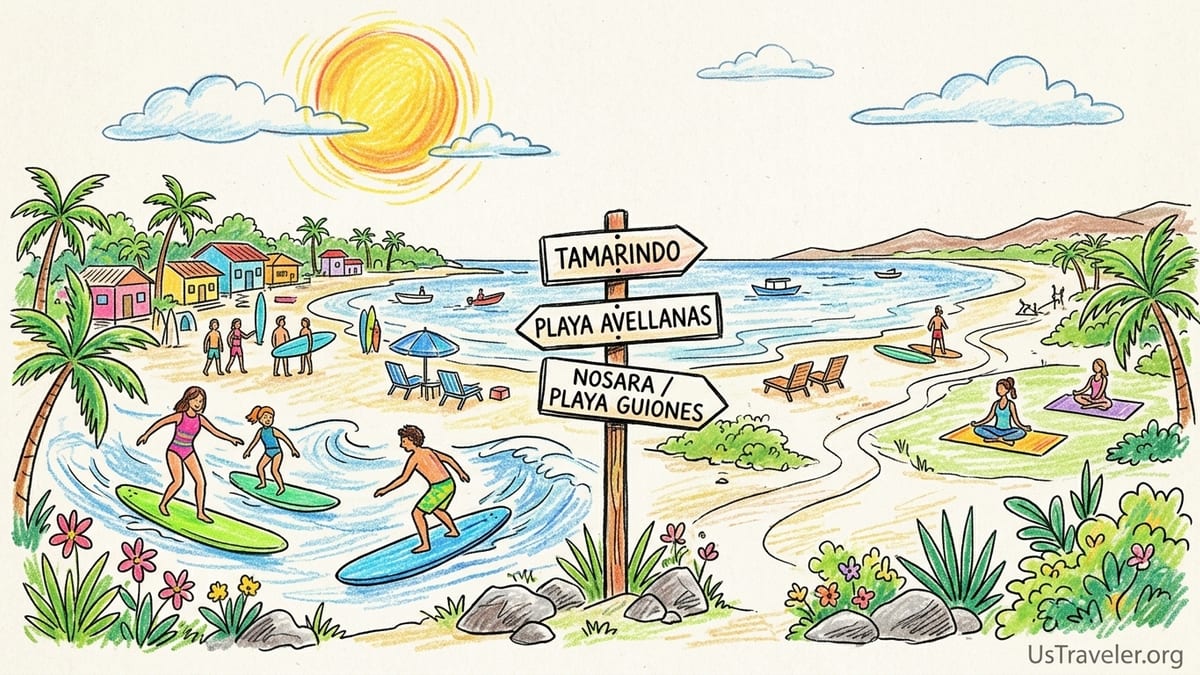
Guanacaste has become Costa Rica’s go-to region for surf camps, with Tamarindo, Playa Avellanas and Nosara’s Playa Guiones offering very different takes on the learn-to-surf experience. From all-inclusive weeklong programs with yoga and chef-prepared meals to flexible hotel-and-lesson combos you can book on arrival, the choice can feel overwhelming. This guide compares the main surf bases, the real costs and who is likely to get the most value from a full camp versus building your own package.
Understanding Guanacaste’s Main Surf Bases
Most international surf travelers in Guanacaste funnel into three hubs: Tamarindo, Playa Avellanas and Nosara’s Playa Guiones. All share warm Pacific water, consistent swell and an established surf-school scene, but they differ sharply in crowd levels, town feel and price. Tamarindo is the largest and most developed, roughly an hour’s drive from Liberia International Airport, with a busy beachfront strip, nightlife and several surf schools operating directly in front of the main break. Nosara and Playa Guiones sit farther south on the Nicoya Peninsula, with a low-rise, wellness-focused atmosphere and higher prices, while Playa Avellanas feels quieter and more rural, reached by dirt roads through cattle country and gated communities.
Specialist surf marketplaces currently list more than two dozen multi-day programs across the region, with weeklong packages in Tamarindo starting around the mid-hundreds of dollars for dorm-style stays and shared lessons, and climbing into the low thousands for boutique retreats in Nosara or Avellanas that include higher-end lodging, gourmet meals and yoga. That spread reflects not only the quality of accommodation but also the intensity of coaching, the coach-to-student ratio and how much is bundled, from airport transfers to daily board rental. Understanding what each base offers in the water is the first step in deciding where your money goes furthest.
Tamarindo, Avellanas and Guiones all revolve around beach breaks rather than sharp reefs, which is one reason they attract so many first-timers. Tamarindo and Guiones are long sandy bays with multiple peaks that can be tailored to different levels on the same tide, while Avellanas has several distinct takeoff zones that range from mellow reform walls at mid-tide to heavier outside peaks that challenge confident intermediates. For many travelers, the question is less whether there are good waves and more which town and style of camp best matches their learning curve and budget.
Tamarindo: Lively Base With High Lesson Frequency
Tamarindo is the obvious entry point for many beginners because of its access, social scene and sheer number of surf schools. Liberia airport sits roughly an hour away by paved road, and many surf camps in town advertise roundtrip transfers baked into their packages, so you can land, get picked up and be in the water the next morning without arranging separate shuttles. Multi-day programs through well-known outfits in Tamarindo commonly offer four to six days of instruction in a one-week stay, with daily 90-minute to two-hour lessons timed around tides and wind, plus unlimited soft-top board use between sessions.
On booking platforms, six-day surf camps in Tamarindo often start in the low to mid hundreds of dollars per person for shared dorm rooms and basic breakfast, rising toward the low thousands for private hotel rooms, airport transfers and extras like photo analysis or boat trips to nearby breaks such as Playa Grande. Single-day group lessons hover in the ballpark of what you would expect at similar mass-market beach towns worldwide, while private lessons fall into a higher bracket but can still undercut more remote destinations in Costa Rica. Travelers in online forums frequently reference weeklong all-inclusive surf-and-stay packages with pricing under 1,000 dollars if they are willing to share a room and opt for basic amenities.
The wave in front of town is a forgiving beach break with a wide sandbar, making it ideal for learning to stand and ride whitewater, but it can also throw up shoulder-high green waves for progressing intermediates on the right tide. That flexibility allows camps to run beginners and more experienced surfers in separate groups at the same beach, often at sunrise and again in the late afternoon when the wind drops. If you are a complete beginner, Tamarindo’s dense cluster of schools means you can join a camp or simply book a few group lessons on arrival without committing to a package. For intermediate surfers who want coaching on maneuvers rather than just standing up, it is worth checking that a camp caps group size and offers some form of video analysis or focused feedback, not just generic push-and-go instruction.
Playa Avellanas: Quieter All-Inclusive Retreats
Playa Avellanas, about 30 to 40 minutes’ drive south of Tamarindo depending on road conditions, draws travelers who want fewer bars and more nature. The beach itself is backed by mangroves, low-key restaurants and a scattering of villas and surf lodges rather than a continuous town. Several operators market Avellanas specifically as a step up in both wave quality and retreat-style atmosphere. For example, one long-running surf resort in Avellanas promotes a seven-night all-inclusive package with luxury rooms, pool views, airport transfers from Liberia, five days of surf coaching lasting three to five hours per day, and two meals daily, usually breakfast and dinner. Prices for that kind of program typically land in the mid to high thousands of dollars per person, reflecting the intensity of coaching and the standard of lodging.
At the other end of the spectrum, Avellanas also has more straightforward surf schools that sell lesson packs and day-by-day rentals rather than bundled stays. One established local school advertises 90-minute group lessons for adults that include 20 minutes of beach instruction and stretching plus water time, with a ratio of one instructor for three students and beginner boards and rash guards included. Rates of around a few dozen dollars per person for group sessions and slightly more for children’s or private lessons are typical. This mix of high-touch retreats and a la carte surf schools allows travelers to stay at nearby mid-range villas or hotels and build their own surf plan while still tapping into quality local coaching.
The wave setup at Avellanas rewards that flexibility. The beach offers multiple peaks along its length, with smaller inside reforms and gentler sections at certain tides that suit confident beginners, and punchy outside peaks that feel more like a performance beach break for intermediates when a solid swell hits. Some camps also organize excursions to neighboring breaks such as Playa Negra or Marbella when conditions line up, which gives returning surfers more variety than simply surfing directly out front every day. For those who want both surf and wellness, Avellanas has begun attracting yoga retreat operators who pair daily classes with one or two surf sessions most days, packaging the experience around quiet evenings rather than nightlife.
Nosara & Playa Guiones: Consistent Waves and Surf-Yoga Culture
Nosara’s Playa Guiones has built a reputation as one of Costa Rica’s most consistent, surfable beach breaks, with reports of well over 300 rideable days per year in many seasons. The long, gently shelving sandbar produces peeling lefts and rights that can cater to both complete beginners on the inside and advanced surfers farther out, depending on swell size. Unlike Tamarindo’s town beach, Guiones is backed by low-rise development with strict height limits, unpaved roads and a heavy emphasis on wellness. It is also more remote. Travelers typically fly into Liberia and then take a four- to five-hour shuttle via paved and dirt roads, or connect via domestic flights into the small Nosara airstrip, followed by a short taxi ride to the beach area.
This remoteness and the destination’s popularity with North American wellness travelers show up in pricing. Marketplaces list weeklong surf camps in Nosara that span from roughly the low thousands to several thousand dollars per person, often for boutique hotels or surf lodges within walking distance of the beach. Packages commonly include daily breakfast, surf coaching on most days, ground transfers and yoga classes, with some upper-end retreats layering in spa treatments and upscale dining. Separate from camps, individual surf schools on Guiones advertise 90-minute private lessons around the high double digits or low triple digits in US dollars, reflecting higher operating costs than in many other Costa Rican beach towns.
Nosara is particularly strong for travelers who want an integrated surf-and-yoga trip. Several hotels and retreat centers near Guiones market dedicated yoga shalas, Manduka mats and in-house instructors, making it easy for surf camps to run sunrise surf sessions followed by mid-morning vinyasa or restorative classes. Properties with on-site concierge services frequently bundle surf lessons, yoga and airport transfers into custom quotes rather than fixed “camp” products, especially for villa buyouts and private groups. The result is a destination where you can either join a ready-made surf-and-yoga week or stitch together your own plan with surf schools, yoga studios and independent accommodations.
For intermediate surfers, Guiones offers perhaps the best combination of consistent swell and manageable sand-bottomed waves in the region, though larger swells can mean long paddles and punchy whitewater on the way out. That consistency lets camps promise near-daily sessions year-round, adjusting lesson times to tides. However, because lessons and lodging in Nosara tend to carry premium pricing, travelers on tight budgets might get better value by basing in Tamarindo or Avellanas and taking targeted trips to Nosara later in their surf progression.
Accommodation, Boards, Transfers and Meals: What Is Really Included
When you compare Guanacaste surf camps, the headline price can mask very different inclusions. In Tamarindo, budget-friendly camps often bundle a bed in a shared hostel-style dorm or simple guesthouse, breakfast, a set number of group lessons and unlimited use of soft-top boards. Airport transfers from Liberia may be included or sold as an add-on shuttle priced in line with general tourist transfers in the region. Mid-range options in town step up to private rooms with air conditioning, while still relying on local cafes or restaurants for most lunches and dinners, which keeps package prices lower but shifts some spending to your daily food budget.
In Avellanas and Nosara, a higher sticker price frequently reflects upgraded accommodation categories and a more inclusive meal plan. Some Avellanas retreats, for example, highlight luxurious rooms with high-thread-count linens, custom walk-in showers and on-site pools, serving chef-designed breakfasts and dinners that lean on organic produce and local coffee. Similarly, Nosara surf-and-yoga retreats may include breakfast and some dinners, sometimes bringing in private chefs for villa groups. Travelers who prefer to explore local sodas and restaurants might find these packages limiting, while those who value convenience and a set budget for the week appreciate not having to calculate daily meal spend.
Board access and quality are another key variable. Entry-level camps usually offer a quiver of soft-tops and beginner-friendly funboards included in the price, suitable for most first-time surfers. More advanced surfers, especially those used to performance shortboards, should ask in advance what is available and whether there is a surcharge for premium or epoxy boards. Some programs in both Avellanas and Nosara advertise custom-tailored board selection and, at times, video analysis or photo packages so guests can review their technique. If you already own a board and are particular about your equipment, you might be better off bringing it and booking coaching only, provided airlines’ board bag fees do not offset the savings.
Airport transfer policies deserve close reading. Many weeklong camps connecting with Liberia airport include one group pickup and drop-off on fixed arrival and departure days. If your flight falls outside that window, you may pay extra or arrange your own private shuttle. From Liberia to Tamarindo, these surcharges are often modest, but from Liberia to Nosara the longer drive means extra costs can quickly add up. Travelers who prefer independence sometimes book a hotel or villa with an in-house concierge that can arrange transfers and then buy surf lessons separately, achieving a similar level of service without committing to a full camp.
Yoga Packages and Wellness Add-ons
Yoga has become a standard part of many Guanacaste surf experiences, particularly in Nosara and Avellanas. In Playa Guiones, multiple retreat centers and hotels are purpose-built with open-air yoga shalas, allowing surf camps to package daily or twice-daily classes alongside surf coaching. These packages typically integrate morning breathwork and stretching with late-afternoon restorative sessions designed to counter paddling fatigue. For example, a surf-and-yoga week in Guiones might advertise six surf sessions and six yoga classes over seven nights, sometimes alongside massage or ice-bath access, targeting travelers who see surfing as part of a broader wellness reset rather than a pure skills boot camp.
In Avellanas, yoga offerings are growing, though not yet as dense as in Nosara. Some surf houses near the beach promote flexible yoga add-ons, where guests can purchase a block of classes to combine with their surf schedule, while others host occasional special retreats with dedicated yoga teachers. This setup suits travelers who want yoga available but do not necessarily need it built into every day of their stay. Tamarindo, by contrast, has several independent studios and fitness spaces in town, but surf camps there are more likely to focus primarily on surfing and offer yoga as an optional extra rather than a central pillar.
Whether yoga belongs in your surf package depends on your goals. If you are nursing previous injuries, are older, or know that flexibility is a limiting factor, structured yoga can significantly reduce soreness and help you surf more days in a row. If you primarily care about maximizing water time and are content with simple stretching on the sand before sessions, paying the premium for an integrated surf-yoga camp may not be necessary. Many travelers find a middle path: choosing accommodation close to an independent studio and dropping into a few classes during a week of surf lessons, which can cost less than fully bundled wellness retreats while still delivering the benefits.
Do You Really Need a Full Surf Camp?
The biggest strategic decision for many visitors to Guanacaste is whether to book an all-inclusive surf camp or simply book accommodation and purchase lessons and board rentals separately. Camps make most sense for first-time visitors who value structure, social connection and predictable costs. A weeklong camp in Tamarindo or Avellanas that includes transfers, daily breakfast, several days of lessons, board rental and group activities essentially removes day-to-day decision-making. You roll out of bed, eat, surf with the same coach, relax by the pool, perhaps join yoga or a sunset drink, and repeat. For solo travelers or nervous beginners, that level of hand-holding can be worth a significant premium.
On the other hand, booking a hotel plus independent lessons can offer better value and flexibility, especially in well-serviced areas like Tamarindo and Guiones where surf schools line the beach. For example, you might stay at a mid-range hotel a short walk from the sand, budget for four or five private or semi-private lessons spread across a week, and rent a board for the days in between. In total, you could land in a similar overall price range to lower- and mid-tier camps but gain control over when and with whom you surf, where you eat and whether you allocate leftover budget to other tours such as horseback riding, snorkeling or wildlife boat trips.
A hybrid approach is also viable. Some travelers start their trip with a structured camp week in Tamarindo to build fundamentals, then shift to a more independent stay in Nosara or Avellanas, using only occasional coaching. This works particularly well if you are planning two or three weeks in Costa Rica and want to sample different surf towns. The first week’s intensive coaching accelerates your progress, while subsequent weeks let you apply those skills in new breaks at your own pace, all without paying for continuous full-camp services.
Ultimately, you do not need a full surf camp to learn to surf in Guanacaste, but camps can compress learning and remove logistics if you have limited time or bandwidth. Travelers comfortable arranging their own transfers, readings tides and booking lessons as needed can safely opt for a hotel-plus-lessons model, particularly in Tamarindo and Guiones. Those who prefer a turnkey vacation where each day’s surf, meals and activities are mapped out will find a deep menu of camps across all three hubs.
Beginner vs Intermediate: Matching Waves and Programs
Beginners often fixate on whether a destination is “good for learners,” but in Guanacaste the more useful question is how each town lines up with your progression and temperament. Absolute beginners, including families with children, tend to do best on forgiving inside sandbars at mid-tide with minimal crowd pressure. Tamarindo and Playa Guiones both excel here, with surf schools timing group lessons to windows when the whitewater is manageable and there is enough room to spread their students out. Programs designed for first-timers usually emphasize safety briefings, dry-land practice, standing up, and basic board control rather than more advanced skills.
Intermediates who can already pop up reliably and ride down the line may outgrow the busiest inside sections quickly. For them, camps that explicitly market coaching for “intermediate progression” or “green wave riders” are worth seeking out. In Nosara, for example, some operators focus on reading the shifting sandbars at Guiones, improving cutbacks and bottom turns, and refining paddle technique, often coupling sessions with video review in the afternoon. In Avellanas, intermediate-oriented programs may alternate between different peaks, including slightly more powerful outside waves or nearby breaks when conditions permit, to push guests beyond straight-line trimming.
Your fitness and risk tolerance should also shape your choice. Bigger days at Guiones can mean punishing paddle-outs, and even though the bottom is sand, the amount of whitewater can be intimidating. Tamarindo and Avellanas can also get chunky on swell spikes, but there are often more sheltered corners where camps can move beginners. If you are nervous around waves or less confident in your swimming, you may appreciate Tamarindo’s protected bay and the comfort of having many schools operating in the same general area, with lifeguard-trained instructors accustomed to handling complete novices.
When comparing specific programs, look at coach-to-student ratios, how many days of instruction are included, and whether coaching is genuinely level-specific. A camp that lumps all guests together for the sake of logistics may be fine for early-stage beginners but frustrating if you already surf and want targeted feedback. Asking directly about typical group size, daily schedule and whether intermediates get separate sessions can reveal whether the marketing matches reality.
The Takeaway
If your priority is easy access, lower entry-level pricing and a lively social scene wrapped around forgiving beginner waves, Tamarindo remains the most practical surf base in Guanacaste. Plenty of camps there cater to first-timers with frequent lessons, simple accommodation and optional extras like boat trips and yoga, and you can always pivot to booking independent lessons if you decide a full package is not for you. The town’s proximity to Liberia airport keeps transfer times and costs reasonable, which matters on shorter trips.
Travelers seeking quieter beaches, more nature and a retreat feel will likely gravitate to Playa Avellanas or Nosara’s Playa Guiones. Avellanas offers a mix of high-touch all-inclusive surf lodges and flexible day schools, with waves that can suit both beginners and intermediates depending on the tide and swell. Nosara and Guiones deliver some of the most consistent surf and richest yoga offerings in the country, but you should expect higher prices and longer travel days. For many, a blended itinerary that starts with structured coaching in Tamarindo and ends with independent surfing in Avellanas or Guiones strikes the best balance between progression, budget and immersion.
Whether you choose a full surf camp or design your own hotel-plus-lessons trip, Guanacaste makes it easy to spend most of your days in warm water, learning new skills and slipping into the region’s laid-back rhythm. Decide how much structure you want, match your base to your level and budget, and then focus on what really matters: catching as many fun waves as your shoulders will allow.
FAQ
Q1. Is Tamarindo or Nosara better for first-time surfers?
Tamarindo is usually better for first-timers who want easy access, lower starting prices and lots of lesson options, while Nosara suits those who value a quieter, wellness-focused setting and do not mind higher costs and longer transfers.
Q2. How much does a weeklong surf camp in Guanacaste typically cost?
Budget-friendly weeklong camps in Tamarindo can start in the mid hundreds of dollars per person, while more upscale retreats in Avellanas or Nosara often range into the low or mid thousands depending on lodging, meals and yoga inclusions.
Q3. Do I need to book a surf camp far in advance?
For peak months like December through March and major holidays, it is wise to reserve popular camps several months ahead, especially in Nosara and Avellanas where room inventory is limited. In shoulder seasons, you may find more last-minute availability, particularly in Tamarindo.
Q4. Are airport transfers usually included in surf camp packages?
Many weeklong Guanacaste surf camps include roundtrip group transfers from Liberia airport on set arrival and departure days, but some charge extra or only include one-way transport, so it is important to confirm details before booking.
Q5. Can I learn to surf just by booking individual lessons instead of a camp?
Yes. In both Tamarindo and Playa Guiones you can stay at an independent hotel, book a handful of group or private lessons with local schools, rent a board for practice sessions and progress well without joining a full camp.
Q6. Which spot is best for combining surfing with daily yoga?
Nosara and Playa Guiones are particularly strong for surf-and-yoga combinations, with multiple retreat centers offering dedicated shalas and packages that include regular classes alongside surf coaching; Avellanas also has growing yoga options, while Tamarindo leans more toward stand-alone studios.
Q7. Is Guanacaste suitable for children and family surf trips?
Yes. Many schools in Tamarindo, Avellanas and Guiones run kid-friendly lessons on gentle inside waves, with child-sized soft-top boards and extra safety supervision, making Guanacaste a solid choice for family surf vacations.
Q8. What level of surfer will get the most from Playa Avellanas?
Playa Avellanas works well for confident beginners who are ready to move beyond pure whitewater and for intermediates who want a mix of mellow reforms and more powerful outside peaks, especially when combined with nearby breaks reached by short drives.
Q9. Do I need to bring my own surfboard to Guanacaste?
Most camps and surf schools provide a wide range of rental boards, including soft-tops and funboards, so beginners rarely need to travel with gear. More advanced surfers who are particular about equipment sometimes bring a favorite board but should weigh that against airline fees and the quality of local rentals.
Q10. How long should I stay to see real progress in my surfing?
A stay of seven to ten days with four to six coached sessions usually yields noticeable improvement for beginners, while intermediates often benefit from a similar length of time that mixes targeted coaching with independent free surfs.