


Caribbean Costa Rica is compact enough that you can wake to howler monkeys in Tortuguero, snorkel Cahuita’s reef by midday, and sip hot cacao in Puerto Viejo by sunset. Yet on the ground, the menu of tours can feel overwhelming: canal safaris, turtle nesting walks, snorkeling and national park hikes, sloth and wildlife outings, cacao experiences, kayaking, surfing lessons, fishing charters and Gandoca Manzanillo jungle walks, often sold as separate products with confusing overlaps. This guide sorts through the strongest bookable experiences and explains when it pays to join a group, spring for a private guide, or simply explore on your own.
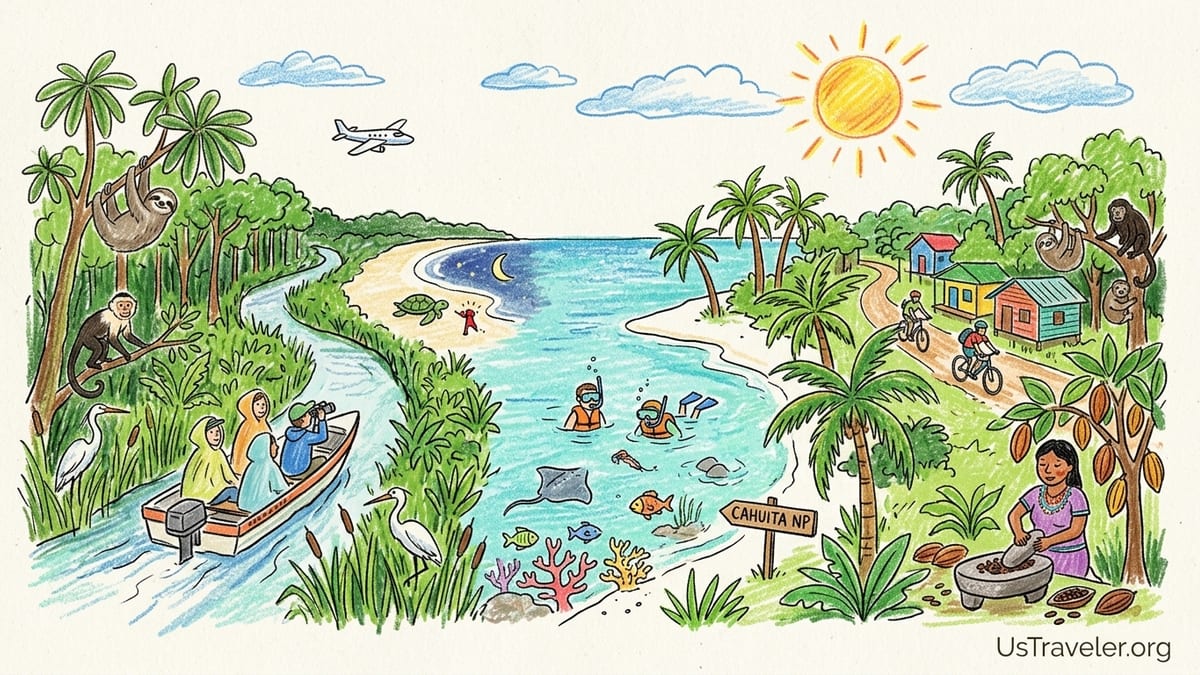
Tortuguero Canal Safaris and Turtle Nesting Tours
Tortuguero is reached only by boat or small plane, which naturally funnels visitors into organized tours. Most lodges and local operators sell early morning canal safaris in small motorboats or kayaks, plus seasonal night walks to see nesting sea turtles on the beach. The canals cut through flooded rainforest where wildlife tends to be active at dawn and dusk, so departures around 5:30 or 6:00 a.m. are common. Typical group boat tours last 2 to 3 hours and cost in the region of 35 to 60 US dollars per person, often including basic rain ponchos and binoculars. Multi day wildlife packages that bundle transport from San José, lodging and several guided outings remain popular for first time visitors who prefer not to manage the logistics.
Canal tours are one activity that genuinely benefits from a trained naturalist. Local guides are adept at spotting camouflaged basilisk lizards, sloths wedged into cecropia trees, and herons lurking in the reeds that independent visitors often miss. Many operators in Tortuguero advertise certified naturalist guides and small group sizes of about 8 to 12 guests so that everyone can see and hear. Private canal tours are widely available through lodges or village outfitters and typically cost about 150 to 250 US dollars per boat for a couple or small family. They are worth the premium if you are serious about birdwatching, want more time for photography, or are traveling with young children who might need a flexible pace.
Turtle nesting walks are strictly regulated inside Tortuguero National Park. Official park rules require visitors to join an accredited guide for night tours during nesting season, and groups are assigned specific beach sectors and time slots. Green turtles nest roughly from July to October, with peak activity in August and September, while leatherbacks appear earlier in the year. Because lighting and crowd behavior can disturb nesting females, guides enforce red light use and keep visitors at set distances. Group turtle walks commonly run around 2 hours and cost about 30 to 45 US dollars per person, with a separate park fee. Private turtle tours are less common and, when available, are usually significantly more expensive without adding much extra wildlife access, so most travelers do fine with a reputable group departure.
Independent exploration in Tortuguero is possible on the marked walking trails during daylight, but many sections are muddy and wildlife is shy. Visitors who skip guided outings often end up seeing only the monkeys, iguanas and birds that pass through the village. For a short stay of one or two nights, booking at least one canal tour and, in season, one turtle nesting walk with a naturalist guide gives the best return on both time and cost.
Cahuita National Park: Snorkeling and Guided Hikes
Cahuita National Park protects one of the few remaining coral reefs on Costa Rica’s Caribbean coast, along with white sand beaches and lowland rainforest. Access rules and sea conditions mean that snorkeling is almost always done as a guided boat trip with licensed operators based in Cahuita village. Official tour companies such as Cahuita Experience and other accredited outfits sell two part experiences that combine about 1.5 to 2 hours of snorkeling over the reef with a guided walk through the forest trails, typically lasting a total of 3.5 to 4 hours. Prices commonly fall around 45 to 65 US dollars per person, including mask and fins, life jacket, fruit snack and national park fees when booked directly.
In practice, a guide makes a real difference on the water at Cahuita. Coral heads, fire corals and delicate fans are spread out in patches, and park regulations often restrict where visitors can enter to minimize damage. Guides know which sections are currently clearest and safest, keep an eye on changing currents and swell, and help spot stingrays, reef fish and occasional nurse sharks over the seagrass. They also manage the safety side, which matters because visibility can change quickly with rain or river runoff. While confident swimmers could theoretically bring their own gear, park staff regularly insist that visitors snorkel only with licensed boat guides, so booking a tour is the practical choice.
The hiking component through Cahuita’s coastal forest is more flexible. You can walk the main trail independently for the price of a voluntary donation at the park entrance and still see capuchin monkeys, raccoons and sloths. However, pairing the snorkel with a guide led hike turns it into more of a natural history lesson. Many tours end the boat portion at Puerto Vargas and then walk back toward the village, pointing out medicinal plants, nesting sites and less obvious wildlife along the way. Travelers with limited time, such as cruise passengers or those staying in Puerto Viejo for only two nights, often appreciate this combined format, rather than trying to arrange snorkeling and hiking separately.
Sea conditions on the Caribbean coast can be unpredictable. Heavy rain or strong swell can suspend snorkeling for days, and park authorities occasionally close the marine sector entirely if visibility drops or storms roll in. For example, local operators publicized a full closure of Cahuita National Park for maintenance and management on two days in late February 2026, which affected both walking and snorkeling access. It is wise to confirm current conditions with a tour company a day or two in advance and keep a backup plan such as a chocolate tour or wildlife hike in case the reef is off limits during your visit.
Puerto Viejo and Surroundings: Sloths, Wildlife and Night Walks
Puerto Viejo de Talamanca is the main base for tours along Costa Rica’s southern Caribbean, with most operators offering separate outings for sloth and wildlife viewing, night hikes, surfing, kayaking and cacao experiences. Sloth and general wildlife tours typically last 3 to 4 hours and run either in the early morning or mid afternoon. Many companies market them as small group experiences at around 45 to 70 US dollars per person, with hotel pickup between Cocles and Playa Negra. A typical itinerary might combine a visit to a secondary forest or private reserve, a short walk along shaded trails, and several roadside stops where guides know of reliable sloth feeding trees.
Whether to book a sloth or wildlife specific tour depends on your expectations. If you simply hope to see a few sloths and monkeys at a relaxed pace, a small group outing is adequate and usually less expensive than a private guide. However, a dedicated naturalist greatly improves your chances of finding well camouflaged species like eyelash pit vipers, tiny frogs or rare birds. Private wildlife guides in the Puerto Viejo area often charge about 120 to 180 US dollars for a half day, which starts to make sense for keen photographers, birders or families who want flexibility for snacks and breaks.
Night walks are another product widely sold as a standalone tour. These usually take place in private reserves or on farms near Puerto Viejo and last around 2 hours, timed to start shortly after dusk. Guides use dim flashlights to search for tree frogs, sleeping birds, nocturnal mammals and insects. For safety and wildlife welfare, night excursions should always be guided; attempting to wander unfamiliar jungle trails in the dark is not recommended. Group night walks can be as low as 35 to 45 US dollars per person and are often a highlight for travelers who have already done daytime wildlife hikes elsewhere in Costa Rica.
Transport logistics are straightforward around Puerto Viejo. Many tours include pickup at central hotels and guesthouses, although more remote lodges toward Punta Uva or Manzanillo may incur a modest surcharge. If you are renting bicycles, some operators allow you to meet directly at their office in town, which can knock a few dollars off the price. Overall, for wildlife, sloth and night tours, a guide is valuable and often essential, and visitors see more by joining an organized outing than by simply walking along the roadside on their own.
Cacao and Chocolate Experiences Across the Region
Cacao has deep roots in the culture of Caribbean Costa Rica, and chocolate tours are among the most distinctive experiences between Cahuita and Manzanillo. Several small producers and specialty chocolate houses around Puerto Viejo market cacao farm visits and tasting sessions as separate products. For example, locally run experiences such as the Caribeans Chocolate Forest tour, Choco’s cacao farm and pairing sessions, and other farm based visits near the Bribri communities introduce guests to the process of harvesting, fermenting, drying and roasting beans under rainforest shade. Typical tours last from 1.5 to 3 hours and cost roughly 30 to 60 US dollars per person, often capped at 8 to 12 participants for an intimate feel.
These experiences benefit less from a conventional wildlife naturalist and more from hosts who are steeped in cacao cultivation and Afro Caribbean or Indigenous Bribri traditions. That said, many cacao farms double as small wildlife havens, and guides frequently point out toucans, poison dart frogs or howler monkeys as you move between the trees. Some operators pair the farm walk with a structured tasting back in Puerto Viejo, where guests sample single origin bars or chocolate and wine pairings. For example, one local chocolate shop currently markets a one hour tasting with multiple wines and curated chocolate flights at a price under 30 US dollars per person, or a combined farm tour plus pairing starting around the high 50s.
Tour formats vary. Some cacao outings include a short walk through the forest and hands on chocolate making with grinding stones, while others focus almost entirely on sensory tasting in a studio space. When comparing offerings, consider how much time you actually want to spend in the field, whether transport is included from Puerto Viejo or Cahuita, and whether group size is limited. Most cacao tours work well as shared group activities, since explanations and demonstrations are easy to follow and the experience is social by nature. Private versions are usually reserved for special occasions or small groups who want a custom schedule and exclusive tastings.
For travelers planning their days, cacao tours pair nicely with morning surfing lessons or afternoon wildlife walks. A common pattern is to snorkel Cahuita’s reef early, enjoy lunch on the beach, and then transfer to Puerto Viejo for a late afternoon farm visit and tasting. Because chocolate experiences run in nearly all weather, they also serve as a solid backup for days when rainfall or swell cancels marine excursions.
Kayaking, Surfing and Fishing: When to Join a Tour
Beyond wildlife walks and chocolate, the Caribbean coast offers active pursuits such as kayaking, surfing and inshore fishing, often sold as stand alone products. Kayaking is particularly popular in calm water areas around Punta Uva, Manzanillo and the Gandoca lagoon. Local companies advertise guided sea kayak outings of about 2 hours for roughly 45 to 60 US dollars per person, sometimes combined with a short jungle hike. For example, at least one operator in the Gandoca Manzanillo area promotes a dedicated kayaking tour from Manzanillo for around 50 US dollars for approximately two hours, aimed at spotting birds and coastal wildlife from the water.
For confident paddlers in good conditions, renting a kayak on the beach can be a budget friendly alternative. However, on this coast, swell and currents can pick up quickly, and river mouths create shifting sandbars. Guided outings give you a local skipper who understands where reefs sit just below the surface and when tides are turning. They are especially recommended in the mangrove lined Gandoca lagoon, where channels can be confusing for first time visitors. Cyclists or backpackers without their own transport also benefit from tours that include pickup in Puerto Viejo or Cahuita and provide dry bags, life vests and basic instruction.
Surfing lessons concentrate around Playa Cocles and Salsa Brava near Puerto Viejo. Surf schools and tour desks generally offer 2 hour group lessons in the 45 to 70 US dollar range, which includes board rental and a rash guard. In this case, instruction is almost essential for beginners; Caribbean waves can be punchy, and there are rips and reef sections that locals know how to avoid. Private lessons, often around 80 to 120 US dollars, suit those who want more one on one coaching or have limited time to progress. More advanced surfers may simply rent boards by the hour or day, using local advice at the shop instead of a formal tour.
Coastal fishing trips are less standardized but are available from both Cahuita and Manzanillo. Small local captains may offer 3 to 4 hour inshore trips targeting species like snapper and tarpon, typically arranged in cash and priced per boat instead of per person. These charters function almost exclusively as private tours, with prices often starting around 200 to 300 US dollars for a small group. Because fishing is highly weather dependent and regulations change, it is best arranged after arrival, once you can assess sea conditions and talk directly with a captain or through your accommodation.
Gandoca Manzanillo Wildlife Refuge: Nature Walks and Quiet Beaches
The Jairo Mora Sandoval Gandoca Manzanillo Mixed Wildlife Refuge stretches from the village of Manzanillo to the Panama border, protecting coral reefs, coastal rainforest, wetlands and sea turtle nesting beaches. Compared with Cahuita, it feels wilder and less developed, with sandy tracks and simple infrastructure. Visitors often base themselves in Puerto Viejo or in small lodges near Manzanillo and then book half day walking tours into the refuge. Guided hikes along the coastal trail typically last 3 to 4 hours, starting early in the morning to avoid midday heat, and cost around 45 to 70 US dollars per person in small groups.
While you can walk sections of the refuge on your own, a local guide adds significant value. Trails are sometimes unmarked, muddy and intersect with side paths to viewpoints or secluded coves that are easy to miss. Naturalists know where to find colonies of howler and capuchin monkeys, poison dart frogs, and seasonal turtle nesting areas near Gandoca beach. They also help with practical safety: advising on currents at swimming spots, identifying plants that can cause skin irritation, and watching tide timings for sections of the coastal path that may be cut off at high water. For first time visitors, booking one guided hike and then returning independently to favorite sections is a sensible compromise.
Specialty tours also operate within or near the refuge. Some companies organize dolphin watching boat trips from Manzanillo toward Punta Mona or offshore reefs, looking for resident dolphin species and occasional turtles at the surface. Others offer night turtle walks near Gandoca during nesting seasons, again under strict regulations and with accredited community guides. Kayak outings in the Gandoca lagoon and nearby mangroves tend to be small scale, focusing on birdlife and tranquil scenery rather than high exertion.
Because Gandoca Manzanillo is more remote, transport can shape your choices. Travelers without a rental car can reach Manzanillo by local bus or taxi from Puerto Viejo, then join prearranged tours that start in the village. Some operators based in Puerto Viejo include pickup and drop off for Gandoca hikes and lagoon kayaking at no extra cost, while others add a modest transport fee. Given the relative isolation and occasional cellphone dead zones, it is advisable to book with established companies or through your hotel rather than relying on walk up arrangements.
Private Versus Group Tours: Choosing What Fits
Across Caribbean Costa Rica, almost every type of experience is sold as separate, bookable products: Cahuita snorkeling, national park hikes, sloth tours, kayak outings, chocolate experiences, night walks and fishing trips. The choice between private and group formats depends on your priorities for cost, flexibility and depth of interpretation. Group tours are generally the most economical, with per person rates that work well for solo travelers and couples. They are also inherently social, which can be appealing in laid back beach towns such as Puerto Viejo.
Private tours come into their own in a few specific situations. Birdwatchers and photographers often prefer private canal boats in Tortuguero or custom wildlife walks in Gandoca Manzanillo for the ability to linger at sightings and reposition without worrying about a group schedule. Families with small children may appreciate flexible pacing and the option to cut a tour short if needed without disrupting others. In these cases, paying two to three times the per person group rate for a dedicated guide can still feel worthwhile.
Certain activities almost always require some form of guiding or licensed operator, regardless of group size. Turtle nesting walks in Tortuguero and Gandoca, Cahuita reef snorkeling and most night hikes fall into this category, due to conservation rules and safety considerations. In contrast, daytime walks along clearly marked sections of Cahuita’s main trail, beach time around Punta Uva, or relaxed cycling between Puerto Viejo and Manzanillo are easy to do independently with a basic map and common sense.
When comparing tour options online or through your accommodation, look beyond headlines like “sloth tour” or “chocolate experience” and focus on details: maximum group size, total time in the field versus in transit, whether park fees and equipment are included, and how knowledgeable the guides are about both wildlife and local culture. Reading recent traveler feedback and asking direct questions in person can quickly reveal which operators treat tours as meaningful experiences and which primarily shuttle guests through. In a region where many products sound similar on paper, these practical differences matter more than marketing labels.
The Takeaway
Caribbean Costa Rica lends itself to slow travel, but a few key tours can elevate even a short itinerary. In Tortuguero, a guided canal safari and, in season, a regulated turtle nesting walk are essential for appreciating the area’s wetland wildlife. Around Cahuita, combining a licensed snorkeling trip with at least a short guided hike adds context to the reef and coastal forest. In Puerto Viejo and south toward Gandoca Manzanillo, a mix of wildlife walks, a cacao or chocolate experience, and a low impact activity such as kayaking or surfing introduces the blend of nature and culture that defines the region.
Choosing between group and private outings is mostly about matching format to your interests and budget. Group tours for snorkeling, night walks, basic wildlife viewing and chocolate are usually sufficient and keep costs reasonable. Private guides are best reserved for serious wildlife enthusiasts, photographers and families who want tailored pacing or have specific mobility needs. Many experiences, from beach time at Punta Uva to daytime strolls in Cahuita, remain rewarding on a do it yourself basis when conditions are safe.
Above all, keep plans flexible. Weather and sea conditions on the Caribbean coast shift quickly, affecting snorkeling visibility and marine excursions. Having backup options such as chocolate tours, village walks or additional wildlife hikes ensures you still enjoy your days if the reef or canals are temporarily off limits. With thoughtful choices, the tours you book will complement the region’s naturally relaxed rhythm instead of crowding it out, leaving you with clear memories of howler calls at dawn, reef fish gliding over coral and the aroma of freshly ground cacao drifting through the forest.
FAQ
Q1. Do I need to book Tortuguero canal tours and turtle walks in advance?
It is wise to reserve in advance during peak turtle season from July to September, especially if you want a specific lodge or a small group canal tour, but outside those months many accommodations can arrange tours on arrival.
Q2. Is a guide required for snorkeling in Cahuita National Park?
In practice, yes, since licensed guides with boats manage access to the protected reef sector, monitor conditions and provide safety gear, and park staff often restrict independent snorkeling to protect fragile coral.
Q3. Can I visit Cahuita National Park on my own just for hiking and the beach?
Yes, you can enter on a donation basis at the park gate and walk the main coastal trail independently, enjoying beaches and common wildlife, though a guide can enrich the experience if you want more in depth natural history.
Q4. Are sloth tours around Puerto Viejo worth paying for, or will I see sloths anyway?
Many visitors do spot sloths along roadsides or in village trees, but a dedicated sloth or wildlife tour with a naturalist greatly increases your chances of seeing multiple individuals and other animals in a short time.
Q5. Which activities in Caribbean Costa Rica really require a naturalist guide?
Canal safaris in Tortuguero, turtle nesting walks, night hikes, Cahuita snorkeling and most Gandoca Manzanillo wildlife walks benefit strongly from a trained guide, while daytime beach time, casual swimming and short town walks can be enjoyed independently.
Q6. How far in advance should I book chocolate or cacao tours near Puerto Viejo?
Outside major holiday periods, booking a day or two ahead is usually enough, but during Christmas, Easter and local festivals, reserving several days in advance ensures a spot in smaller group experiences.
Q7. Is kayaking near Punta Uva or Gandoca safe to do without a tour?
On calm days experienced paddlers can rent kayaks on the beach, but guided tours are safer around reefs, river mouths and mangroves, and they add wildlife interpretation that you would otherwise miss.
Q8. What is the typical duration of group tours in Caribbean Costa Rica?
Most shared experiences, including canal safaris, snorkeling outings, wildlife walks and chocolate tours, last between 2 and 4 hours, fitting comfortably into either a morning or afternoon slot with time to relax before or after.
Q9. Are private tours in this region suitable for families with young children?
Yes, private canal boats, wildlife walks and chocolate tours work well for families, allowing for flexible pacing, extra breaks and adjustments to children’s attention spans without affecting other guests.
Q10. Can bad weather completely cancel my plans along the Caribbean coast?
Heavy rain or strong swell can postpone snorkeling, fishing and some boat trips, but many activities such as chocolate tours, village walks and covered wildlife outings operate in light rain, so keeping flexible alternatives in mind is helpful.