


Puntarenas sits at the heart of Costa Rica’s Pacific, a narrow sand spit that functions as ferry terminal, cruise pier, local beach hangout and springboard to islands, cloud forest and the Nicoya Peninsula. For many travelers it is not a final destination but a staging point. From here you can board boats into the Gulf of Nicoya, hop the ferry to southern Nicoya, or connect by road into the Monteverde cloud forest. Choosing the right tour and departure point can mean the difference between a long, tiring logistics day and a relaxed highlight of your trip.
How Puntarenas Works as a Base for Tours
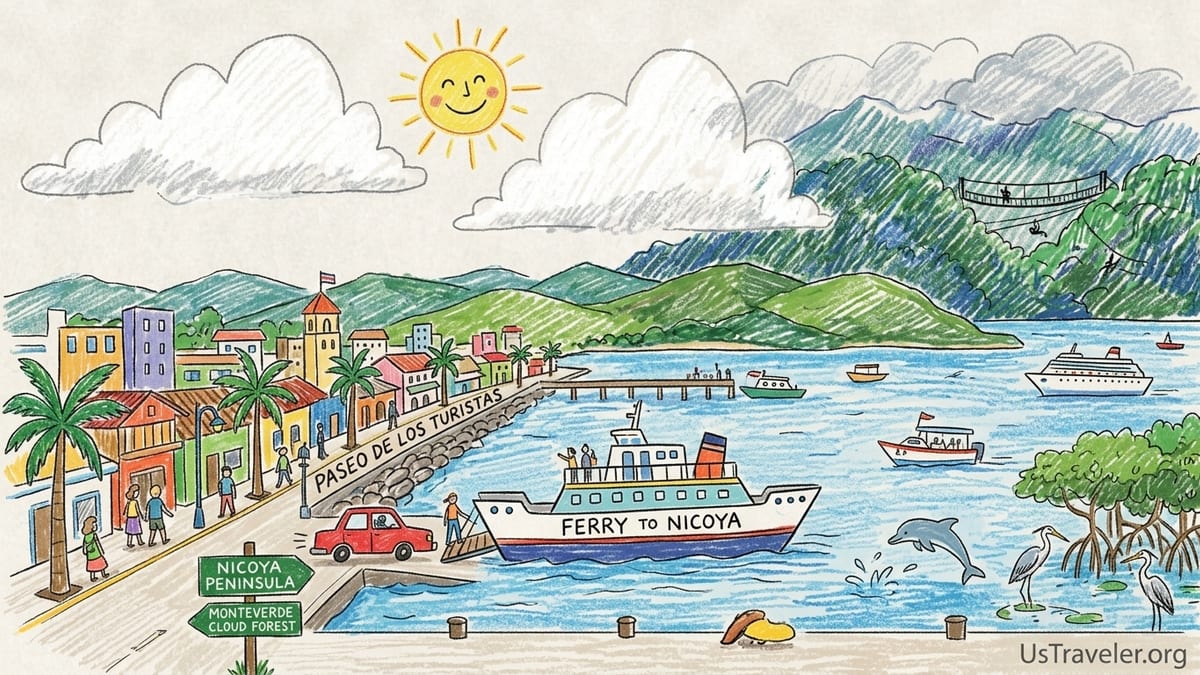
Puntarenas city is first and foremost a working port. The cruise pier, local docks and ferry terminal cluster along the Paseo de los Turistas, where buses, taxis and private shuttles arrive from San José and coastal towns. Regular ferries link Puntarenas to Paquera and Naranjo on the Nicoya Peninsula, making this one of the main gateways for exploring southern Nicoya beaches and nature reserves. The same waterfront also serves as the launch point for many Gulf of Nicoya boat trips and day tours to nearby islands.
For visitors, this concentration of marine services creates two big advantages. First, tour times typically line up with ferry schedules and cruise ship calls, so departures in the early to mid morning are common. Second, you can often choose between joining a shared boat from the city docks or arranging a private charter tailored around your group’s timing. Local operators based in Puntarenas and nearby ports such as Caldera tend to focus on half-day or full-day excursions that fit comfortably within a cruise stop or a short stay in town.
Accommodation in Puntarenas itself is simple and functional rather than resort-style. Many travelers stay instead in San José, Jacó or southern Nicoya and treat Puntarenas as a transfer hub. That is where decisions about where to start your tour matter. A shared island cruise that departs directly from Puntarenas can work well if you are already overnighting in town or arriving on a cruise ship. If you are based in San José or in a Nicoya beach village, traveling into Puntarenas just to backtrack by boat sometimes adds unnecessary road time.
As a rule of thumb, consider Puntarenas-based day trips when your ship or hotel is in or near the port, when you want a compact excursion that returns you to the pier on time, or when you plan to continue by ferry to the Nicoya Peninsula afterward. For cloud forest and many peninsula nature experiences, it is often better to stay closer to the action and join local tours there rather than funnel everything through Puntarenas.
San Lucas Island and Gulf of Nicoya Wildlife Cruises
San Lucas Island National Park sits in the middle of the Gulf of Nicoya, roughly between Puntarenas and the Nicoya Peninsula. Boats from Puntarenas usually cross first through the city’s mangrove estuary then into the wider gulf, combining wildlife watching with a short island visit. A typical shared tour runs about four hours, including the navigation time, and operates in the morning when wildlife activity is highest and the seas are usually calmer.
One common format starts with slow birdwatching along the estuary, where herons, egrets and kingfishers hunt in the mangroves. As you leave the channels behind, dolphins and sea turtles become more likely sightings in the open waters of the gulf. Operators often time their visit to San Lucas so that guests can walk the old prison grounds or relax on the small beaches before returning to Puntarenas. These excursions rarely include lunch but usually provide fruit and water, and they are gentle enough for families and older travelers.
For cruise passengers who dock in Puntarenas or Caldera, San Lucas and Gulf of Nicoya wildlife cruises are among the easiest tours to slot into a short port call. Transport is minimal: you typically walk or take a quick shuttle from the ship to the small-boat pier, then board a covered launch. If you are staying in San José, however, the calculus changes. The road transfer to Puntarenas can take around two hours each way depending on traffic. That means your four-hour boat tour quickly becomes a ten-hour day once pickup and drop-off are included.
Private versions of Gulf of Nicoya trips are widely available and can make sense for small groups or keen photographers. Instead of joining the fixed schedule of a shared departure, you can leave earlier to catch softer light, spend longer around dolphin pods or add stops at lesser-visited islands such as Venado or Chira when sea conditions allow. Prices scale with boat size and fuel, but once you have four to six people the per-person cost often approaches that of standard shared tours promoted to cruise passengers.
Monteverde Cloud Forest and Canopy Tours from the Coast
Monteverde lies inland in the Tilarán mountain range, part of Puntarenas province but a world away from the hot, humid waterfront. From the Caldera and Puntarenas area the drive to Monteverde usually takes three to three and a half hours one way, climbing from sea level up steep, curving mountain roads. The reward is access to world-famous cloud forest reserves, canopy bridges and some of Costa Rica’s best birdwatching and nightlife-themed wildlife walks.
Tour companies based around Puntarenas and the central Pacific often sell long day trips that bundle transport to Monteverde, a guided walk in a reserve such as Monteverde or Santa Elena, a canopy bridge circuit or zip-line park, lunch, and the return drive. These are typically small-group or shared van arrangements, with pickup at hotels near the port and at some properties around Jacó and Herradura. Expect a 12 to 14-hour day from pickup to drop-off, with several hours spent in the vehicle and four to five hours in the cloud forest itself.
If you are docking on a cruise for just one day, a Monteverde shore excursion can be memorable but demanding. Departure times must align with ship schedules, and traffic or road delays on the mountain can create stress on the return leg. For visitors flying into San José and planning a longer itinerary, booking Monteverde locally rather than as a day trip from Puntarenas usually makes more sense. You can take a direct shuttle from San José to Monteverde, spend two or three nights, and then continue toward the Nicoya Peninsula or Arenal without backtracking to the coast.
Private Monteverde transfers and tours provide more flexibility but carry higher prices. Families or groups of four or more may justify a private van with a bilingual driver, leaving early from a central Pacific beach town and arranging a custom mix of hanging bridges, coffee farm visits and night walks with Monteverde-based guides. In almost all cases, however, travelers get better value and a more relaxed pace by staying overnight in the cloud forest rather than trying to squeeze the experience into a single day from Puntarenas or San José.
Southern Nicoya Nature Tours and When to Use Puntarenas
The southern Nicoya Peninsula begins just across the gulf from Puntarenas, reached by car and passenger ferries that sail several times a day. On the Nicoya side, hubs such as Paquera, Tambor, Montezuma, Santa Teresa and Mal País offer their own portfolio of nature tours: hiking in reserves like Curú and Cabo Blanco, boat trips to see dolphins or visit islands, horseback riding, waterfall hikes, yoga and surfing. Many travelers barely set foot in Puntarenas city, instead using it as a quick ferry gateway to reach these beach towns.
Local operators on the peninsula tend to run smaller, more flexible tours than those aimed at cruise passengers in Puntarenas. For example, a Paquera-based company might offer a small-boat outing to spot dolphins and sea birds, followed by snorkeling in the gulf and lunch at a family-run restaurant. In Montezuma or Santa Teresa, guides lead jungle walks to waterfalls and along coastal trails, often with the option of early-morning departures that make the most of cooler temperatures and wildlife activity. Because you are already staying nearby, the overall experience feels less rushed than a single long day looping out from the mainland and back.
Using Puntarenas as your base for southern Nicoya nature tours only makes sense in a handful of scenarios. One is if you are traveling with a rental car and plan to cross to the peninsula very early or late, but want to fit a short nature or wildlife tour into the hours between arriving by bus in Puntarenas and catching the ferry. Another is if your cruise ship docks in Puntarenas and local providers arrange special fast-boat or van-plus-boat combinations to get you to a nearby reserve or beach on the peninsula and back within your port time.
For most independent travelers staying several nights in Costa Rica, it is more efficient to commit to at least two or three nights on the Nicoya side. You can then book nature tours directly with local operators in Paquera, Tambor, Montezuma or Santa Teresa. Not only does that reduce time spent in transit each day, it also brings economic benefits to small communities and allows for last-minute adjustments for weather and sea conditions, something that is harder to do when you are locked into a rigid excursion from San José.
Puntarenas-Based Day Trips: Mangroves, Estuaries and Nearby Highlights
Not every traveler has time for a multi-day detour to Monteverde or a full circuit of the Nicoya Peninsula. If you are overnighting in Puntarenas before catching the ferry, or stopping on a cruise, shorter tours that depart directly from the port can still offer a strong sense of Costa Rica’s natural richness. Among the most popular are mangrove and crocodile cruises on nearby rivers and estuaries, which typically last between two and four hours.
One common itinerary takes you by bus from the port to a river such as the Tárcoles or to the Guacalillo estuary, where you board flat-bottomed boats and drift along muddy banks lined with mangrove trees. Guides point out large crocodiles basking in the shallows and an array of waterbirds and raptors in the canopy. These excursions usually include round-trip transportation from the pier, bottled water and a bilingual naturalist guide. Because total time away from the ship is relatively short, they work well as a low-stress option for visitors who prefer not to travel far inland.
Another accessible choice from Puntarenas is a combined city and culture tour. These half-day outings visit the Paseo de los Turistas, local markets and viewpoints over the gulf, sometimes paired with a quick estuary boat ride. They rarely appeal to adventure travelers but can be valuable for guests with limited mobility or for those curious about everyday life in a coastal Costa Rican city. Hotel pickups within Puntarenas are often included, while guests staying farther afield may need to arrange a taxi to a central meeting point.
When evaluating these short tours, look closely at how much time is spent on the activity versus on transfers, and whether the departure fits your arrival and departure window. For example, a two-hour mangrove cruise that begins a 45-minute drive from the port quickly becomes a four- to five-hour outing once boarding and transport are included. In contrast, an estuary tour that loads directly onto small boats just a few minutes from the pier maximizes wildlife time while minimizing logistics, which is usually preferable on a tight schedule.
Choosing Between Shared and Private Tours
Across Puntarenas, Monteverde and southern Nicoya, travelers typically face a similar decision: join a shared group tour or charter something private. Shared excursions keep costs predictable and work well for solo travelers and couples. They follow fixed schedules, with set departure times and inclusions such as snacks, lunch, entrance fees and basic equipment. The trade-off is less flexibility. You depart when the group is ready, move at the pace of the slowest participant and usually visit the most popular spots rather than quieter corners.
Private tours can be more economical than many visitors expect, especially for families or small groups of friends. For instance, a private small-boat wildlife tour in the Gulf of Nicoya or a private nature guide in Monteverde is often priced per boat or per group, not per person. Split across four to six people, the per-person cost may end up only slightly above that of a shared excursion but with the benefits of personalized pace, custom timing and the ability to focus on particular interests such as bird photography or hiking intensity.
In Puntarenas specifically, private charters are popular among cruise passengers who want to avoid large bus tours organized by the ship. Independent operators can adjust departure times slightly to account for early or late tender operations and can sometimes offer alternate routes if a planned river or estuary is too crowded. On the Nicoya Peninsula, private guiding is common for surf lessons, yoga sessions, waterfall hikes and wildlife walks, giving you more control over when to start and how long to stay out.
Whether shared or private, always confirm what is included before booking: hotel or pier pickup, entrance fees, meals, drinks, snorkeling or safety gear, and whether gratuities are expected. Ask specifically about group size limits in shared tours. A “small group” of eight can feel intimate on a riverboat, while 25 guests on that same boat may make wildlife viewing and photography more challenging. Clarity on these points helps ensure that your expectations match the reality on the day.
Booking From San José Versus Locally in Puntarenas and Nicoya
Many visitors fly into San José and are tempted to book all their excursions from the capital, including island cruises, Monteverde, mangrove tours and Nicoya nature trips. Large agencies in San José do a brisk business packaging these into long day trips with early-morning hotel pickups, round-trip road transport, the activity itself, meals and a late return. This approach offers simplicity on paper: one company, one payment, minimal planning. It works best for travelers with only a few days in the country who prioritize seeing a specific highlight even if it means a long day in transit.
In practice, however, arranging every excursion from San José often leads to stacked, tiring days. A classic example is an island or Gulf of Nicoya cruise. From the capital, you are usually picked up very early to beat traffic, driven roughly two hours to the coast, placed on a shared boat departure, then driven back in the afternoon or evening. Sea conditions or road delays are out of your control, yet the schedule is fixed. From a cost perspective, you are basically paying for both the coastal tour and the additional round-trip private transport layered on top.
Booking locally in Puntarenas or on the Nicoya Peninsula simplifies things if you plan to spend at least one night in the region. You can travel from San José to the coast or Monteverde using regular shuttle services or a rental car, check in to a hotel, and then join tours that depart nearby the following morning. Not only does this reduce total travel hours per day, it allows more flexibility for adjusting to weather, especially during the rainy season when afternoon downpours and rougher seas can force last-minute changes.
A hybrid strategy works well for many itineraries. Use San José-based operators for transfers and perhaps one key excursion on your way out of the city, then rely on local tour companies in Puntarenas, Monteverde and Nicoya for the rest. For example, you might book shared transport from San José to Monteverde through a capital-based agency, stay two nights and arrange canopy bridges and a night walk directly through your Monteverde lodge. Afterward, continue to the Nicoya Peninsula by shuttle and choose local guides for waterfalls, wildlife and boat trips, only returning to Puntarenas to catch the ferry or for a final short estuary tour before heading back to the airport.
The Takeaway
Puntarenas is less a destination in itself and more a crossroads linking several of Costa Rica’s most compelling experiences: island-dotted gulfs, mangrove-lined estuaries, the Monteverde cloud forest and the wild beaches and reserves of southern Nicoya. Understanding how these pieces fit together geographically is the key to choosing the right tours. While you can technically reach almost anywhere in a day from San José or a cruise ship in Puntarenas, the most rewarding outings tend to be those that start close to where you sleep, with minimal backtracking and realistic expectations about travel times.
As you weigh tours and departure points, think first about your base: a port hotel in Puntarenas, a cabin in Monteverde or a beach bungalow on the Nicoya Peninsula. From there, compare shared and private options, looking closely at what is included, how long you will spend in transit and whether you prefer a structured group atmosphere or a more flexible, custom pace. Booking locally in Monteverde and southern Nicoya generally gives you more time in nature and better flexibility, while Puntarenas-based excursions shine for short, efficient glimpses of the gulf and mangroves, especially on tight cruise schedules.
Whichever mix you choose, leave space in your itinerary for the unexpected: a pod of dolphins that keeps your boat out longer than planned, a clear spell in Monteverde that begs for one more viewpoint, or a Nicoya beach sunset that convinces you to stay an extra night. In a region defined by water, forest and light, the best tours are often the ones that allow a little room for serendipity.
FAQ
Q1. Is it better to book Gulf of Nicoya and San Lucas tours from San José or from Puntarenas?
For most travelers it is better to book these tours from Puntarenas or nearby coastal towns, because you avoid a long round-trip road transfer from San José and have more flexibility to work around weather and sea conditions.
Q2. How long does it take to travel from Puntarenas to Monteverde for a cloud forest tour?
The drive from the Puntarenas and Caldera area to Monteverde typically takes around three to three and a half hours each way, depending on traffic and road conditions, so most day tours run 12 to 14 hours door to door.
Q3. Are Puntarenas-based day trips suitable for cruise passengers with limited time in port?
Yes, many tours are designed around cruise schedules, including short mangrove cruises, river wildlife tours and Gulf of Nicoya boat trips that depart close to the pier and return with a comfortable buffer before all-aboard time.
Q4. When does a private tour make more sense than a shared excursion in this region?
A private tour is often worthwhile for families or small groups of four or more, for keen photographers who want a flexible pace, or for cruise passengers who prefer custom departure times and smaller groups than the standard bus tours.
Q5. Should I base myself in Puntarenas or on the Nicoya Peninsula for nature and beach tours?
For multi-day beach and nature experiences it is usually better to stay on the Nicoya Peninsula in towns like Paquera, Tambor, Montezuma or Santa Teresa and book tours locally, using Puntarenas mainly as a ferry and transport hub.
Q6. Is a Monteverde day trip from Puntarenas recommended, or should I stay overnight?
While day trips are possible, staying at least one or two nights in Monteverde is generally recommended so you can enjoy multiple activities, such as hanging bridges and night walks, without spending most of the day in a vehicle.
Q7. Are hotel pickups usually included for tours from Puntarenas and southern Nicoya?
Many shared tours include pickup from central hotels or designated meeting points, but guests staying in remote rentals or outside core areas may need to arrange a taxi or pay a small extra fee for door-to-door service.
Q8. How rough are the boat rides in the Gulf of Nicoya and around southern Nicoya?
Sea conditions vary by season and time of day, but most tours use covered boats and schedule departures for calmer morning hours; travelers who are prone to motion sickness may want to take preventive medication.
Q9. Can I combine a ferry crossing from Puntarenas with the same-day start of a Nicoya Peninsula tour?
It is sometimes possible to take a morning ferry and join an afternoon tour near Paquera or Tambor, but it is safer to allow a buffer between ferry arrival and any booked excursion in case of schedule changes or sea delays.
Q10. When is booking through a San José agency still a good idea for this region?
Booking through a San José agency can make sense if you have very limited time in Costa Rica, prefer a single point of contact for complex logistics or want hotel pickups and drop-offs in the capital bundled with a specific must-see tour.