


On my most recent trip to Costa Rica’s Central Pacific coast, I deliberately avoided renting a car. Instead I moved between San José, Jacó, Manuel Antonio and the beaches farther south using only public buses, shared and private shuttles, and local taxis. I wanted to see how realistic a car free trip really is in a region that marketing describes as highly developed for tourism, and surf guides praise for its bus access to many beaches. What follows is a ground level account of exactly which services I used, how they handled luggage, what the waits and delays were like, and where not having a car felt effortless versus genuinely frustrating.
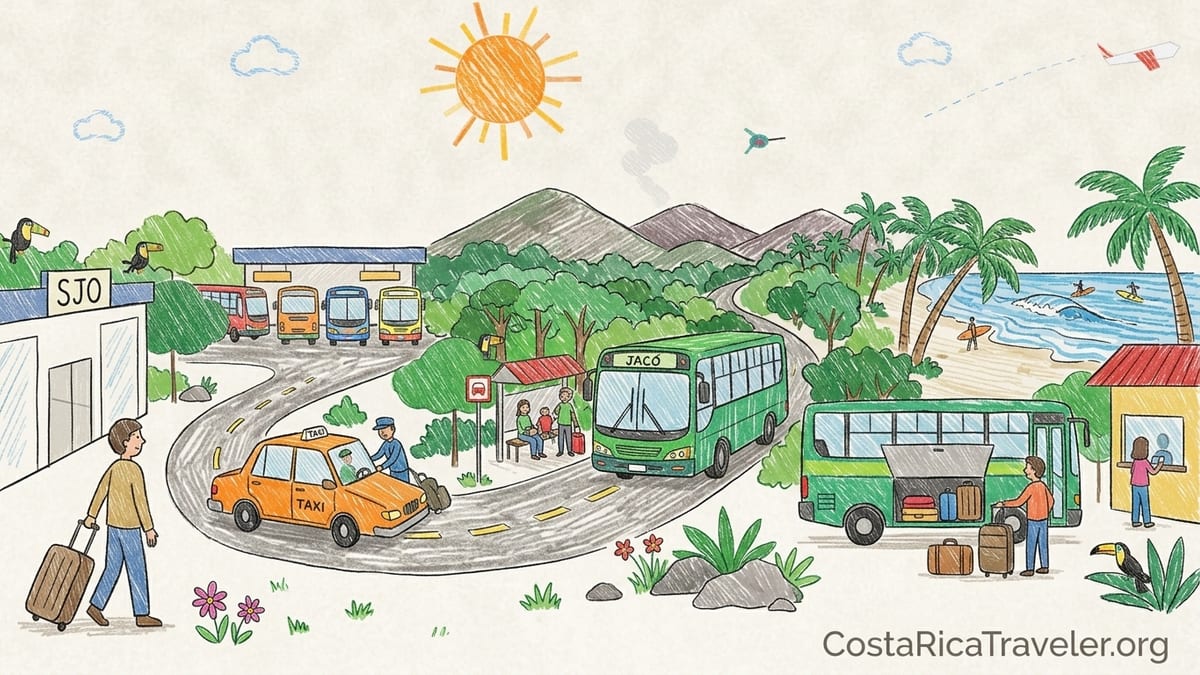
Getting from San José to Jacó Without a Car
I started at Juan Santamaría International Airport outside San José with Jacó as my first stop. The backbone of this connection is the Transportes Jacó public bus, which now departs from Terminal Atlántico Norte in downtown San José several times per day, with the last departure at 7:00 p.m. according to the company’s October 2026 timetable. I checked the schedule on the company’s website the day before traveling and again on the morning of travel to be sure nothing had changed overnight. Buying a ticket in advance online locked in my seat, which turned out to be important because the late afternoon departure was nearly full.
Because the bus leaves from downtown rather than directly from the airport, my first leg was a licensed orange airport taxi to Terminal Atlántico Norte. With light mid morning traffic on Route 1 it took around 25 minutes and cost just under the equivalent of 35 US dollars on the meter, including airport pickup surcharge and a small tip. Carrying one large checked size suitcase plus a daypack, I asked the driver to drop me right at the terminal entrance. Inside the station I still had about 30 minutes before departure, enough to buy the bus ticket at the Transportes Jacó window, confirm that my online reservation matched their system, and use the restrooms before boarding.
On the bus itself, luggage is handled in a straightforward, old fashioned way. The assistant opened the underfloor compartment and loaded my large suitcase by hand. There was no barcode tag or luggage receipt, but I stood and watched the bag go in and made sure I was close to the door at Jacó so I could see it come out again. Daypacks and small bags went on the overhead racks. The bus left within five minutes of the scheduled time and took just over two hours along Route 27 and the Costanera highway, including a short pause near Orotina where some passengers boarded at the roadside. Afternoon traffic was moderate and the air conditioning kept the interior comfortable.
In Jacó, the bus pulls into the company’s small terminal in Plaza Jacó, which sits roughly two blocks inland from the main beach road. I rolled my suitcase the short distance along level sidewalks to my hotel near the south end of town in about 10 minutes. For this first leg, traveling without a car felt surprisingly smooth. The only mildly awkward piece was transferring between airport and downtown terminal with luggage, which I handled via taxi but could have done with a local bus if I had carried only a backpack and had more time.
Using Shared Shuttles and Taxis Around Jacó
Jacó’s reputation as one of the Central Pacific’s most developed tourism centers proved accurate from a car free perspective. Once checked into my hotel, I found that day to day movement involved a mix of walking, inexpensive local taxis and one shared shuttle ride. Jacó itself is compact, so I mostly walked between my hotel, the beachfront and restaurants along the main strip. The furthest walk, from my hotel to the north end of the beach near the estuary, took about 25 minutes at a relaxed pace, entirely on sidewalks or firm sand.
For an early morning surf lesson at Playa Hermosa, about 10 minutes south by road, I opted for a shared shuttle organized through a local surf school. I booked it the day before via the surf shop’s desk, paid in cash on pickup and received a WhatsApp confirmation with the pickup time, vehicle description and the driver’s first name. The van arrived within the promised 10 minute pickup window. The driver loaded boards onto the roof rack and stowed my daypack inside without any fuss. We picked up two more surfers from a hostel in south Jacó, then continued straight down the coastal highway to Hermosa. Road traffic heading south at that hour was light and the trip took less than 15 minutes door to sand.
Returning from Playa Hermosa later that morning, I switched to a red official taxi from the small taxi stand near the highway. There was no posted fare chart, but the driver used the meter and the total to my hotel in Jacó came to the equivalent of around 12 US dollars, including a small tip. I shared the ride with another surfer and we easily fit two shortboards in the trunk by folding down one rear seat. For short hops like this, taxis are extremely practical when you do not have a rental car, particularly if you share the fare with others from a hostel or surf camp.
What struck me in Jacó is that the “last mile” rarely felt like a problem. The surf schools, canopy tour operators, ATV outfits and tour desks are used to visitors arriving without cars, and almost every excursion I considered offered hotel pickup in a minibus or 4x4. In practice that means you can spend several days in Jacó with no vehicle and still visit waterfalls inland, surf breaks along the coast and even undertake day trips to Carara National Park, all using bundled transportation. The tradeoff is that you are tied to their schedules and group itineraries, rather than being able to improvise stops the way you could with your own rental car.
Jacó to Quepos and Manuel Antonio by Bus
From Jacó I continued south to Quepos, gateway to Manuel Antonio National Park, using the public bus that runs along the coastal highway. There are two main patterns here. One is a local Jacó to Quepos bus, and the other is a longer route operated by Tracopa that runs between cities farther north and south, picking up in Jacó en route to Quepos and beyond. I confirmed current times using a local bus information site and by asking at the small Jacó bus stop on the highway the day before traveling, because printed schedules and online brochures are often out of date.
On the morning I traveled, I boarded a mid morning bus at the stop on the main highway at the south end of Jacó, a five minute taxi ride from my hotel. I arrived 20 minutes before the scheduled time and paid the fare directly to the driver in colones in cash, as advance reservations are not usually possible for this short leg. The bus was about three quarters full on departure and made several stops in Herradura, Playa Mantas and Parrita to pick up local passengers. My large suitcase again went into the underfloor compartment, while my daypack stayed with me. Including stops, the journey took just under two hours along mostly flat, paved highway.
The bus dropped us at the main Quepos bus terminal, which sits a short walk from the waterfront and around 15 minutes on foot, or a five minute taxi ride, from the hotels clustered on the hill road toward Manuel Antonio. With luggage and mid day heat, I chose a taxi from the stand beside the station. The driver named a flat fare on par with what I had seen discussed locally for this exact ride, in the range of 6 to 8 US dollars equivalent, and I accepted. Traffic on the narrow hill road was slow because of delivery trucks and tour vans stopping to load passengers, so the ten minute drive felt justified compared to hauling a wheeled suitcase up the gradient.
Traveling this stretch without a car highlighted both the strengths and the gaps of Central Pacific bus infrastructure. Between towns like Jacó, Parrita and Quepos, the public buses are frequent enough during daylight hours and reasonably comfortable. They run on main paved roads, tickets are inexpensive, and drivers are used to handling tourists with luggage. The challenge comes in the vertical connection from the bus terminal up to hillside accommodations around Manuel Antonio. That last climb is where travelers either sweat it out on foot, add taxi costs, or choose hotels directly in Quepos or within easy walking distance of the main road where the Quepos–Manuel Antonio local buses pass.
Connecting Quepos, Manuel Antonio and Beaches Farther South
Once in Manuel Antonio, I relied on the local shuttle style public bus that runs between Quepos town and the national park entrance. This service is frequent and inexpensive, and crucial for car free visitors. I boarded near my hillside hotel in the morning and was dropped right by the park’s public bus stop area in less than 15 minutes. Buses run back and forth throughout the day, and even at park closing time there was space for everyone. The vehicles are smaller than long distance coaches and have less dedicated luggage space, which is worth noting if you are moving hotels with bags, but for day trips with only a backpack they are ideal.
To continue farther south toward Dominical and Uvita, I again turned to Tracopa, which operates coastal routes linking Quepos with smaller beach towns and the southern zone. Because Tracopa’s official website and timetable PDFs can be confusing, I double checked times directly at the Quepos bus station ticket window two days before departure. The clerk confirmed that at least one daily bus continued south, with departure times displayed on a printed sheet taped beside the window. I purchased a ticket for the late morning service toward Uvita and received a printed ticket showing the destination and seat number.
On the day of travel I arrived 30 minutes early, which turned out to be wise. The bus pulled in slightly ahead of schedule and began boarding almost immediately. The driver stored my suitcase underneath and I kept a small bag in the cabin. As we left Quepos, the bus stopped at several small roadside shelters to pick up locals and a few backpackers. The ride to Dominical and then Uvita took roughly two hours, broken up by these brief pauses as well as some slower sections where roadworks had reduced the highway to a single alternating lane.
The last mile challenge returned once I reached Uvita. The Tracopa bus dropped passengers on the main highway near the small cluster of shops that constitute central Uvita. My guesthouse, however, was closer to Playa Uvita and Marino Ballena National Park, roughly 2.5 kilometers away down a side road. In the midday sun with a rolling suitcase, that is a sweaty 30 minute walk. There is no dense taxi stand here as in Jacó or Quepos, and ride hailing apps have only a limited presence, so I had planned ahead with the guesthouse to arrange a local taxi pickup at approximately the bus’s arrival time. The driver was waiting by the bus stop with my name written on a scrap of paper, and for the equivalent of about 6 US dollars he drove me and my luggage down to the lodging’s gate along a partly paved, partly gravel road.
How Travel Felt Without a Car Versus Renting One
After several weeks of moving along the Central Pacific coast without driving, certain patterns became clear. In places like Jacó and central Quepos, public transport and tourism infrastructure are strong enough that a car really is optional. Frequent buses link the main towns, tour operators include pickup in their prices, and local taxis fill in the gaps. I could visit surf breaks, viewpoints and national park entrances without once touching a steering wheel. The tradeoff was primarily time. A bus that leaves when the timetable says 10:30 will usually go close to that time, but it may stop many times en route, and I needed to arrive 20 to 30 minutes early to be sure of a seat on routes without reservations.
If I had rented a car, several things would have changed. The most obvious improvement would have been in spontaneous side trips. On the bus between Jacó and Quepos, for example, I saw signed turns for lesser known beaches and riverside swimming spots that would have been simple ten minute detours in a private vehicle but were impossible as a bus passenger tied to a fixed route. In Uvita and other smaller towns, a rental car would also have solved the last mile problem from highway to beach or guesthouse, saving repeated short taxi rides and avoiding the need to coordinate pickups in advance.
However, the car would also have introduced its own frictions. Traffic jams near San José and at certain beach towns on Sunday afternoons are well known, and self driving would have placed me in the thick of those instead of reading a book on the bus or watching the scenery through a window. Parking near the Manuel Antonio park entrance is paid and limited, with attendants crowding vehicles into small lots. Without a car, I simply stepped off the local bus and walked to the main gate, bypassing the parking scrum entirely. Fuel and tolls along Route 27 would have been additional expenses that I did not incur while using buses and shuttles.
The other major difference concerns luggage. With one large suitcase and one smaller bag, I found coach style buses such as the San José–Jacó and Tracopa services very manageable. There was always underfloor space and the drivers handled bags as a normal part of their routine. Shared shuttles and taxis were also fine with this amount of luggage, though some smaller shuttles would have been tight if every passenger carried multiple big suitcases. If I had traveled with surfboards or bulky sports equipment, a rental car would likely have been the more practical choice unless I committed to specific surf camps that provided their own transport for gear.
Where Being Car Free Was Easy and Where It Was Frustrating
Across the Central Pacific, my experience matched the way surf guides describe the coast as broadly accessible by bus but varied in how close those buses actually take you to the sand. In Jacó, the main bus terminal is just a few minutes’ walk from the beach, and the strip of hotels and hostels runs parallel to the shore. Car free travel here truly is easy. Even late in the evening I saw people walking or catching short taxi rides back to their rooms without any sense of isolation.
Quepos and Manuel Antonio were more mixed. The public bus connection between the town and the national park is excellent, and the presence of a central bus station with ticket windows for long distance routes makes onward travel by bus straightforward if you plan a day or two ahead. Yet the hillside geography means that some hotels have spectacular views at the cost of steep climbs or reliance on taxis. Returning up that hill after sunset, I repeatedly chose a taxi over the walk, especially when carrying camera gear or after a long day in the heat.
Farther south, in places like Dominical, Playa Matapalo and Uvita, the last mile frustrations become more pronounced. The main highway is never far from the ocean on the map, but the actual distance from the bus stop to the water’s edge can range from an easy 10 minute walk to a long, exposed trudge. Gravel side roads puddle in the rainy season, and lighting is limited after dark. Without a car, you either pay for frequent short taxis, arrange pickups through your lodging, or choose accommodations close to the highway and accept that you may be a significant walk from the beach itself.
The key lesson is that “good tourist infrastructure” does not automatically mean “perfect for car free travel.” It matters where the bus stops are, how often services run, whether there are safe sidewalks or shoulders, and whether taxis are plentiful and regulated. Jacó scores high across these measures. Quepos and Manuel Antonio do well in terms of services but less so in walkability for hillside hotels. The smaller beach communities along the same coast are wonderful for slowing down in one place but can feel inconvenient if you are trying to move quickly between multiple spots without your own wheels.
The Takeaway
For travelers planning to stay mostly in one beach town, such as Jacó or central Quepos, going without a car on the Central Pacific coast works very well. You can take the Transportes Jacó bus from San José to Jacó, walk or taxi the short distances around town, and rely on tour operator pickups for activities. If you choose a hotel within a short walk of the beach and main street, you may only need taxis for late night returns or very early departures. The money saved by not renting a car can comfortably cover those occasional rides.
If your itinerary combines national parks and several beaches, for example a loop from San José to Jacó to Manuel Antonio and then back to the capital, public buses and shuttles remain workable, but you need to build in extra time. Check bus schedules again just before travel dates, purchase long distance tickets a day or two in advance where possible, and give yourself generous connection windows in case of traffic or full buses. In this scenario, a rental car would buy back significant flexibility and allow spontaneous stops, yet it is not strictly necessary if you are patient and keep luggage modest.
For travelers planning to move steadily south through the region, perhaps continuing past Uvita toward the Osa Peninsula, the balance tilts further toward renting a car unless you are comfortable with occasional confusion and last minute adjustments. Tracopa buses do run along the coastal highway, but departures may be limited to once or twice per day in some segments, and the last mile from roadside bus stop to lodging becomes a recurring puzzle. A car free journey is still entirely possible, and I met several backpackers doing exactly that, but it requires more advance communication with lodgings about pickups and a willingness to walk stretches in the heat when taxis are not immediately available.
The Central Pacific of Costa Rica rewards travelers either way. With a rental car you gain freedom to chase swells and sunsets along little side roads. Without one, you move at the rhythm of buses, shuttles and taxis, sharing the journey with locals and other visitors and noticing details you might blur past behind the wheel. Having now experienced the region entirely car free, I would comfortably recommend that first timers base themselves in Jacó or Quepos without a vehicle, then decide on renting a car only if their ambitions stretch to multiple smaller beaches and tight timetables farther south.
FAQ
Q1. Is it realistic to visit Jacó and Manuel Antonio without renting a car?
Yes. Regular public buses connect San José with Jacó and Quepos, local buses run between Quepos and Manuel Antonio, and taxis plus tour pickups cover most remaining distances if you choose centrally located hotels.
Q2. How far is the bus stop from the beach in Jacó?
The Transportes Jacó terminal in Plaza Jacó is only a few blocks from the sand. Walking from the bus to beachfront hotels near the town center typically takes about 5 to 10 minutes on flat streets.
Q3. Do the buses between Jacó and Quepos accept luggage like a suitcase?
Yes. Long distance and coastal buses usually have underfloor luggage compartments. Drivers are accustomed to loading standard checked size suitcases, while smaller bags can be kept with you in the cabin.
Q4. How do I get from Quepos bus station to a hotel in Manuel Antonio without a car?
You can either take a short taxi ride up the hill from the Quepos bus terminal or board the frequent local bus toward Manuel Antonio and get off at the stop closest to your hotel, then walk the remaining distance.
Q5. Are shared shuttles worth the extra cost compared with public buses?
Shared shuttles cost significantly more per person than public buses but offer door to door service, guaranteed seating, air conditioning and fewer stops, which can be valuable after a long flight or with heavy luggage.
Q6. How reliable are bus schedules on the Central Pacific coast?
Main routes such as San José to Jacó and Quepos to Manuel Antonio tend to follow published schedules closely, but services farther south may be less frequent. It is important to verify times close to your travel date and arrive early.
Q7. What is the biggest downside of traveling this region without a car?
The main drawback is the “last mile” between highway or bus terminal and your lodging or beach, especially in smaller towns. You may rely more on taxis, prearranged pickups or longer walks in the heat.
Q8. Is it safe to take public buses with luggage on this route?
Public buses on the Central Pacific are widely used by locals and tourists. Using common sense, keeping valuables with you in a daypack and watching your bag being loaded and unloaded reduces the risk of problems.
Q9. When would you strongly recommend renting a car instead?
If you want to visit several smaller beaches in a short time, carry bulky gear like surfboards, or travel late at night or very early when buses are limited, a rental car provides much more flexibility.
Q10. Can I combine buses one way and a rental car for only part of the trip?
Yes. Some travelers start car free in San José and Jacó, then arrange a rental pickup in Quepos or Uvita for the more remote southern segment, returning the car later in another town to avoid backtracking.