


I spent three very different weeks along Costa Rica’s Pacific Coast over two recent trips: a Guanacaste resort break in July 2025, a Central Pacific road trip in February 2024, and a remote South Pacific lodge stay on the Osa Peninsula in May 2023. The landscapes were all palm trees and Pacific sunsets, but the spending profiles could not have been more different. Below is what I actually paid, line by line, and how those costs compare with representative 2026 prices for travelers planning a similar route today.
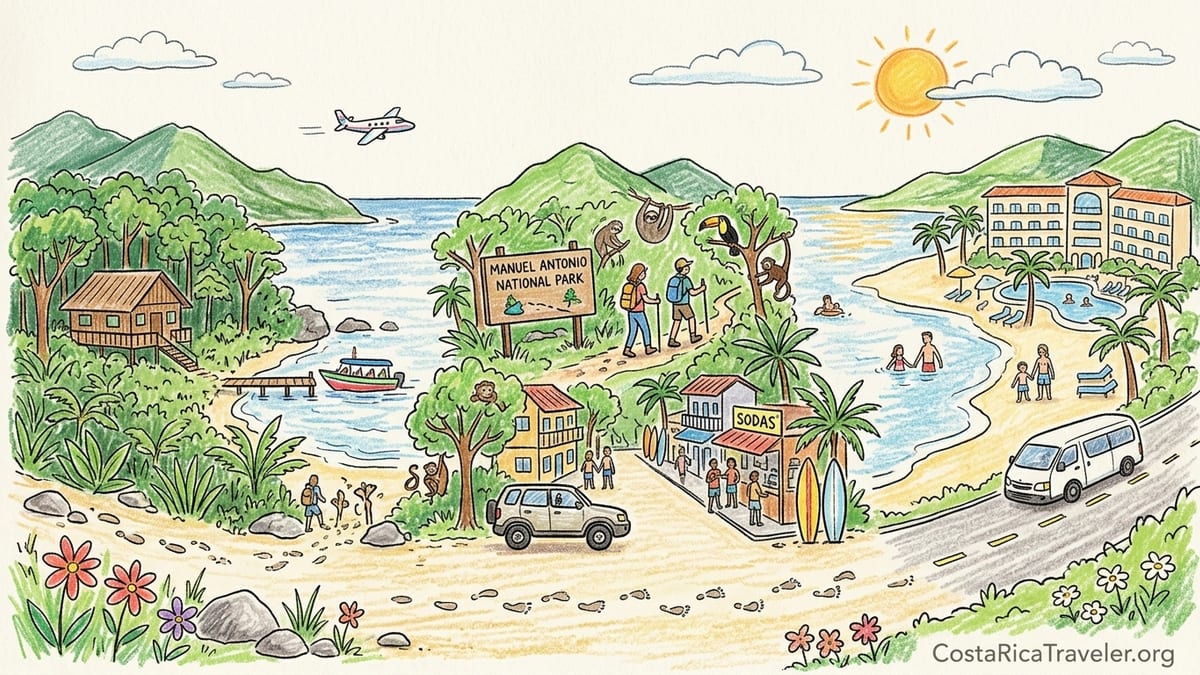
My Three Pacific Coasts: When and Where I Actually Traveled
To understand the money, you need the geography and timing. My most expensive stretch was four nights at a mid‑range all‑inclusive resort near Playa Conchal in Guanacaste in July 2025, booked for two adults and one child. We flew into Liberia, skipped a rental car, and used a private shuttle instead. This was classic Gold Coast Costa Rica in the North Pacific, where large resorts cluster around Papagayo, Hermosa, Conchal, Flamingo and Tamarindo.
The second trip felt completely different. In February 2024 I rented a compact SUV out of San José and drove the Central Pacific, basing in Jacó and then Manuel Antonio for a week. This leg was all about mixing beach time with self‑drive national park visits and small independent hotels. I ate in local sodas, paid national park fees out of pocket, and juggled tolls, fuel and parking instead of resort extras.
The third base was the wild end of the coast. In May 2023 I flew from San José to Puerto Jiménez on the Osa Peninsula, then transferred by lodge boat to a remote jungle eco‑lodge facing the South Pacific. The stay was on a per‑person, mostly all‑inclusive basis that wrapped meals, guided hikes and boat tours into a single nightly rate. Once I arrived, I barely handled cash for three days, but the headline nightly price was far higher than my Central Pacific guesthouses.
Across these three trips, the daily out‑of‑pocket range ran from under 120 US dollars per person on the Central Pacific road trip to over 350 US dollars per person at the Guanacaste resort and more than 400 US dollars per person at the Osa lodge. The point is not that one is “better” than another, but that region, season and style of travel completely reshaped the cost structure.
Guanacaste Resort Week: Real Costs From the Gold Coast
The Guanacaste segment was four nights near Playa Conchal in July 2025, for two adults and one child. We stayed in a mid‑range all‑inclusive beach resort, not on the ultra‑luxury Papagayo Peninsula but still in the conventional resort belt where 2026 rate surveys now show many properties around 350 to 600 US dollars per night in high season for two adults in a standard room, with Papagayo luxury resorts climbing higher. I booked a summer shoulder‑season promotion and paid 420 US dollars per night for a family room, all inclusive of meals, local drinks and kids’ activities.
Transport was simple but not cheap. We landed at Liberia International Airport and booked a private shuttle to the resort. In July 2025 that one‑way 1 hour 15 minute transfer cost 120 US dollars including a child seat and a short grocery stop, and we tipped 15 US dollars. Round trip that came to 270 US dollars. For context, regional operators now commonly advertise private Liberia–Conchal transfers in late 2026 in the 110 to 140 US dollar range per vehicle for up to four passengers, so our price was close to current norms.
Once on site, our real daily spending beyond the room was low. Because meals and most drinks were included, our only extras over four nights were 110 US dollars for a half‑day catamaran snorkel trip booked through the resort desk in July 2025, 60 US dollars in ice creams and branded coffees at the on‑site café, and 40 US dollars in resort shop souvenirs. We also spent 35 US dollars on taxis into a nearby town one evening. In total, extras ran to about 245 US dollars for the four‑night stay, or roughly 61 US dollars per day for the family.
Adding it up, the Guanacaste resort segment cost about 420 US dollars times four nights, plus 270 US dollars for shuttles and 245 US dollars in extras, for a total of roughly 2,295 US dollars. Divided by four days and three people, that works out to around 190 US dollars per person per day. The main drivers were the resort nightly rate and the private airport transfer. Food, activities and incidentals were a small share of the total because the resort bundled meals and many kid‑friendly diversions into the room price.
Central Pacific Road Trip: Independent Hotels and Self‑Drive Costs
The Central Pacific road trip in February 2024 is where I saw how different Costa Rica’s Pacific can feel when you leave the resort bubble. For eight nights I stayed in Jacó and Manuel Antonio, driving a rental car, choosing independent hotels and paying for national park entry, fuel and tolls separately. For two adults, total trip costs came out significantly lower per person than in Guanacaste, but our spending was spread across more line items.
In San José I picked up a compact SUV from a major international rental brand and paid 48 US dollars per day in base rate for eight days. Mandatory Costa Rican liability insurance and a moderate excess coverage package roughly doubled that to just under 95 US dollars per day, so the final rental came to about 760 US dollars including taxes. Comparing this with late 2026 advertised rates, the pattern is similar: headline prices around 35 to 50 US dollars per day often rise to 70 to 110 US dollars per day once compulsory insurance is added, especially in high season.
Fuel and road costs added up more than expected. Over the eight days we drove around 550 kilometers between San José, Jacó and Manuel Antonio and for local exploring. I spent the equivalent of 135 US dollars on gasoline in February 2024, when pump prices ran close to 6 US dollars per gallon in many parts of Costa Rica, and 30 US dollars on Route 27 and Route 34 tolls. Parking for beaches and hotels in Jacó and Manuel Antonio added another 25 US dollars across the week. Fuel, tolls and parking together cost roughly 190 US dollars.
Accommodation on this leg skewed mid‑range. In Jacó, three nights in a small, air‑conditioned hotel one block back from the beach cost 120 US dollars per night including breakfast in February 2024. In Manuel Antonio, five nights in a lush hillside hotel with a pool and partial ocean view averaged 160 US dollars per night with breakfast. The total accommodation bill was 1,280 US dollars for eight nights. For comparison, 2026 searches for similar Central Pacific properties show many well‑rated hotels in Jacó from about 90 to 180 US dollars per night in the dry season, with Manuel Antonio’s view hotels often around 150 to 250 US dollars per night.
Food, Parks and Activities: What Surprised Me in the Central Pacific
Food was where my Central Pacific costs felt most flexible. By choosing local sodas for most lunches and several dinners, two of us spent about 35 to 45 US dollars per day on meals outside the included breakfasts. Typical plates of casado with fish or chicken in Jacó and Quepos in February 2024 ran around 7 to 10 US dollars, while simple beachfront restaurant meals could easily reach 20 to 25 US dollars per person with a drink. Over eight days, restaurant and grocery spending landed near 350 US dollars. The surprise was how fast costs rose when we chose “view” restaurants instead of neighborhood spots only a block inland.
National park and wildlife fees were a more predictable surprise. In February 2024, Manuel Antonio National Park entry for foreign adults was advertised just above 16 US dollars per person plus tax, so two of us paid a little under 40 US dollars at the official gate for one full day. I then hired a freelance naturalist guide just outside the entrance for 60 US dollars for a small group tour, which felt worthwhile given the number of camouflaged sloths and frogs we would have missed. Following current 2026 park fee round‑ups, most major Costa Rican national parks on the Pacific side now charge foreign adults in the 15 to 18 US dollars range per day, with some specialist reserves setting their own higher rates.
Other activities in the Central Pacific added up quickly but were easier to control than park fees. A two‑hour surf lesson with board rental in Jacó in February 2024 cost 45 US dollars per person, which aligns with late 2026 surf school prices that frequently fall between 40 and 70 US dollars per group lesson. A guided nocturnal wildlife walk near Manuel Antonio, booked through our hotel, cost 50 US dollars per person including transport. A half‑day inshore fishing charter shared with another couple from Quepos marina cost us 160 US dollars per person including basic tackle and drinks.
Across the Central Pacific week, two adults spent approximately 760 US dollars on rental car and insurance, 190 US dollars on fuel, tolls and parking, 1,280 US dollars on accommodation, 350 US dollars on food and groceries, 100 US dollars on national park entry, 110 US dollars on surf lessons, 100 US dollars on a night walk, 320 US dollars on the fishing charter and about 120 US dollars on small extras and tips. That totaled close to 3,330 US dollars for eight nights, or about 208 US dollars per person per day. Unlike Guanacaste, there was no single dominant cost. Car rental, accommodation and paid activities all mattered.
South Pacific Jungle Lodge: When Everything Is Bundled
The Osa Peninsula segment showed a third spending pattern. In May 2023 I spent three nights at a remote eco‑lodge reached from Puerto Jiménez, facing the Golfo Dulce on Costa Rica’s South Pacific. The lodge offered a fixed per‑person nightly rate that included accommodation, three meals per day, guided hikes in primary rainforest and shared boat excursions, with only premium drinks and certain specialist tours charged extra.
The biggest shock was the domestic flight. In May 2023 my one‑way ticket on a regional airline from San José to Puerto Jiménez cost 145 US dollars, and the return sector cost 135 US dollars, for a total of 280 US dollars. A shared taxi from the San José hotel to the domestic terminal added 15 US dollars. Once on the Osa, the lodge’s included boat transfer from Puerto Jiménez pier covered the final stretch, so I did not spend more on ground transport. Looking at late 2026 booking engines, typical San José to Puerto Jiménez fares for foreign visitors in the dry season often sit in the 120 to 200 US dollars one‑way bracket depending on luggage and flexibility.
The lodge rate in May 2023 was 395 US dollars per person per night, double occupancy, including three substantial meals, coffee and juice, daily guided walks and at least one boat outing during the stay. Over three nights that came to 1,185 US dollars per person before tax and service. I added a specialist mangrove kayaking tour for 95 US dollars and spent about 45 US dollars on beers and wine over the long weekend.
National park fees were lower than I expected relative to the overall outlay. For a guided day walk into a sector of Corcovado National Park arranged through the lodge, the separate park entry fee for foreign visitors was under 20 US dollars in 2023, with the guiding fee already wrapped into the lodge package. Corcovado is one of Costa Rica’s more expensive parks in relative terms, but against a lodge bill running into thousands, the park line item felt small.
In total, the Osa Peninsula segment cost close to 1,605 US dollars per person for three nights once flights, lodge, activities and drinks were counted. That is over 530 US dollars per person per day. The difference compared with Guanacaste or the Central Pacific is that nearly all discretionary costs like activities and most food were pre‑bundled into the nightly rate. The main variables were the choice of lodge standard and whether to pay extra for add‑on activities such as dolphin‑watching or specialist birding.
How 2026 Prices Compare: Representative Current Costs
My personal spending took place between 2023 and 2025, but anyone planning a Costa Rica Pacific Coast trip now will face 2026 prices. While individual deals vary, current rate surveys and local transport and activity listings suggest that most of my real figures still sit within today’s common ranges, with some modest upward drift in accommodation and fuel.
In Guanacaste, 2026 rate round‑ups of popular resorts report three broad tiers. Large all‑inclusive family resorts outside the ultra‑luxury Papagayo enclave often price around 300 to 500 US dollars per night in high season for two adults, while Papagayo’s top luxury brands can easily exceed 800 US dollars per night before tax and resort fees. Smaller boutique properties and condos around Tamarindo and Nosara may start closer to 180 to 250 US dollars per night for mid‑range comfort in the dry season, with some budget guesthouses still under 120 US dollars per night, especially in the green season.
For the Central Pacific, 2026 hotel searches in Jacó and Manuel Antonio still reveal a wide spread. Basic private rooms with air conditioning and walking distance to the beach can often be found between 70 and 120 US dollars per night. Well‑rated mid‑range hotels with pools and better views typically run 130 to 220 US dollars per night, and a handful of boutique properties with panoramic ocean outlooks reach 250 to 400 US dollars per night.
On the South Pacific and Osa Peninsula, eco‑lodges that include meals and guided activities routinely list 2026 dry‑season rates of about 350 to 600 US dollars per person per night for standard rooms on a full‑board basis. More luxurious tented suites or beachfront villas can go higher, while simpler, community‑run cabins without inclusive tours might fall closer to 150 to 220 US dollars per night per person with meals.
Across the Pacific Coast, current foreign visitor national park entry fees for major sites such as Manuel Antonio, Marino Ballena, Carara and Rincón de la Vieja generally cluster in the mid‑teens in US dollars per day once tax is included. Surf lessons on popular beaches such as Tamarindo, Jacó and Dominical in 2026 are widely advertised between about 40 and 70 US dollars for a two‑hour group lesson with board rental. Half‑day inshore fishing charters from Quepos or Tamarindo that were already expensive on my trips continue to show rates from roughly 500 to 900 US dollars per boat, which, when shared between four people, can still mean 125 to 225 US dollars per person.
What Really Drove Costs Up or Down on Each Coast
Looking back at all three segments, four main factors explain the dramatic difference in daily costs: season, region, accommodation type and how many paid wildlife and marine activities I booked. A fifth, often overlooked driver was how many separate “bases” I used, and how often I moved between them.
Season is the simplest. My Central Pacific road trip in February 2024 fell in the peak dry season, but by choosing mid‑range independent hotels, I stayed under 210 US dollars per person per day. The Guanacaste resort stay in July 2025 overlapped with the green season, yet the resort’s all‑inclusive model and airport transfer pushes meant I still spent around 190 US dollars per person per day. On the Osa Peninsula in May 2023, technically shoulder season, the remote lodge and domestic flights pushed costs to over 500 US dollars per person per day. In other words, low or shoulder season does not automatically guarantee a cheap trip if you pick an isolated, high‑touch lodge.
Region matters because it shapes what exists around you. Guanacaste’s main resort strips are designed so you can stay put, pay once for an all‑inclusive package and only occasionally step out for external tours. That can control your on‑the‑ground spending, but the starting nightly rate channels you toward a higher baseline. The Central Pacific around Jacó and Manuel Antonio supports a more fragmented pattern of local hotels, sodas and independent tour operators, which allows more budget flexibility but pushes you toward separate payments for food, activities and national parks. The South Pacific around Osa simply does not have the same density of towns and supermarkets, so eco‑lodges package everything at a higher per‑day cost.
Accommodation type is often the single clearest predictor of your eventual budget profile. My Guanacaste bill was essentially governed by one figure: the resort nightly rate. My Central Pacific bill depended far more on cumulative mid‑range hotel nights and rental car costs. On the Osa, the jungle lodge absorbed not just a bed but food and guiding. This bundling can be emotionally reassuring, since there are fewer daily payment decisions, but it can make it harder to trim costs after booking.
The quantity of paid wildlife and marine activities was another strong cost driver. Once you start stacking surf lessons, whale‑watching or snorkeling trips, deep‑sea fishing and multiple guided night walks, daily costs can climb fast even if your base hotel is modest. On my Central Pacific leg, the single most expensive day was not the one with the priciest hotel, but the day that combined a morning of fishing out of Quepos marina with a guided wildlife walk in Manuel Antonio and a restaurant dinner on the waterfront.
The Takeaway
Across my three Pacific Coast trips, there was no single “Costa Rica price” that would make sense as a headline figure. In Guanacaste, an all‑inclusive resort in July 2025 for a small family came out to around 190 US dollars per person per day, dominated by the room rate and private transfer. On the Central Pacific coast in February 2024, a week of self‑drive exploration with independent hotels, national park visits and a handful of activities averaged about 208 US dollars per person per day for two adults, with costs spread across car rental, accommodation, meals and tours. On the remote South Pacific coast in May 2023, a three‑night stay at an eco‑lodge that wrapped in meals and guided excursions cost more than 500 US dollars per person per day once domestic flights were included.
If you are budgeting a Costa Rica Pacific Coast trip for 2026, focus first on region and accommodation style, then on transport and how many paid experiences you truly want. Guanacaste’s resort belt may make sense if you value simplicity and bundled meals and can accept a higher room rate. The Central Pacific rewards travelers happy to handle a rental car or private shuttles and to choose local restaurants and à la carte tours. The South Pacific and Osa Peninsula deliver exceptional wildlife and a feeling of remoteness, but usually at a higher all‑in price because of domestic flights and lodge packages.
Instead of chasing a single daily average, it is more honest to plan around cost drivers you can control. Traveling in the green season, limiting the number of times you move hotels, booking mid‑range independent accommodation, sharing private shuttles or rental cars, and prioritizing a few high‑impact activities over a long list of paid excursions will shift your budget far more than searching for one magic destination. Costa Rica’s Pacific Coast can be a relatively affordable adventure or a once‑in‑a‑lifetime splurge. The decisions you make about where to base yourself, how you move and how often you pay for guided nature or boat experiences will decide which version you experience.
FAQ
Q1. How much should I budget per day for a mid‑range Costa Rica Pacific Coast trip in 2026?
For a mid‑range traveler staying in independent hotels, using a rental car or shared shuttles and doing a few paid activities, a realistic 2026 planning range along the Pacific Coast is roughly 150 to 250 US dollars per person per day, excluding international flights. The lower end assumes green‑season travel, simple hotels and limited tours, while the upper end reflects dry‑season rates and more frequent wildlife or marine excursions.
Q2. Is Guanacaste really more expensive than the Central Pacific?
Nightly room rates at Guanacaste’s larger resorts, especially around Papagayo and Conchal, tend to be higher than typical mid‑range hotels in Jacó or Manuel Antonio. However, Guanacaste’s all‑inclusive model can reduce daily spending on food and some activities. In the Central Pacific you might pay less per night for a room but more over time for meals, national park entry and à la carte tours. Overall costs depend heavily on where you stay and how many activities you book.
Q3. Do I need a rental car to explore Costa Rica’s Pacific Coast?
You do not strictly need a rental car, especially in Guanacaste resort areas where private shuttles and organized tours with hotel pickup are common. On the Central Pacific, a car provides flexibility for beaches, viewpoints and small towns along Route 34, but many visitors still rely on shuttles and local taxis. On the Osa Peninsula and more remote South Pacific areas, road conditions and limited infrastructure mean many travelers use domestic flights and lodge transfers instead of driving themselves.
Q4. How much do national parks and wildlife reserves cost for foreign visitors?
As of 2026, many major Costa Rican national parks on the Pacific side charge foreign adults somewhere around the mid‑teens in US dollars per day once tax is included. Some specialized reserves and wildlife refuges have their own pricing, which can be higher. Guided tours inside the parks add an extra cost that can range from about 30 to over 70 US dollars per person, but they often deliver better wildlife sightings than visiting independently.
Q5. Are surf lessons and board rentals expensive?
On popular Pacific beaches such as Tamarindo, Jacó and Dominical, a typical two‑hour beginner group surf lesson with board rental in 2026 usually runs between about 40 and 70 US dollars per person. Once you know the basics, many shops rent boards by the hour or by the day for lower amounts, which can keep costs reasonable if you surf frequently and do not need formal instruction each time.
Q6. How do domestic flights affect the budget on the South Pacific and Osa Peninsula?
Domestic flights between San José and South Pacific gateways such as Puerto Jiménez or Drake Bay add a significant fixed cost. Recent fares often fall around 120 to 200 US dollars one way for foreign visitors depending on luggage and season. When you factor in both directions and possibly a connecting ground or boat transfer, flights can rival or exceed the price of several nights in a mid‑range hotel elsewhere in the country, which is why Osa itineraries tend to have higher average daily costs.
Q7. Can I travel the Pacific Coast on a tight budget?
It is possible to travel the Pacific Coast on a tighter budget by choosing simple guesthouses, using regional buses where available, focusing on beaches and free hikes instead of daily guided tours, and eating at local sodas. In that scenario, some solo travelers report spending under 100 US dollars per day, especially in the green season. However, you will need to accept slower travel, less flexibility and fewer structured wildlife or marine excursions.
Q8. What unexpected expenses caught you out on your trips?
On my Central Pacific road trip, mandatory rental car insurance roughly doubled the advertised daily rate, and fuel plus tolls added more than I anticipated. In Guanacaste, the private airport shuttle cost almost as much as a single night in a modest hotel. On the Osa Peninsula, domestic flight prices and lodge package rates were higher than I initially expected, even though on‑the‑ground spending at the lodge was minimal once I arrived.
Q9. Where did you find the most worthwhile savings?
On the Central Pacific coast, eating at neighborhood sodas instead of beachfront restaurants cut daily food costs without sacrificing quality, and sharing fishing charters and guided tours with other travelers reduced per‑person prices. In Guanacaste, skipping a rental car and arranging one airport transfer plus a few organized excursions made sense for a short resort stay. In all regions, traveling in shoulder or green season brought more moderate accommodation rates than peak holiday periods.
Q10. How many different bases should I plan along the Pacific Coast?
Every time you switch bases you typically pay for extra transport, lose part of a day to logistics and are tempted by new paid activities. For a one‑ or two‑week Pacific Coast trip, choosing one or two main bases in neighboring regions often strikes a good balance between variety and cost control. For example, pairing a Guanacaste beach town with the Central Pacific or combining Manuel Antonio with a South Pacific base lets you see contrasting coastlines without multiplying transfer and check‑in costs.