


The southern Caribbean coast of Costa Rica has gone from whispered secret to established favorite, and most itineraries now include at least a few nights somewhere between Cahuita and Manzanillo. The real planning dilemma for 2026 is not whether to come, but where to base yourself: lively Puerto Viejo de Talamanca or laid-back Cahuita. Both are small towns on the same stretch of coast, about 16 kilometers apart, yet they offer distinctly different experiences in terms of beaches, nightlife, wildlife encounters and overall pace.
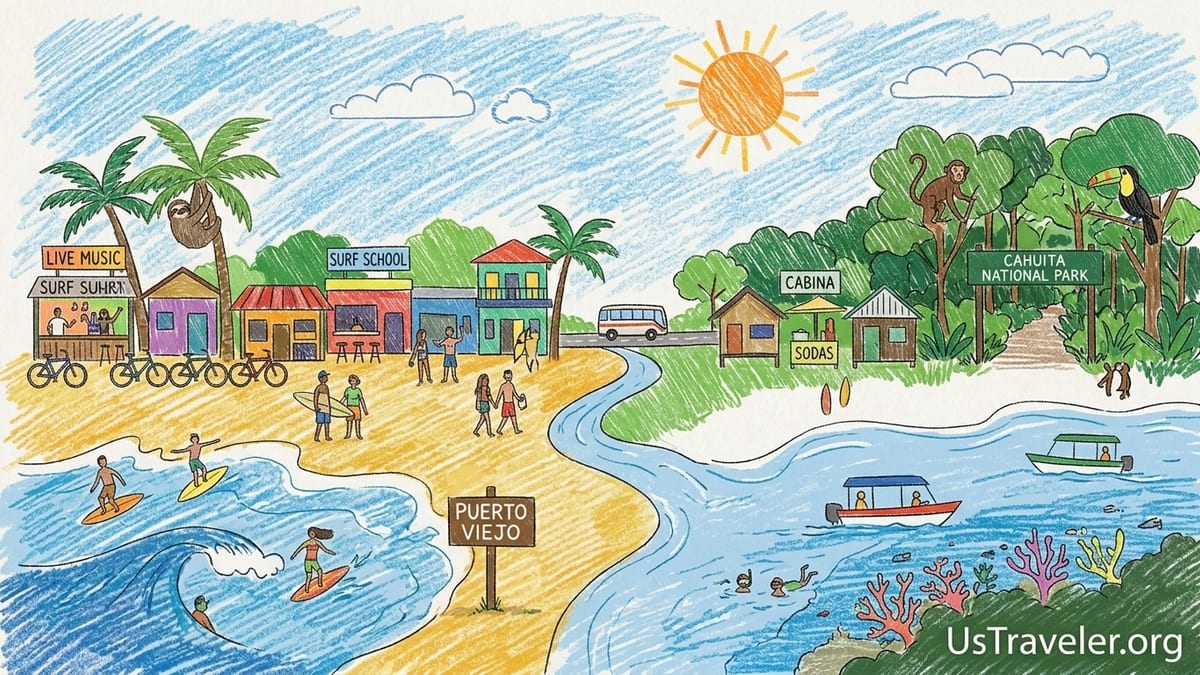
Orientation: Two Towns on the Same Coast, Different Energy
Puerto Viejo de Talamanca and Cahuita sit on Costa Rica’s southeastern Caribbean coast in Limón province, about a 4.5 to 5 hour drive or shuttle ride from San José. Public buses and shared shuttles connect both towns several times a day, and the journey between them takes around 20 to 30 minutes, so you can easily day trip from one to the other regardless of where you sleep.
Puerto Viejo is the larger and more developed of the two. The compact center stretches along the main coastal road with surf shops, bike rental stands, hostels, boutique hotels, bars and restaurants stacked side by side. It has become the region’s social and culinary hub, drawing a mix of backpackers, digital nomads, surfers and couples. You will find late-opening restaurants, multiple nightlife spots and a broader range of services, from yoga studios to co-working spaces.
Cahuita, by contrast, feels more like a village than a resort town. Its few main streets are lined with simple guesthouses, small sodas serving Caribbean dishes, and a handful of bars that tend to quiet down early outside weekends and holiday periods. The town sits directly beside Cahuita National Park, so you can walk from your cabina onto white-sand Playa Blanca or into the jungle trail within minutes. It attracts travelers looking for nature, culture and calm rather than a party scene.
Because the two towns are so close, some visitors choose to split their stay, but many prefer to pick a single base. The decision usually comes down to how much nightlife and dining variety you want, whether you plan to surf, and how important it is to wake up right next to a national park.
Beaches, Snorkeling and National Parks
Both Puerto Viejo and Cahuita have multiple beaches within easy reach, but they offer different strengths. Around Puerto Viejo, you can cycle or drive between Playa Negra, Playa Cocles, Playa Chiquita and Punta Uva. Playa Negra, directly north of town, is a long black-sand beach with a mellow vibe and a few beachfront bars and cabinas. South of town, Cocles is a golden-sand surf beach with lifeguards, while Playa Chiquita and Punta Uva are more secluded, with calm water on clear, low-swell days that can be suitable for casual snorkeling close to shore.
Cahuita’s beaches are more directly tied to its national park. Playa Blanca, at the Kelly Creek entrance on the edge of town, is a white-sand crescent backed by palms and rainforest. If you walk the coastal trail toward Punta Cahuita inside the park, you pass a series of quiet coves where capuchin monkeys often swing overhead. Offshore, Cahuita National Park protects one of Costa Rica’s most significant coral reef systems, and local guides based in Cahuita town run boat-and-snorkel trips when sea conditions allow. Policies have tightened in recent years to protect the reef, so you now typically must go with a certified guide rather than snorkeling independently with your own gear.
For travelers whose top priority is snorkeling on a living reef, Cahuita generally has the edge, especially between roughly February and early September when seas are more likely to be calm and clear. A typical half-day guided snorkel and hike combination booked in Cahuita might include boat transport to the reef, an hour or two in the water over coral and seagrass, and then a guided walk back through the park to town, with prices often landing in the moderate range for Costa Rica’s Caribbean coast depending on group size. Puerto Viejo has some snorkeling at Punta Uva or Manzanillo on calm days, but the experience is more variable and often less colorful than the protected reef off Cahuita.
In terms of national parks, Cahuita wins on proximity and ease of access. The park entrance is a short stroll from many guesthouses, and you can walk the forested coastal trail at your own pace, spotting sloths, howler monkeys, raccoons and toucans, then swim at Punta Cahuita before looping back. Puerto Viejo is technically closer to the Gandoca-Manzanillo Wildlife Refuge and other reserves, but these generally require a short drive, rented bike ride or organized tour. If stepping out of your room and into a national park is high on your wish list, Cahuita is the more convenient base.
Surfing, Adventure and Activity Level
Puerto Viejo is unquestionably the more active hub, especially for surfing. Just north of town is the famous Salsa Brava reef break, which draws experienced surfers during the right Caribbean swell windows, typically around January to April and again in late summer. Even if you are not ready for reef barrels, the sight of local and visiting surfers dropping into powerful Caribbean waves can be a highlight. Beginners and intermediates tend to head to Cocles Beach, where multiple surf schools set up daily, renting boards by the hour and offering group or private lessons.
Beyond surfing, Puerto Viejo functions as a launchpad for a long list of activities. Tour desks and hotels routinely arrange chocolate and cacao farm visits in nearby Bribri communities, waterfall hikes in the hills behind town, indigenous cultural experiences, canopy zipline tours and river rafting day trips that start with early-morning pick-ups. It is easy to fill several days with back-to-back adventures booked from Puerto Viejo without needing a rental car, since most operators include transport.
Cahuita offers many of the same tours but at a lower density and with a quieter feel. You can still book guided hikes in Cahuita National Park, snorkeling excursions, Afro-Caribbean cooking classes and chocolate tours, but you will find fewer outlets advertising them along the street. Many visitors here prefer a slower rhythm: leisurely walks along the coastal trail, long swims at Playa Blanca, reading in a hammock and heading into town in the evening for a plate of rice and beans with coconut milk. If you need a full menu of structured activities and social energy, Puerto Viejo fits better. If you want to build your days around the park and the ocean, Cahuita is ideal.
For purely adrenaline-focused travelers, Puerto Viejo has the stronger infrastructure and is better connected with tour operators that run trips onward to the Pacuare River, the Talamanca foothills and the Gandoca-Manzanillo area. In Cahuita you can still join some of these, but pick-up options and departure days can be more limited, especially in shoulder or rainy seasons, which can matter if you are short on time.
Restaurants, Nightlife and Overall Vibe
One of the clearest differences between the two towns is food and nightlife. Puerto Viejo has become a regional dining hub, with options ranging from low-cost Caribbean sodas to mid-range beach bistros and small upscale spots serving tasting menus or inventive seafood dishes. In a single day you could have a hearty Caribbean breakfast near the beach, lunch on vegan bowls or wood-fired pizza, then dinner at a candlelit restaurant offering fresh snapper, patacones and craft cocktails. Prices vary widely, but there is usually something to match most budgets, and many establishments stay open until late evening.
The nightlife in Puerto Viejo is lively by Costa Rican beach-town standards. On weekends and during high season from roughly December through April, bars around the center often host reggae, calypso or DJ sets, and it is common to see travelers moving between venues well into the night. Some beachfront bars in the Playa Negra and Cocles area also draw crowds for sunset drinks. If you are a light sleeper, you will want to choose accommodation a bit removed from the central strip, or opt for one of the bungalow-style hotels tucked into the forest just outside town.
Cahuita’s dining scene is smaller but flavorful. You will find a handful of long-running local restaurants serving dishes like rondon (a coconut-based seafood soup), jerk chicken, and rice and beans cooked in coconut milk, as well as a few Italian or international options. A typical evening might involve strolling the main street, picking a place with a couple of occupied tables, and lingering over dinner while a local musician plays guitar in the corner. Prices for simple meals can be slightly lower than in Puerto Viejo, especially at basic eateries away from the park entrance.
Nightlife in Cahuita is much more subdued. There might be live calypso or reggae at a bar near Playa Negra on certain nights, and weekends can feel festive, but overall the town winds down earlier. By 10 or 11 p.m., especially outside holidays, many places are quiet. Travelers who want to listen to the waves and the sounds of the jungle are often happiest here, while those who crave bar-hopping and late nights usually gravitate to Puerto Viejo.
Accommodation, Walkability and Practicalities
Puerto Viejo offers a broader and more varied range of places to stay than Cahuita. The town and surrounding beaches have everything from simple hostels and surfer lodges to mid-range boutique hotels and higher-end eco-lodges built among the trees. You can find shared-dorm rooms, modest cabinas close to the sand, and jungle bungalows with outdoor showers and breakfasts included. Because of this variety, Puerto Viejo works especially well for mixed groups, such as families traveling with adult children, or friends with different budgets who still want to stay quite close together.
In terms of layout, Puerto Viejo itself is walkable, but many of the most atmospheric hotels and rentals are strung out along the road south toward Cocles and Playa Chiquita or north toward Playa Negra. That means you may rely on bicycles, taxis or rental cars to go back and forth for dinner, the beach or nightlife, especially after dark when walking along the roadside can be uncomfortable. Bike rentals are widely available, and many visitors treat cycling to the beach or into town as part of the experience, though heavy rain and humidity can make this less appealing at certain times of year.
Cahuita’s compact size is one of its main advantages. Most guesthouses, small hotels and cabinas lie within a short walk of both the park entrance and the main street restaurants. It is entirely possible to spend several days in Cahuita without needing a car or bicycle at all, which can be attractive to budget-conscious travelers or families with younger children. You step out of your room, walk a few minutes for breakfast, continue on to the park for a hike or swim, then return the same route in the afternoon.
From a practical standpoint, both towns have ATMs, small supermarkets, pharmacies and tour agencies, but Puerto Viejo offers more choice and slightly longer opening hours. Shared shuttle companies often list Puerto Viejo as the primary southern Caribbean drop-off point, with Cahuita as an additional stop along the route. If you are relying entirely on public transport and want maximum flexibility with departure times, basing in Puerto Viejo can provide a slight edge, though day trips to Cahuita remain straightforward.
Wildlife, Families vs Couples and Overall Pace
Wildlife is abundant in both Puerto Viejo and Cahuita, but the experience of seeing it can differ. In Cahuita, much of the action happens in and around Cahuita National Park, where it is common on a single morning walk to spot howler monkeys, capuchin monkeys, agoutis, raccoons and multiple bird species alongside the trail. Sloths often rest in trees near the path or right at the edge of town. Because the park entrance is so close to local guesthouses, families with children or travelers who prefer shorter outings can head in for an hour or two without committing to a full-day excursion.
Around Puerto Viejo, wildlife is more dispersed among the surrounding forests and private reserves. You may see sloths in trees along the roadside between town and Cocles, or toucans flying over your breakfast table at a jungle lodge. Several small wildlife centers and rescue facilities are within a short drive, making it easy to combine a visit with a beach afternoon. For birders, guided outings into the nearby lowland rainforest can start from either town, but Puerto Viejo has more tour operators marketing such trips.
For families, both bases can work well, but they offer different strengths. Puerto Viejo provides more dining choices and structured activities, which can help keep older children and teens engaged. Beaches like Cocles can have strong currents, so parents need to watch younger kids carefully and favor calmer spots such as Playa Chiquita or Punta Uva on low-swell days. In Cahuita, the simplicity and walkability, plus the ability to visit the national park in short bursts, suit families with younger children or those who prefer a slower, more predictable routine.
Couples often face the trickiest choice. Puerto Viejo can feel vibrant and romantic, with candlelit beachfront dinners, live music and the option to switch from lazy beach days to active tours at short notice. On the other hand, Cahuita’s quieter streets, nearly empty stretches of Playa Blanca outside peak times, and evenings spent listening to the sea from a small cabina appeal to those seeking intimacy and calm. The overall pace in Puerto Viejo is energetic, especially in high season, while Cahuita tends to stay relaxed even when visitor numbers rise.
The Takeaway
Choosing between Puerto Viejo and Cahuita is less about finding a single “best” town and more about matching your base to the type of Caribbean experience you want. Puerto Viejo is the more active and versatile option, with a wider spread of hotels, restaurants and nightlife, plus excellent surfing and easy access to tours. It works particularly well for travelers who like to mix beach time with social energy, diverse dining, and a steady flow of activities, or for groups and couples who enjoy a buzzier scene.
Cahuita, on the other hand, offers direct, walkable access to one of Costa Rica’s most rewarding national parks, a smaller-scale town center, and a genuinely laid-back Afro-Caribbean atmosphere. It is better suited to travelers who prioritize wildlife, snorkeling on a protected reef when conditions allow, and quiet evenings over bar-hopping. Families with younger children, nature lovers and anyone seeking a slower pace often find that Cahuita feels just right.
If you have a week or more on the southern Caribbean coast, you could easily split your time between the two: start with three or four nights in Puerto Viejo to enjoy its dining, surfing and social scene, then move to Cahuita for three nights of early-morning park walks and hammock time. With less time, choose Puerto Viejo if you crave variety and nightlife, and Cahuita if you imagine your ideal day as a gentle loop between town, jungle trail and sea, all within walking distance of your room.
FAQ
Q1. Is Puerto Viejo or Cahuita better if I will not have a rental car?
Both towns work without a car, but Cahuita is more compact and walkable, with most guesthouses, restaurants and the national park entrance clustered together. Puerto Viejo’s center is walkable, yet many popular hotels and beaches are spread along the coast, so you may rely more on bicycles, taxis or shuttles to move around.
Q2. Which town has better beaches for swimming?
Cahuita’s Playa Blanca inside the national park often has gently sloping sand and relatively calm water on good days, which many people find comfortable for swimming. Around Puerto Viejo, beaches like Cocles can have stronger waves and currents, while Playa Chiquita and Punta Uva tend to be better for relaxed swims when seas are calm.
Q3. Where is snorkeling better, Puerto Viejo or Cahuita?
Cahuita generally offers better snorkeling because of the coral reef protected within Cahuita National Park. Guided boat trips can take you to sections of reef with colorful fish and coral heads when visibility and sea conditions cooperate. In the Puerto Viejo area, casual snorkeling is possible around Punta Uva or Manzanillo on calm days, but conditions and marine life density are usually more variable.
Q4. Which base is best for surfing?
Puerto Viejo is the clear choice for surfers. The area includes the advanced Salsa Brava reef break near town and more forgiving beach breaks at places like Cocles, where several surf schools offer board rentals and lessons. Cahuita has surfable waves at times, especially near Playa Negra, but lacks the consistent surf infrastructure and range of breaks that Puerto Viejo provides.
Q5. Is one town safer than the other for walking at night?
Safety can change over time, and in both towns it is wise to use common sense, avoid walking alone on dark, isolated stretches of road and take taxis or bikes for longer distances after dark. In general, central areas of both Puerto Viejo and Cahuita see regular foot traffic in the evening, but Puerto Viejo stays busier later due to its nightlife, while Cahuita tends to quiet down earlier.
Q6. Which town is better for families with young children?
Cahuita is often more convenient for families with younger kids because of its compact layout and easy access to Cahuita National Park, where you can take short walks and return quickly for naps or meals. Puerto Viejo can also be family friendly, especially if you choose quieter accommodation outside the party zone, but you may spend more time managing transport between beaches, restaurants and activities.
Q7. Where will I find more restaurant and nightlife options?
Puerto Viejo has significantly more restaurants, cafes and bars than Cahuita, with cuisines ranging from local Caribbean dishes to international and vegetarian-focused menus. Nightlife in Puerto Viejo includes live music, DJ sets and beach bars that stay open late in high season, while Cahuita offers a handful of relaxed spots that usually wind down earlier.
Q8. Can I easily visit Cahuita National Park if I stay in Puerto Viejo?
Yes, it is straightforward to visit Cahuita National Park from Puerto Viejo. Public buses and shared shuttles run between the towns, and the ride typically takes around 20 to 30 minutes. Many visitors staying in Puerto Viejo make a day trip to Cahuita for a guided snorkel-and-hike combo or a self-guided walk along the coastal trail.
Q9. How do prices compare between Puerto Viejo and Cahuita?
Overall costs in both towns are similar, but Puerto Viejo’s broader range of accommodation and dining means you will find both more budget and more high-end options. Simple local eateries in Cahuita can sometimes be a little less expensive, while mid-range and upscale restaurants, plus some boutique hotels, are more common in Puerto Viejo.
Q10. If I only have three nights, where should I stay?
If you have just three nights and want energy, varied food and easy access to tours and surfing, basing in Puerto Viejo makes sense and you can still day trip to Cahuita. If your priority is peaceful beach time, wildlife walks and a slower pace, choosing Cahuita and focusing your days around the national park will likely feel more rewarding in a short stay.