


For many cruise passengers, Puntarenas and nearby Puerto Caldera are their only taste of Costa Rica. With cloud forests, crocodile-filled rivers, rainforest skywalks and palm-fringed islands all within reach, this is a port where a well-chosen excursion makes or breaks the day. This guide focuses on practical, real-world choices for cruise guests docking at Puntarenas or Puerto Caldera, comparing ship-sponsored and independent tours to Monteverde, Carara and the Tárcoles River, Tortuga Island, rainforest canopy walks, ziplining parks and regional highlights.
Understanding Puntarenas and Puerto Caldera as Cruise Gateways
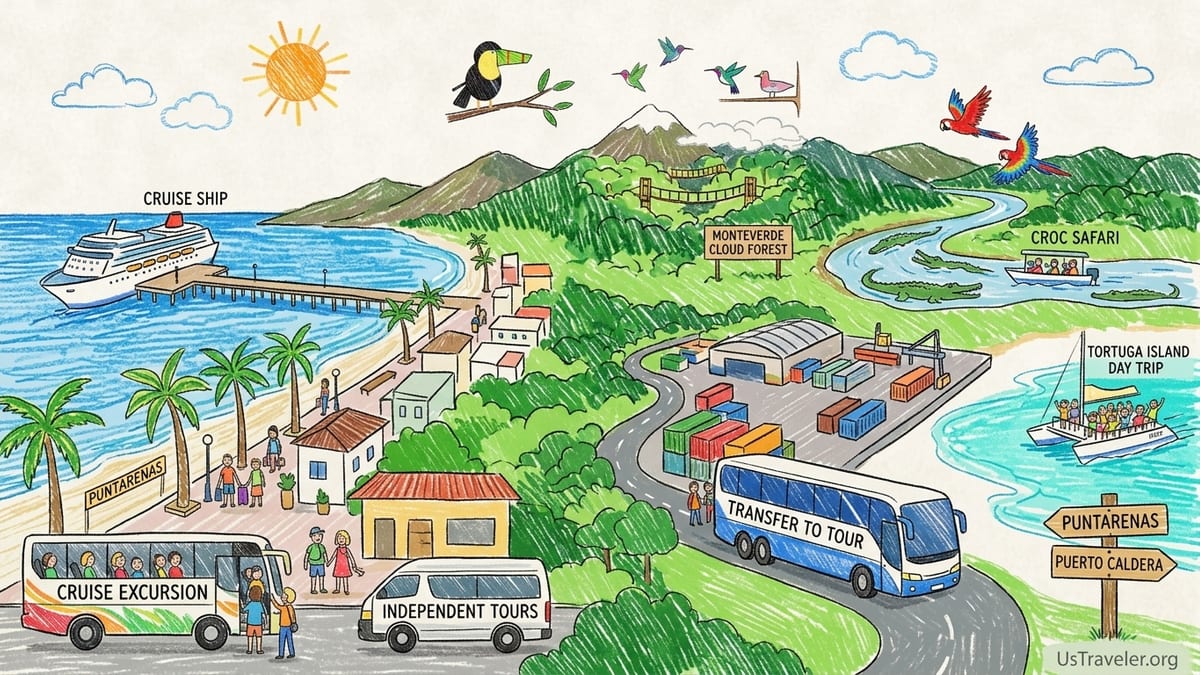
Puntarenas and Puerto Caldera sit on Costa Rica’s central Pacific coast and function as twin cruise gateways. Some ships dock directly at the long pier in Puntarenas, where passengers walk ashore to a low-key beachfront promenade. Others anchor at Puerto Caldera, the main commercial port about 15 kilometers south, where buses and tour vans line up just outside the security gate to whisk guests inland. There is little to do at Puerto Caldera itself, so most visitors either shuttle into Puntarenas or head straight out on prebooked excursions.
From both ports, most organized tours follow the same roads: inland toward the mountains for Monteverde cloud forest and coffee country, north to Carara National Park and the Tárcoles River for wildlife, or south and west along the coastal highway for adventure parks, canopy ziplines and beach stops. Driving times are central to planning a realistic day within cruise-ship schedules. Expect roughly 60 to 90 minutes each way to Monteverde and 45 to 60 minutes to the Carara and Tárcoles area, depending on traffic and road conditions.
Cruise lines typically publish their own shore excursions to these key areas, while local operators and global resellers offer parallel tours meeting outside the port gates. On a typical winter season day you might see buses labeled for a “Rainforest Skywalk and Tarcoles River Cruise,” “Monteverde Cloud Forest and Hummingbird Gallery,” “Tortuga Island Catamaran Day Trip,” or “Canopy Zipline and Jungle River Combo.” Prices can range from around 80 to more than 200 US dollars per person, depending on duration and inclusions like lunch or park fees.
Because the distances are significant and the terrain is mountainous in places, it is essential for cruise passengers to balance how far they go with how much time they have ashore. A port call advertised as 8 hours may shrink once you account for tendering, immigration or delays, so seeking honest drive-time estimates and clear return-to-ship guarantees should be the foundation of your excursion planning.
Ship Excursions vs Independent Tours: Key Differences
For many passengers the first decision is whether to book through the cruise line or arrange an independent excursion. Ship-sponsored tours are generally more expensive but come with a simple selling point: if the tour is delayed for reasons beyond your control, the ship will either wait or take responsibility for reuniting you with the itinerary. For example, if a cruise-operated “Rainforest Aerial Tram and River Cruise” coach is stuck behind an accident on the mountain road, the captain will be notified and departure delayed if feasible.
Independent operators usually cannot offer a literal guarantee that the ship will wait, but serious providers know their reputation depends on getting cruise guests back on time. Many Puntarenas and Caldera tour companies advertise “back to ship on time or your money back” policies, along with promises of full refunds if the ship misses port due to weather or itinerary changes. It is common to see language such as “100 percent refund if your ship does not call at Puerto Caldera” and flexible cancellation up to 24 to 48 hours before arrival.
Cost is the most obvious difference. A cruise-line Monteverde day trip that includes a guided walk in the cloud forest, a simple lunch and a couple of photo stops might be priced around 170 to 220 dollars per person, whereas similar independent small-group tours from Puerto Caldera often list from roughly 120 to 150 dollars, with occasional promotions dipping lower for groups of six or more. Likewise, a ship’s “Carara National Park and Tarcoles River Crocodile Safari” can easily exceed 140 dollars per person, while independent versions combining a shorter walk in Carara with a 60- to 90-minute river boat ride may be offered nearer 100 dollars.
Group size and experience style also differ. Ship tours frequently run on large coaches with 30 or more passengers and a set timetable that leaves little room for detours. Independent operations may use minibuses or vans with 8 to 16 guests, allowing more flexibility for wildlife viewing stops or a quick roadside fruit tasting. For some travelers the structured nature of ship excursions feels reassuring; for others, smaller independent groups offer a more personal, less hurried experience. Ultimately the choice hinges on your tolerance for risk, your budget and how confident you feel meeting guides outside the port gates.
Monteverde from Puntarenas: Is the Cloud Forest Worth the Drive?
Monteverde is one of Costa Rica’s signature destinations, a highland cloud forest famous for hanging bridges, hummingbird gardens and mist-covered trails. From Puntarenas or Puerto Caldera, visiting it in a single port day is ambitious but common. Most cruise-line Monteverde excursions quote a 3-hour drive each way, though in practice the journey often takes around 2 to 2.5 hours inbound and a similar time back, depending on how high into the hills the tour ventures and current road conditions.
Ship-sponsored Monteverde tours typically leave early, sometimes within 30 to 45 minutes of the all-clear for disembarkation. A standard itinerary might include a guided walk in a private reserve or at the Monteverde Cloud Forest Reserve, a stop at a viewpoint over the Gulf of Nicoya, and visits to a hummingbird gallery or small coffee shop. Lunch is usually served at a simple mountain restaurant. Expect total tour durations of 8 to 9 hours, which can consume the entire time in port on days when the ship is docked for around 10 hours.
Independent Monteverde shore excursions from Puerto Caldera often market themselves as “small-group cloud forest adventures” or “Monteverde express tours for cruisers.” These usually aim to trim road time by focusing on one main attraction, such as a hanging bridges park or a cloud forest loop trail, plus a quick coffee sampling stop. Departures are timed to coincide with a ship’s arrival, and operators emphasize that itineraries are designed specifically around cruise schedules. Prices can be slightly lower than ship excursions, but the real benefit may be more time on foot and fewer supermarket-style souvenir stops.
For many cruise passengers, the biggest question is whether Monteverde is simply too far for a single port day. If your call is shorter than 8 hours or if you know you prefer a relaxed pace, Monteverde may feel rushed. An all-day tour that leaves little margin for delays can be stressful, especially in rainy season when fog or landslides occasionally slow traffic. As a rule, Monteverde works best for guests comfortable with a long day on winding roads who accept that genuine cloud forest experiences require serious travel time. If you are prone to motion sickness or traveling with young children, a closer wildlife or rainforest excursion might be a better fit.
Carara, Tárcoles and Wildlife Tours: High Reward with Shorter Drives
Carara National Park and the nearby Tárcoles River offer an excellent compromise between distance and biodiversity. Located north of Puerto Caldera along the coastal highway, this area is typically 45 to 60 minutes from port, depending on traffic. Carara sits at a biological crossroads between dry and wet forest zones, which helps explain why it is known for high bird diversity and frequent sightings of scarlet macaws. The Tárcoles River, forming the park’s northern boundary, is famed for its population of large American crocodiles often seen basking on sandbanks near river bends and bridges.
Ship-operated excursions to Carara and Tárcoles usually combine a walking segment with a river cruise. A common format is a 60- to 90-minute guided walk along relatively flat forest trails followed by a 60- to 90-minute boat ride on the Tárcoles. Guests may spot crocodiles, herons, egrets, kingfishers and occasionally monkeys along the banks. Total tour times often range from 5 to 6.5 hours, leaving a buffer for port formalities and an optional short stroll through Puntarenas or around the pier on return.
Independent wildlife tours tend to mirror this structure but with smaller boats and more flexibility. For example, a local operator might offer a “Tarcoles Crocodile River Safari & Carara Walk” timed specifically for cruise schedules, with pick-up at the port entrance, a mid-morning river trip when crocodiles are most visible, a shorter forest walk to focus on macaws and other birds, and a quick stop at a roadside fruit stand for fresh pineapple or mango. Prices are often competitive, sometimes in the 90- to 120-dollar range per person, including park entrance fees and water.
Because Carara and Tárcoles are closer than Monteverde and involve less climbing, these tours suit a wide range of mobility levels and comfort zones. Trails can still be humid and uneven, and river boats may require stepping down a few steps or onto floating docks, so guests with limited mobility should read tour descriptions carefully. In terms of value for time, Carara and Tárcoles wildlife excursions are among the best bets for cruise passengers who want an immersive nature experience without spending half the day on the bus.
Rainforest Skywalks and Ziplining Parks Near Puntarenas
Costa Rica’s canopy experiences range from serene hanging bridges to adrenaline-heavy ziplines. Near Puntarenas and Puerto Caldera there are several adventure parks that package multiple activities into a single visit. Some combine a rainforest aerial tram, short nature walks and a modest canopy zipline course, while others focus on long, high-speed zipline runs combined with options like ATV rides or river tubing. These parks are typically between 30 and 75 minutes from port.
Cruise-line shore excursion catalogs often feature combinations such as “Aerial Tram, River Cruise and Lunch” or “Canopy Zipline and Jungle River Combo.” A typical package might include hotel-style roundtrip transportation, a safety briefing, 8 to 12 zipline cables through secondary forest, and a gentle river float or short nature walk. Total tour durations commonly sit around 5 to 7 hours, including driving, giving a comfortable margin within standard port times. Ship excursions emphasize safety standards, insurance coverage and well-maintained harnesses and platforms.
Independent adventure parks catering to cruise guests generally advertise direct pick-up at the pier, smaller groups and lower prices. For instance, a zipline and jungle river combo from Puerto Caldera might be marketed at around 110 to 140 dollars per person with a 6-hour total duration, versus a similar ship-sponsored trip at closer to 180 to 220 dollars. Many of these operators state that they work regularly with cruise timetables and will adjust departure times if a ship’s arrival is delayed. It is wise to confirm how long you will actually spend on the ziplines compared with transport and orientation.
For guests comparing a skywalk versus pure ziplining, the choice often comes down to comfort with heights and desired pace. Hanging bridge parks provide a quieter experience: 1.5 to 2 hours strolling along forest paths and across suspended walkways, stopping for photos of orchids, leafcutter ants or distant toucans. Zipline-focused tours deliver more adrenaline and less opportunity to linger over individual plants or birds. Some parks offer both in one ticket, but fitting everything into a cruise schedule may require prioritizing. If you are traveling with mixed ages or energy levels, consider choosing a park where non-zipping companions can enjoy short trails, a café or viewing areas near the landing platforms.
Tortuga Island Day Trips: Beach Time From a Working Port
Tortuga Island, a small, palm-fringed isle in the Gulf of Nicoya, is a popular beach escape for passengers who would rather swim and snorkel than hike. From Puntarenas, day catamarans and smaller boats depart the pier for roughly 80- to 90-minute crossings, depending on vessel speed and sea conditions. From Puerto Caldera, passengers are usually transferred by bus to Puntarenas or another nearby marina before boarding the boat. Sea conditions can be choppy, so those prone to motion sickness should prepare accordingly.
Ship-sponsored Tortuga Island excursions typically include bus transfers where needed, a boat ride out to the island, several hours of free time on the beach and a buffet-style lunch under shade structures. Equipment for guided snorkeling sessions, stand-up paddleboarding or kayaking may be included or available for rental on-site. These tours are full-day commitments, often stretching to 8 hours door to door and suitable mainly for port calls of that length or longer. Cruise lines emphasize safety, licensed boats and reliable schedules, especially important in a region where the return timing is tied to tides and afternoon winds.
Independent Tortuga Island tours are widely offered online and in Puntarenas itself. Many local catamaran operators run daily trips catering to both cruise guests and hotel visitors, with pricing that may start around 80 to 140 dollars per person depending on season, inclusions and boat style. For cruise passengers, the critical questions are boarding time, return time and contingency plans if the ship needs to alter departure. Reputable operators will ask for your exact all-aboard time, schedule a conservative return and provide clear instructions on where and when to meet the group at the port entrance or Puntarenas pier.
Because Tortuga Island tours are among the longest day trips in terms of total duration, they are best suited to travelers whose primary priority is beach and water time rather than forest or wildlife. If your itinerary already includes Caribbean beaches or other tropical islands, you might decide that limited port hours are better spent in Costa Rica’s distinctive forests. Conversely, if this is your only warm-water beach stop, a well-run Tortuga Island excursion delivers a classic Pacific postcard scene within reach of your gangway.
Pickup Points, Timing and Return-to-Ship Guarantees
The logistics of simply finding your bus or van can feel intimidating at a working cargo port like Puerto Caldera, but in practice systems are straightforward. For ship-sponsored excursions, passengers usually gather in a designated lounge or theater on board, receive color-coded stickers and are escorted in groups to their buses parked just beyond security. Meeting times are announced over the public address system and printed in the daily program. Return times are built in with a substantial buffer before all-aboard, and guides stay in radio contact with port agents.
Independent tours operate outside the formal cruise line framework, so pickup and drop-off details need to be checked carefully in advance. Most established operators specify clear meeting spots such as “outside the main port gate in Puerto Caldera” or “at the base of the Puntarenas pier, near the taxi stand.” Many will hold a sign with the company name or your surname. Given that ports can be busy, building in 15 extra minutes to locate your guide is prudent, especially if your ship uses tenders rather than docking directly.
Return-to-ship guarantees vary widely. Cruise-line excursions effectively guarantee that, so long as you follow instructions and stay with the group, you will not be left behind. Independent providers sometimes advertise similar-sounding promises, but in practice they can only refund your tour cost or help arrange onward transport if something truly unusual happens. When comparing options, look for specific statements about “back to ship on time” policies, how they monitor ship schedules, and what happens if road closures or accidents occur. Operators that regularly cater to cruise passengers will typically plan to have you back at port 60 to 90 minutes before the published all-aboard time.
Cancellation rules are another key consideration. Ship excursions generally allow cancellation without penalty up until a specified cut-off, often 24 to 48 hours before port arrival, and automatically cancel with full refunds if the ship skips the port. Independent companies in Costa Rica commonly offer similar terms, such as full refund if the cruise line changes itinerary and at least partial refund for cancellations made a day or two in advance. Always confirm whether refunds are automatic or if you must request them, and keep digital copies of your confirmations in case shipboard internet is spotty when you need to check details.
How Far Is Too Far for a Port Day in Costa Rica?
Costa Rica’s compact size on the map can be misleading. Mountain roads, traffic near San José and weather-related slowdowns mean that “two hours” on paper can stretch to three in reality. For cruise passengers in Puntarenas and Puerto Caldera, the practical question is how much driving you are comfortable with and how much margin you want before the ship’s departure. While there is no universal rule, a few guidelines help frame the decision.
For standard 8- to 10-hour port calls, journeys of up to 90 minutes each way can be reasonable, especially on main paved highways. This radius covers Carara National Park, the Tárcoles River, many zipline parks and some lowland rainforest reserves. Once one-way drive times creep beyond 2 to 2.5 hours, as with some Monteverde or central highland itineraries, the day becomes more tightly scripted and less forgiving of delays. Excursions that advertise both long inland drives and multiple major stops, such as combining Monteverde with extended coffee tours and shopping detours, should be assessed carefully to ensure the schedule is realistic.
Weather and season also matter. In the dry season, typically December through April, roads are generally in better condition and daylight lasts longer, which helps reduce risk even on longer trips. In the wetter months, heavy afternoon rains in the mountains can slow traffic and occasionally lead to temporary closures or detours. If your call at Puntarenas falls in the heart of the rainy season and your ship departs before sunset, a slightly more conservative choice like Carara, a closer canopy park or a Tortuga Island trip with ample buffer may feel more comfortable.
Your personal travel style is just as important as driving times. Some guests are happy to sit on a bus for several hours in exchange for a bucket-list glimpse of cloud forest or a capital city museum, while others prefer a shorter journey with more time on foot and fewer deadlines. If you know that anxiety about missing the ship would overshadow your enjoyment on a long inland tour, prioritizing nearer options is sensible. Conversely, if Monteverde is a lifelong dream and your port time is generous, booking a ship-sponsored version of that excursion can strike a good balance between ambition and security.
The Takeaway
Puntarenas and Puerto Caldera may not look glamorous at first glance, but they are gateways to some of Costa Rica’s most memorable landscapes. From the misty trails of Monteverde to the crocodile-rich waters of the Tárcoles River, from rainforest zipline circuits to the white sand of Tortuga Island, cruise passengers have an unusually broad menu of day trips to choose from. The challenge is not finding something to do, but matching the right excursion to your port timetable, budget and comfort with travel logistics.
Ship-sponsored excursions offer clear advantages in simplicity and security, especially for longer trips into the mountains or all-day Tortuga Island outings where schedules are tight. Independent tours can deliver smaller groups, more flexibility and lower prices, particularly for closer destinations like Carara, the Tárcoles River and nearby adventure parks. For most travelers, the smart approach is to weigh distance, total tour duration, return-to-ship policies and cancellation terms just as carefully as the activities themselves.
If you want the most wildlife for the least bus time, consider a Carara and Tárcoles combination or a rainforest skywalk within an hour of port. If you dream of cloud forest and are prepared for a long day, a carefully chosen Monteverde excursion can still be worthwhile from Puntarenas, particularly when booked through the ship. And if your idea of Costa Rica is turquoise water and palm trees, a Tortuga Island catamaran trip can deliver that postcard scene without the need to plan your own transport. Whatever you choose, booking early, reading the fine print and allowing generous buffers around the ship’s schedule will help ensure that your one day in this corner of Costa Rica feels rich, relaxed and safely back at the gangway by sunset.
FAQ
Q1. Can I safely book an independent excursion instead of a ship tour in Puntarenas or Puerto Caldera?
Independent excursions are common and generally safe if you choose reputable operators that work regularly with cruise passengers, clearly state pickup points, and build in a solid buffer before all-aboard. However, only ship-sponsored tours can truly guarantee that the ship will wait if your group is delayed, so your comfort with a small amount of risk should guide the decision.
Q2. How long does it take to get from Puntarenas or Puerto Caldera to Monteverde?
Most passengers should plan on roughly 2 to 2.5 hours each way under normal conditions, and occasionally up to 3 hours if traffic or weather slow the climb into the highlands. That makes Monteverde a full-day outing, typically 8 to 9 hours round trip including driving, a cloud forest walk and a simple lunch.
Q3. Is Monteverde too far for a single cruise port day?
Monteverde can be worthwhile if your ship is in port for at least 8 to 10 hours and you are comfortable with significant time on winding roads. If your call is shorter, or if you prefer a relaxed pace with extra safety margin, a closer option such as Carara National Park, a canopy park or a Tortuga Island beach day may be more realistic.
Q4. What is the typical duration of a Carara National Park and Tárcoles River wildlife tour?
A standard Carara and Tárcoles excursion from Puntarenas or Puerto Caldera usually runs about 5 to 6.5 hours total. That often includes 45 to 60 minutes of driving each way, a 60- to 90-minute guided walk on forest trails, a 60- to 90-minute crocodile and bird-watching boat ride, and a short stop for refreshments or shopping.
Q5. Are zipline and canopy tours suitable for beginners and older travelers?
Many canopy parks near Puntarenas offer zipline courses designed for first-timers, with modern harnesses, safety briefings and guides who handle braking. Healthy older travelers who are steady on their feet and comfortable with moderate exertion generally do well. Those with serious mobility issues, heart conditions or a strong fear of heights may prefer a hanging bridges skywalk, which offers canopy views at a gentler pace.
Q6. How long is a Tortuga Island excursion from the cruise ports?
Tortuga Island trips are typically full-day excursions lasting around 8 hours door to door. This includes 30 to 45 minutes by bus from Puerto Caldera to the departure pier if needed, an 80- to 90-minute boat ride each way, and several hours of beach time with lunch and optional snorkeling or water sports.
Q7. Where do independent tours usually pick up cruise passengers in Puerto Caldera and Puntarenas?
Independent operators typically meet guests just outside the main port gate in Puerto Caldera or at the base of the long pier in Puntarenas, near taxi stands or clearly marked meeting spots. They often hold a sign with the company name or the lead passenger’s name. It is important to confirm the exact location and allow extra time to find your guide.
Q8. What happens if my ship skips Puntarenas or Puerto Caldera due to weather or itinerary changes?
Ship-sponsored excursions are automatically canceled with full refunds if the port call is missed. Many independent operators in Costa Rica offer similar policies and refund your payment if the ship does not arrive, but you should always verify these terms before booking and keep your confirmation emails in case you need to follow up.
Q9. How far in advance should I book shore excursions for Puntarenas or Puerto Caldera?
For popular activities like Monteverde, Tortuga Island and high-demand wildlife or zipline tours, booking several weeks to a few months ahead is wise, especially in peak season between December and March. Last-minute spots may be available, but choice of departure time, group size and specific activities can be more limited close to the sailing date.
Q10. What should I prioritize if I have only one day in port and want a classic Costa Rica experience?
If you want maximum wildlife with manageable travel time, prioritize a Carara National Park and Tárcoles River combination or a rainforest skywalk and river cruise. If cloud forest is your dream and port time is generous, a Monteverde excursion offers a distinctive highland atmosphere. If you mainly want beaches and clear water, a Tortuga Island catamaran day will feel most rewarding. Matching your choice to your interests and your tolerance for long drives is the key to a satisfying day.