


The southern Caribbean coast of Costa Rica offers one compact strip of shoreline with very different personalities: remote wildlife lodges in Tortuguero, laid-back beach towns around Cahuita and Puerto Viejo, surf-focused Cocles, jungle boutique hideaways in Playa Chiquita and Punta Uva, and the sleepy end-of-the-road village of Manzanillo. Picking the right base is less about finding the single “best” beach and more about matching your budget, transport and travel style to the right stretch of coast.
Understanding the Layout of Caribbean Costa Rica
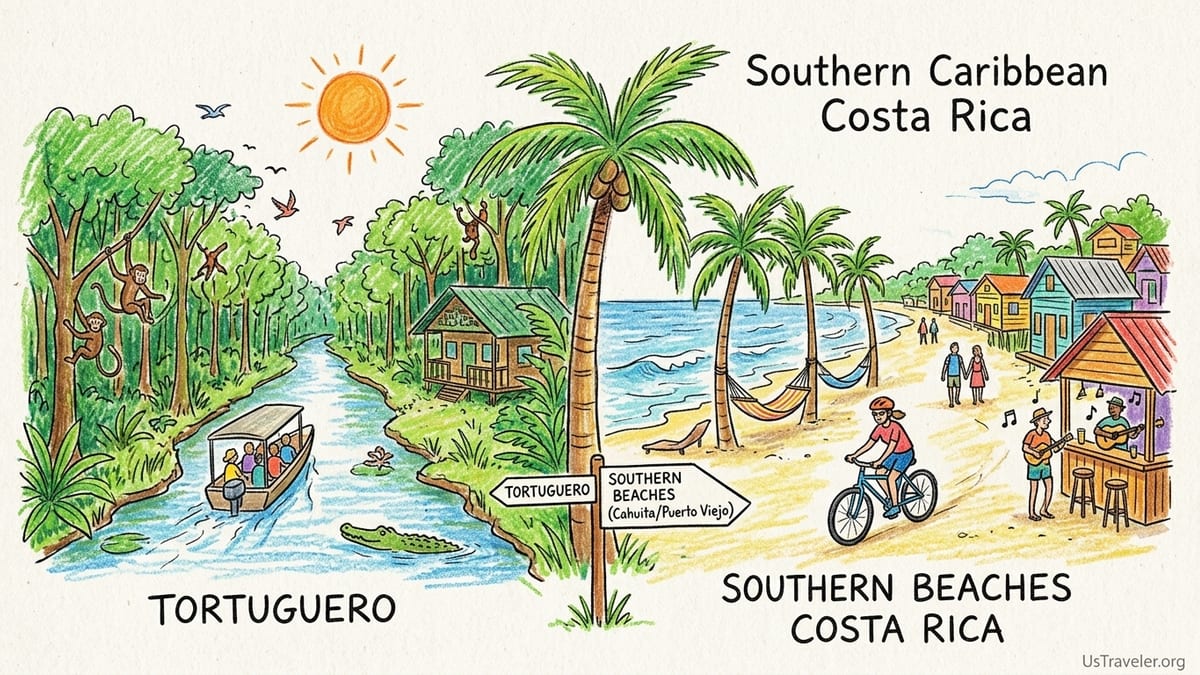
The Caribbean side of Costa Rica that most travelers visit falls into two distinct zones. To the north is Tortuguero, a trackless national park of canals and flooded forest only reachable by boat or small plane. To the south, several small beach communities line the coastal road between Cahuita and Manzanillo, about a four-hour drive from San José plus a final hour along the coast.
On the southern coast, the main reference point is Puerto Viejo de Talamanca, usually shortened to Puerto Viejo. From there, the road runs south past Playa Cocles, Playa Chiquita, Punta Uva and finally Manzanillo, just before the border with Panama. Many hotels and vacation rentals market themselves as being in “Puerto Viejo,” but in reality they may sit three to eight kilometers down this road, closer to Cocles or Playa Chiquita than to town. For travelers without a rental car, that distance can shape how easily you reach restaurants, bars and the bus stop.
Because this coastline is compact, it is entirely possible to explore multiple beaches from a single base. Local buses and inexpensive bike rentals make it realistic to stay in, for example, Playa Chiquita yet head into Puerto Viejo for dinner. Still, subtle differences in hotel supply, beach character and nightlife mean it pays to choose carefully from the start, especially during peak seasons like Christmas, New Year and Easter when the best options book up months in advance.
Before drilling into each area, consider three practical questions: how much do you care about wildlife and national parks; do you want walkable access to restaurants and nightlife; and will you have either a rental car or the willingness to cycle several kilometers on a humid coastal road. The answers usually point quite clearly toward one or two ideal bases.
Tortuguero: Wildlife Lodges and All-Inclusive Packages
Tortuguero sits on Costa Rica’s remote northern Caribbean coast, sandwiched between the Caribbean Sea and a maze of jungle canals. There are no roads into the village. Visitors typically transfer by bus or shuttle from San José to a riverside dock, then continue 60 to 90 minutes by boat to their lodge. A handful of properties also connect to a small local airstrip, making 30-minute flights from the capital an option for travelers with tighter schedules.
Because it is costly and logistically complex to operate here, Tortuguero has developed a very specific style of accommodation. Most visitors stay in mid-range or upscale nature lodges such as Tortuga Lodge & Gardens, Mawamba Lodge or Evergreen Lodge, often on “packages” that bundle boat transport, meals and guided wildlife excursions into one per-person rate. Recent packages at well-known lodges commonly price out in the range of roughly 250 to 450 US dollars per person per night depending on season, room type and whether domestic flights are included. Those rates usually cover boat transfers from the dock, all meals and two or more guided outings, such as canoe trips through narrow canals, sunrise birdwatching and nighttime turtle walks in nesting season.
Beach access in Tortuguero is very different from the southern Caribbean. There is a long, wild strip of dark sand along the ocean side, but currents can be strong and swimming is often discouraged. Instead, the main attraction is wildlife: howler monkeys moving through the canopy above lodge walkways, caimans and herons in the back canals, and during parts of the year green sea turtles nesting on the beach. The “village” of Tortuguero is small, with a few simple sodas, souvenir shops and basic guesthouses, but this is not the place to come for restaurant-hopping or nightlife.
Transport inside Tortuguero revolves entirely around boats and walking. Lodges usually handle everything from park permits to wake-up calls when wildlife is active. This makes the area ideal for visitors who want a largely organized wildlife experience with minimal logistical planning, and less ideal for those seeking independent exploration, rental cars or a wide choice of cafes and bars. Many travelers pair two or three nights in Tortuguero with time further south around Puerto Viejo or Cahuita for beach time and a more flexible base.
Cahuita: Quiet Base Beside a National Park
A two-hour drive south of Limón, the village of Cahuita offers a contrasting experience: a low-key Caribbean town sitting directly beside Cahuita National Park. The park entrance at Playa Blanca sits just a short walk from the small cluster of restaurants and guesthouses in town. This makes Cahuita especially appealing to travelers who want easy, low-effort access to long coastal trails, beaches and snorkeling without needing a guide for every activity.
Cahuita’s hotel supply is modest compared to Puerto Viejo’s but broad enough to cover most budgets. Travelers find simple cabinas and guesthouses around the center, and slightly more polished small hotels with pools and gardens just out of town. Hotel El Encanto, for example, is often cited as a comfortable mid-range choice with a pool and lush grounds within walking distance of town and the park entrance. Nightly rates in Cahuita for a mid-range double room commonly land in the 70 to 140 US dollar range outside peak holidays, while very simple rooms and cabinas can be lower.
Beach access is one of Cahuita’s strengths. Playa Blanca inside the national park offers white sand and calm areas for swimming on good days, while Playa Negra stretches along the other side of town with darker volcanic sand and relatively few crowds. Restaurants in Cahuita lean casual and local: Caribbean-style rice and beans, whole fried fish and simple cocktails in open-air settings. Visitors looking for dozens of international options or late-night dancing will find the scene limited compared to Puerto Viejo, but those seeking a mellow rhythm often appreciate that.
For transport, Cahuita has regular public buses up and down the coast and is small enough that many visitors skip rental cars entirely. You can walk from most in-town hotels to the park entrance, beach, main bus stop and restaurants in less than 10 to 15 minutes. Bicycles are helpful if you stay at guesthouses strung along the coastal road north or south of the village, but they are not essential if you choose a central location. As a base, Cahuita works very well for travelers who prioritize quiet evenings, daily access to a national park and moderate prices over nightlife and trendier cafes.
Puerto Viejo Town: Restaurants, Nightlife and Convenience
Puerto Viejo de Talamanca is the liveliest hub of the southern Caribbean coast. The compact town center clusters around the main crossroads near the beach and bus stop. Here you find the highest density of restaurants, bars, bike rental shops, tour agencies and small supermarkets in the region. For many travelers, especially those relying on public transport who like to eat out often, this concentration of services is the main reason to base themselves in or just outside town.
Accommodation in Puerto Viejo runs the full spectrum. In and around the center there are budget hostels with dorm beds starting somewhere around 15 to 25 US dollars per night, simple cabinas in the 40 to 80 dollar range, and a handful of mid-range hotels and apartment-style rentals at higher rates. Because land is limited in the immediate center, large full-service resorts are rare here; those tend to appear a few kilometers down the coast in Cocles or beyond, where beachfront parcels are bigger.
The town beach itself is pleasant for a stroll but not the most pristine swimming spot along the coast. Surfers gravitate to Salsa Brava, a powerful reef break close to town that draws advanced surfers during bigger swells. For more relaxed swimming, most visitors hop on a bike or catch a quick taxi or bus ride to Playa Cocles, Playa Chiquita or Punta Uva. Restaurants, however, are where Puerto Viejo stands out. Within a few blocks you can find wood-fired pizza, Caribbean-Mediterranean fusion, vegan cafes, craft cocktail bars and casual beachfront spots playing reggae and calypso late into the night.
If you stay in central Puerto Viejo, you can easily get by without a car. The bus from San José stops right in town, and onward buses to Cahuita, Manzanillo and Limón are straightforward. Bicycle rental shops line the main street, with daily rates often around 8 to 12 US dollars per day for basic cruisers. Because nightlife here can be loud, travelers sensitive to noise should look carefully at reviews and maps before booking a room directly on the main strip. Those who want nightlife within walking distance, though, will find Puerto Viejo the most convenient base along this part of the coast.
Cocles: Surf-Friendly Beaches and Mid-Scale Resorts
Just one and a half to two kilometers south of Puerto Viejo, Playa Cocles is often the first stop for travelers who want a quieter feel than town but easy access to its restaurants and services. The main paved coastal road runs just inland from the sand, with several beachfront access points where surf schools stack boards under palm trees. The beach is known for consistent beach breaks and sandbars that produce rideable waves much of the year, with local surf schools offering lessons for beginners when conditions are gentler.
Cocles has one of the more developed hotel scenes outside Puerto Viejo itself. Mid-scale resorts like Cariblue Beach & Jungle Resort and design-forward hotels such as Le Caméléon sit between the road and the sand, pairing pool complexes and on-site restaurants with quick access to the waves. Smaller jungle lodges and bungalows hide a bit further back from the road, often in lush gardens where guests regularly spot sloths and howler monkeys. Prices for mid-range hotels on or near the beach often fall in the 150 to 300 US dollar range for a double room in high season, with more basic cabinas available for less along side streets.
Beach access in Cocles is straightforward. Many hotels are literally across the road from the sand, and public access paths run frequently. Because Costa Rican beaches are public, you can walk long stretches of shoreline regardless of where you stay. Restaurants here are fewer than in Puerto Viejo but you will still find a mix of casual beach bars, small cafes and hotel restaurants, some popular enough with non-guests to serve as local hangouts. For broader choice, Puerto Viejo’s center remains a ten-minute bike ride or a short taxi or bus trip away.
Transport-wise, Cocles is where the question of bikes versus cars starts to matter more. The distance to Puerto Viejo is short enough that many visitors simply rent bicycles for their entire stay and pedal into town for dinner. If you are staying closer to the southern end of Cocles or traveling with small children, taxis are widely available and comparatively inexpensive for such short hops. Guests planning to explore inland waterfalls or head to the Pacific coast afterward may still prefer a rental car, but for a surf-focused, beach-centered stay, Cocles can work smoothly without one.
Playa Chiquita and Punta Uva: Boutique Jungle Stays
Continuing south, Playa Chiquita and Punta Uva offer a more secluded, village-in-the-jungle feeling than either Puerto Viejo or Cocles. The road narrows and is often lined with dense vegetation, with small signs pointing down side lanes to boutique hotels, yoga retreats and vacation rentals tucked into the forest. The beaches here, especially around Punta Uva, are frequently cited as some of the most beautiful in Costa Rica, with clear shallows, leaning palms and a mix of small coves and longer sandy arcs.
Hotel supply shifts noticeably in this stretch. Instead of larger resorts, you mostly find small-scale boutique properties and eco-lodges, many with just a handful of rooms or casitas. Examples include jungle lodges with elevated wooden bungalows, design-focused small hotels with plunge pools and open-air lounges, and family-run bed and breakfasts set in abundant gardens. Nightly rates can vary widely, but stylish boutique properties with breakfast included often sit in the 160 to 350 US dollar range for a double room in high season, while simpler cabins and rooms down side lanes can be more modestly priced.
Restaurants are scattered rather than concentrated. A few well-regarded cafes, bakeries and dinner spots dot the main road, sometimes clustered near small groceries, but you will not find the back-to-back dining strip that defines Puerto Viejo. This is part of the appeal for many guests, who may cook in their rental kitchen or dine at a favorite local spot most nights, using Puerto Viejo only occasionally for a change of scene. Nightlife, beyond live music evenings at specific venues, is limited, which suits travelers prioritizing early mornings on the beach or in hammocks over late nights out.
Without a car, location becomes crucial in Playa Chiquita and Punta Uva. Many properties market themselves with “Puerto Viejo” in their name or description but actually sit six or more kilometers from town along a gently rolling road. For confident cyclists, renting bikes for the duration of the stay is a good solution, but those uncomfortable riding at night or in the rain should either pick a place close to the small local restaurants or budget for regular taxis. Buses do run along this road, yet service can be infrequent in the evenings. Travelers coming specifically for a boutique jungle stay tend to accept this trade-off in exchange for quiet, more space and closer contact with wildlife.
Manzanillo: End-of-the-Road Isolation
South of Punta Uva, the coastal road eventually dead-ends at the fishing village of Manzanillo, on the edge of the Jairo Mora Sandoval Gandoca-Manzanillo Mixed Wildlife Refuge. This is where the developed coastal strip gives way to protected rainforest and mangroves. The village itself is small, with a few modest restaurants, groceries and simple guesthouses, plus a handful of more polished lodges a short walk or drive away. Travelers who make it this far generally come for quiet beaches, birdwatching and long coastal walks rather than nightlife or extensive dining options.
Hotel supply in Manzanillo is limited. You will find a mix of budget rooms above small shops, family-run cabins set back in the forest and a small number of mid-range jungle lodges and vacation rentals. Prices span from inexpensive basic rooms to more comfortable cottages and villas that can reach mid-range rates similar to those in Playa Chiquita or Punta Uva, especially if they offer ocean glimpses or private plunge pools. Because the area remains less developed, some lodgings here have more rustic infrastructure: fans instead of air conditioning, limited on-site facilities and, in a few cases, gravel access roads that can be muddy after heavy rain.
Beach access is excellent in the literal sense: the village fronts a broad stretch of sand, and the refuge beyond includes quieter beaches reached by trails. Swimmers should still pay attention to currents and conditions, as lifeguards are not always present. For restaurants, visitors can expect a small selection of sodas serving Caribbean dishes, a few beachfront bars and seasonal openings that may vary between weekdays and weekends. Compared to Puerto Viejo, choice is limited, so many visitors staying in vacation homes stock up on groceries in larger supermarkets closer to Puerto Viejo before settling in.
Because Manzanillo sits about 12 kilometers south of Puerto Viejo, having your own transport becomes far more attractive. Public buses connect the two, but schedules thin out in the evening, and taxi rides add up if you plan to go north often. Some visitors relish this isolation, using Manzanillo as a digital-detox base with days centered on walking, reading and wildlife spotting. Others quickly feel constrained by the limited services. As a rule, Manzanillo works best for travelers who know they enjoy quiet, self-contained stays and are comfortable trading variety for solitude.
Transport, Distances and Why Exact Location Matters
One of the most common surprises for first-time visitors to Caribbean Costa Rica is how far their “Puerto Viejo” hotel turns out to be from Puerto Viejo’s actual town center. Because booking platforms often list all properties from Cocles to Manzanillo under the Puerto Viejo umbrella, a hotel called something like “Hotel Puerto Viejo Beachfront” might sit on a stretch of sand four or five kilometers away, with no sidewalk, limited lighting and only a few neighboring restaurants. Travelers assuming an easy stroll into town for dinner can find themselves facing nightly taxi rides instead.
To avoid this, always look closely at the map on your booking site. Check the distance to Puerto Viejo’s main crossroads or bus station. As a rough guide, properties within two kilometers north or south of that point are realistically walkable or bikeable to town for most people. Anything beyond that, especially past the southern end of Cocles toward Playa Chiquita and Punta Uva, should be chosen with your transport plan in mind. Pay particular attention if you are visiting in the rainy season, when heavy showers make cycling less appealing and unpaved side roads more slippery.
For many visitors, bicycles bridge the gap perfectly. Classic cruiser bikes with wide tires are widely available for rent throughout the coast, and the relatively flat road between Cahuita and Manzanillo suits cycling in good weather. Helmets are not always standard, so safety-conscious travelers may want to bring their own or confirm availability. Those planning to move accommodation several times or explore inland regions may prefer a rental car, which offers flexibility but comes with limited parking in the very center of Puerto Viejo and occasional potholes or speed bumps on rural stretches.
Taxis and local buses provide a workable middle ground. Shared shuttles from San José or La Fortuna drop visitors in Cahuita or Puerto Viejo, where taxis can then handle short hops to more remote lodges. Buses between Cahuita, Puerto Viejo and Manzanillo are inexpensive and reasonably frequent in daytime, though they can be crowded at peak times and less regular after dark. Before committing to a property marketed generically under “Puerto Viejo,” imagine what a typical day will look like for you, from breakfast to dinner, and ensure the location makes that routine realistic.
Matching Each Area to Your Travel Style and Budget
Thinking of the Caribbean coast in terms of trip types can simplify the decision. Travelers seeking a largely pre-arranged wildlife experience with guided boat trips, set meal times and minimal planning often start in Tortuguero. They accept higher per-person lodge rates in exchange for easy logistics and guaranteed access to wildlife-rich canals and, in season, turtle nesting. After a few days of early-morning excursions and lodge dinners, many head south to the beach towns for more flexible days.
Those dreaming of long walks in a national park and relaxed evenings in a low-key village tend to gravitate to Cahuita. Here, value-conscious travelers find good mid-range choices within walking distance of the park and beach, and they can eat affordably in simple local restaurants. Families with older children who enjoy hiking but not late-night noise often appreciate Cahuita’s rhythm, perhaps scheduling a day trip to Puerto Viejo for more variety.
Puerto Viejo itself works best for social travelers. Solo visitors, digital nomads and those who like to try a different restaurant each night often appreciate being able to stroll from their accommodation to cafes, bars and live music without worrying about buses or bikes. Budget travelers also benefit from the concentration of hostels and inexpensive eateries. For a compromise between that energy and a more relaxed beach environment, Cocles offers the surf, mid-scale resorts and easy access back into town.
Playa Chiquita, Punta Uva and Manzanillo are where quiet seekers and design-conscious travelers usually find their ideal stay. Boutique jungle lodges with stylish interiors, outdoor showers and private decks feel far from the bustle, yet remain a bike ride or short drive from Puerto Viejo’s services. Manzanillo represents the far end of the isolation scale, best suited to visitors who relish a slower pace, basic local restaurants and a feeling of being at the edge of the map. Across all these areas, comparing not only hotel photos and prices but also precise locations and transport options will lead to a smoother Caribbean Costa Rica experience.
FAQ
Q1. Is Tortuguero or Puerto Viejo better as a first stop in Caribbean Costa Rica?
Tortuguero is better if you want guided wildlife packages and are comfortable with boat transfers and lodge stays, while Puerto Viejo suits travelers seeking restaurants, nightlife and beach-hopping.
Q2. Do I need a rental car to stay in Cocles, Playa Chiquita or Punta Uva?
No, you do not strictly need a car, but having bicycles or budgeting for taxis is important because many properties are several kilometers from Puerto Viejo’s town center and bus stop.
Q3. How close to Cahuita National Park should I stay if I want to walk there daily?
If daily park visits are a priority, look for accommodation either in central Cahuita or along the short stretch of road just outside town so you can reach the entrance on foot in 10 to 20 minutes.
Q4. Are the beaches swimmable in Tortuguero?
Tortuguero’s ocean beach is usually not recommended for swimming due to strong currents and waves; most visitors focus on canal boat tours and wildlife viewing rather than time in the sea.
Q5. Is Puerto Viejo safe for walking at night?
Many visitors walk around central Puerto Viejo at night to reach restaurants and bars, but it is still wise to stay on lit streets, avoid isolated beaches after dark and take a taxi for longer distances.
Q6. What makes Cocles particularly good for surfers?
Cocles has consistent beach breaks and sandbars suitable for different levels, along with surf schools on the sand and several mid-range hotels located within a short walk of the main surf zone.
Q7. How isolated is Manzanillo compared to Punta Uva?
Manzanillo is at the literal end of the coastal road with fewer restaurants and lodgings, so it feels more isolated, while Punta Uva still has a modest scattering of cafes and is closer to Puerto Viejo.
Q8. Are boutique jungle lodges in Playa Chiquita and Punta Uva much more expensive?
Many boutique lodges here do cost more than basic cabinas in town, but prices vary; you can find simple cabins, mid-range eco-lodges and higher-end design hotels within the same general area.
Q9. How long should I stay in Tortuguero versus on the southern Caribbean coast?
A common pattern is two or three nights in Tortuguero for wildlife-focused activities, followed by four to seven nights divided between Cahuita, Puerto Viejo, Cocles or the quieter southern beaches.
Q10. Why does it matter if my “Puerto Viejo” hotel is actually in Cocles or Playa Chiquita?
Because distances can be three to eight kilometers from town, staying in Cocles or Playa Chiquita changes how often you rely on bikes, buses or taxis and how easily you reach restaurants and nightlife.